Trees
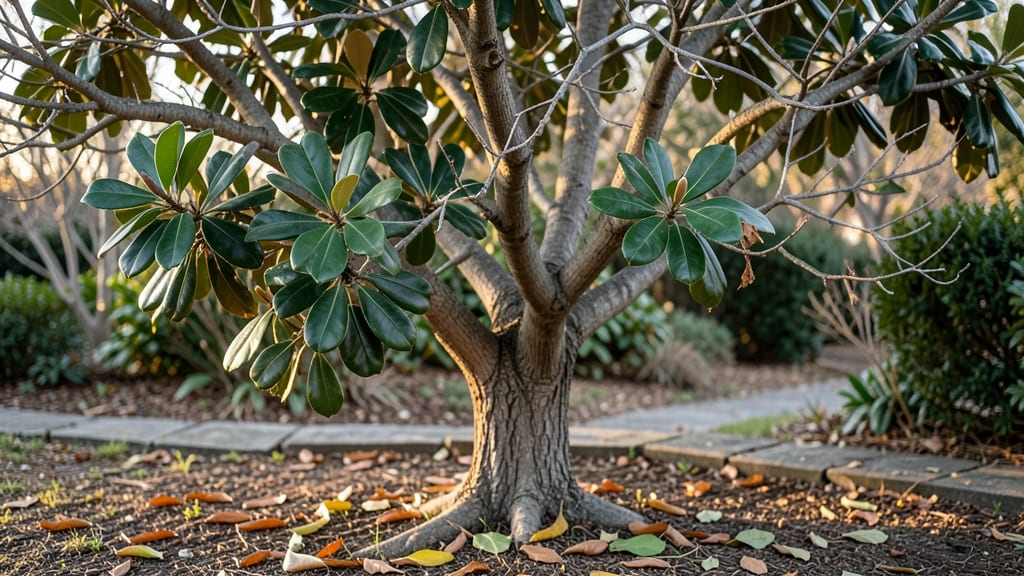
Your magnolia tree dropping leaves doesn’t mean it’s dying—it’s often just asking for a little help. 🌿 I’ve seen these trees go from bare branches to lush canopies in just one season by focusing on three key adjustments: watering, pruning, and pest checks.
The first step is figuring out why the leaves are falling, because that tells you exactly what to fix next.
Most of the time, it’s not a disease but simple stress—too much sun, not enough water, or pests like lace bugs hiding under the leaves. Start by checking the soil: if it’s bone-dry two inches down, you’re underwatering.
If it’s soggy, you’re overdoing it. Then look for tiny yellow spots on the undersides of leaves—that’s lace bugs, and they’re the sneakiest culprits. A sharp pair of pruners and a hose spray can turn things around fast.
📚 In This Guide
- What you need
- Instructions
- Tips and common mistakes
- Wrapping up and next steps
What you need
- ● Pruning shears – Bypass pruners (sharp, 6-8" blades) for small branches (1/4"–3/4" diameter). Quantity: 1 pair.
- ● Lopping shears – Long-handled (for branches 3/4"–2" diameter). Quantity: 1 pair.
- ● Pruning saw – Curved-tooth, 8-10" blade for thick branches (2"+ diameter). Quantity: 1.
- ● Gloves – Heavy-duty, cut-resistant (gardening or pruning gloves). Quantity: 1 pair.
- ● Disinfectant – 70% isopropyl alcohol or pruning sealant (to sterilize tools between cuts). Quantity: Small bottle.
- ● Heavy-duty trash bags – For collecting debris (10-20 gallon size). Quantity: 2-3 bags.
- ○ Ladder – Sturdy, extendable (if tree exceeds 8 ft tall). Quantity: 1 (optional but helpful).
- ● Pole pruner – Extends reach for high branches (10-15 ft).
- ● Tree wound dressing – Pruning paste (for large cuts, though not always necessary for magnolias).
- ● Work boots – Steel-toe or waterproof (if working in wet conditions).
- ● Safety glasses – Protects eyes from debris.
- ● Hose or water sprayer – Cleans tools and rinses sap off branches.
Step-by-Step guide to revitalizing a magnolia tree losing leaves
Here's how I nurse a struggling magnolia back to full, lush health—without drastic measures.
🌿 Step 1: Assess the Problem with a Close Inspection
Start by examining the leaves closely. Healthy magnolia leaves should be deep green, firm to the touch, and free of spots or discoloration. If you see yellowing between the veins, that's a classic sign of iron deficiency. Brown patches or curling edges often point to fungal issues or environmental stress.
Check the soil around the tree's base. If it feels dry and powdery 2 inches below the surface, your magnolia isn't getting enough water. On the flip side, if the soil smells sour or feels soggy, you're overwatering. Magnolias hate wet feet—this is the #1 reason they drop leaves in spring.
Look at the tree's growth pattern. If new leaves are small and spaced far apart, it's likely struggling with poor soil nutrition or root competition from nearby plants. I always run my fingers along the trunk to feel for any unusual softness or cracks—signs of potential disease or pest damage.
✂️ Step 2: Perform the First Cut to Improve Airflow
Use clean, sharp pruning shears to remove any dead, diseased, or crossing branches first. Cut back to a healthy bud or branch junction, making the cut at a 45-degree angle about ¼ inch above the bud. This prevents water from pooling and causing rot.
Next, focus on thinning the canopy. Magnolias need good airflow to prevent fungal diseases. Remove about 20% of the branches that are rubbing against each other or growing inward. You'll see the difference immediately—the center of the tree will open up, letting sunlight reach the lower branches.
Here's the thing—don't overdo it. I always stop when I can see light filtering through the outer branches. A magnolia's dense foliage is its natural defense against pests, so you're not stripping it bare. Just creating space for air and light circulation is enough to stop the leaf drop.
💧 Step 3: Adjust Watering and Soil Conditions
Magnolias need deep watering once a week during dry spells, but they hate sitting in wet soil. Water slowly at the base until you see 6 inches of soil absorb moisture. If your soil drains poorly, mix in 2 inches of compost around the drip line to improve aeration and water retention.
For iron deficiency, I apply a chelated iron supplement in early spring. You'll see new growth within 4-6 weeks if the tree is otherwise healthy. For general nutrition, spread a 2-3 inch layer of organic mulch (like pine straw) over the root zone, keeping it 6 inches away from the trunk. This conserves moisture and slowly releases nutrients.
Real talk: If your magnolia is established (5+ years old), it's probably not the water or soil—it's often the roots. Older trees develop shallow root systems that dry out quickly. In that case, water twice a week during heatwaves and monitor the soil moisture closely.
☀️ Step 4: Provide Seasonal Care to Prevent Future Leaf Drop
In spring, fertilize lightly with a balanced 10-10-10 formula just as new leaves emerge. Too much fertilizer stresses magnolias and causes leaf drop. I always use half the recommended dose—these trees are sensitive to overfeeding.
During summer, watch for spider mites or scale insects on the undersides of leaves. A strong spray of water can knock off mites, but for scale, I use neem oil applied in the early morning. You'll know it's working when you see fewer sticky residues (honeydew) on the leaves.
In fall, prune again to remove any weak or damaged growth. Magnolias set next year's buds in late summer, so avoid heavy pruning after mid-August. A light trim to shape the tree is fine, but major cuts will reduce flowering the following spring.
Tips & tricks for revitalizing a magnolia tree
Took me years to figure out these tricks—now I can tell you exactly what works (and what doesn't) for bringing a struggling magnolia back to life.
Diagnosis Tip: When checking for iron deficiency in Step 1, look for yellowing between the veins first—this is the classic sign. I also check the undersides of leaves for tiny rust-colored spots, which means fungal infection. Grab a magnifying glass if you're unsure—you'll spot pests or disease much faster than with your naked eye.
Pruning Precision: In Step 2, those 45-degree cuts aren't just for looks—they're about water flow. Make sure your pruning shears are sharp—dull blades crush stems and invite infection. And always cut just above a bud that faces outward. I mark these buds with a white dot on my trees before cutting to avoid mistakes.
Watering Wisdom: The 6-inch soil depth check in Step 3 is crucial—stick your finger in! If it's dry at that depth, water until it's moist all the way through. For established trees, I use a soil probe (just a long screwdriver) to check moisture at 12 inches deep during heatwaves. That's where the real roots are.
Seasonal Strategy: Don't skip the fall pruning in Step 4—it's when magnolias set next year's buds. I always do a final check in late October to remove any weak growth that might have sprouted after mid-August. This one step makes a huge difference in spring flowering.
Pro Tips for Magnolia Tree Dropping Leaves
- Took me years to figure out these tricks—now I can tell you exactly what works (and what doesn't) for bringing a struggling magnolia back to life.
- Diagnosis Tip: When checking for iron deficiency in Step 1, look for yellowing between the veins first—this is the classic sign.
- Pruning Precision: In Step 2, those 45-degree cuts aren't just for looks—they're about water flow.
Frequently asked questions
about magnolia trees dropping leaves—because even the most stunning trees need a little TLC! Here’s what you’ve been wondering:Why is my magnolia tree dropping leaves in the middle of summer?
Summer leaf drop is often stress-related—think heat, drought, or poor soil. Magnolias are sensitive! Check for yellowing edges (underwatering) or crispy leaves (overwatering). Mulch the base and water deeply 1-2x/week to revive it. If pests (like scale) are present, they’ll leave sticky residue—hose them off gently.
Is it normal for magnolias to lose leaves in fall/winter?
Yes! Deciduous magnolias (like Magnolia soulangeana) shed leaves annually in fall, while evergreens (like Magnolia grandiflora) may drop a few in winter. If all leaves fall early, it could signal root rot or fungal issues—inspect the trunk for cracks or mushrooms.
Can I prune a magnolia when it’s dropping leaves?
Prune after leaf drop (late winter/early spring) for best results. Avoid heavy cuts during active leaf loss—it stresses the tree further. Focus on dead or crossing branches only. Use clean, sharp tools and sterilize with rubbing alcohol to prevent disease spread.
What’s the fastest way to stop leaf drop?
Start with watering consistency (1–1.5 inches/week) and balanced fertilizer (like 10-10-10 in early spring). Improve drainage by amending clay soil with compost. If pests are the culprit, neem oil or insecticidal soap can help. Monitor for 4–6 weeks to see improvement!
Are there magnolia varieties that drop fewer leaves?
Evergreen magnolias (e.g., Magnolia grandiflora or Magnolia virginiana) retain leaves year-round. For deciduous types, Magnolia stellata is more cold-hardy and drops leaves later. Always check your climate zone—some varieties thrive where others fail!
Pro tip: Label your magnolia’s variety—it’s a game-changer for care! Snap a photo of the leaves/flowers and compare to online databases for ID help.
Wrapping up and next steps
If your magnolia tree is dropping leaves, don’t panic—it’s often a sign of natural growth or seasonal adjustments! With the right three strategic cuts—pruning for shape, thinning for airflow, and rejuvenating for health—you can keep your tree thriving year-round. 🌿
Take action now: grab your tools, assess your tree’s needs, and give it the care it deserves. A little effort today means lush, vibrant foliage tomorrow—your magnolia will thank you!
Next step: Schedule your first pruning session before the next growing season kicks in! 🌱