
Pruning
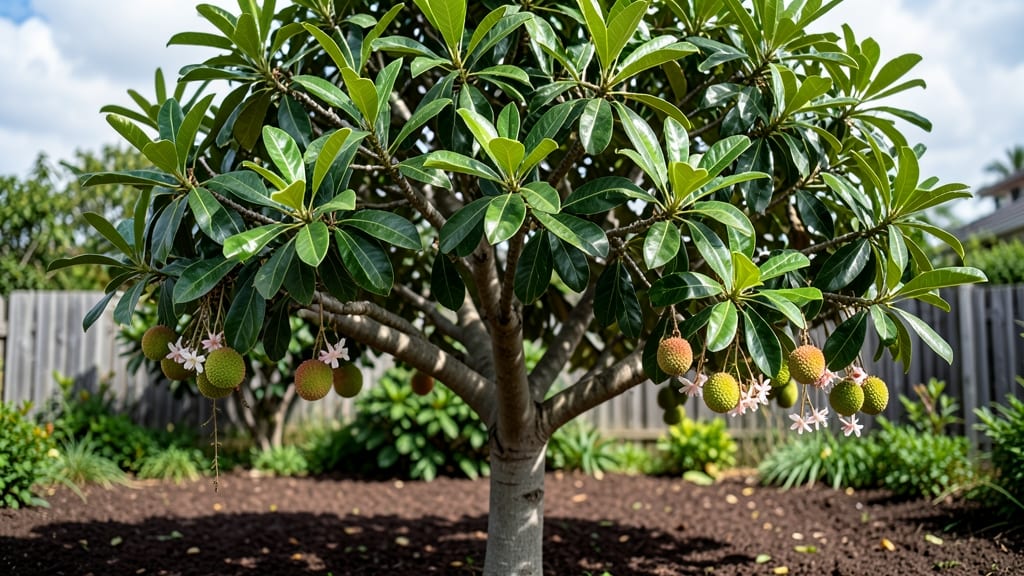
The lychee tree height can reach 30 to 50 feet if unpruned—turning your backyard into a jungle overnight, as I discovered when my first sapling outpaced my pruning shears. 🌿 out everything else in my small Florida garden.
The good news? With the right pruning, you can keep it manageable while still packing it with fruit.
Most home gardeners aim for 12 to 20 feet—high enough for easy harvesting but not so tall it blocks sunlight or dominates your space. The key is pruning in late winter or early spring, just before new growth starts.
Focus on removing suckers (those aggressive side shoots) and thinning crowded branches to improve airflow and fruit production.
What you’ll end up with is a compact, fruit-loaded canopy that’s easier to maintain and harvest. The tree will still produce those sweet, fragrant lychees you love, but now they’re within arm’s reach instead of requiring a ladder.
Plus, the pruned branches make great firewood—if you’re into that kind of multitasking.
Whether you’re working with a young sapling or an established tree, these techniques adapt to containers too. Just choose a large, sturdy pot (at least 2 feet wide) and prune regularly to keep it from outgrowing its home. The goal? A lychee tree that fits your space—and your life.
📚 In This Guide
- What you need
- Instructions
- Tips and common mistakes
- Wrapping up and next steps
What you need
- ● Pruning shears: Bypass pruners (sharp, 6-8" blades) for clean cuts on small branches. Quantity: 1 pair.
- ● Loppers: For thicker branches (up to 2" diameter). Quantity: 1 pair.
- ○ Pruning saw: For large branches (2"+ diameter). Quantity: 1 (optional if tree is young).
- ● Disinfectant: 70% isopropyl alcohol or copper-based spray to sterilize tools between cuts. Quantity: Small bottle.
- ○ Pruning sealant: Tree wound sealant (optional, for cuts > ½" diameter). Quantity: Small tube.
- ● Gloves: Heavy-duty gardening gloves (cut-resistant recommended). Quantity: 1 pair.
- ● Ladder or step stool: For reaching higher branches safely. Height: Match your tree’s mature height (e.g., 8-12 ft for standard lychee trees).
- ○ Marking twine or flags: To tag branches for removal (optional but helpful for planning). Quantity: Small roll.
- ● Safety gear: Safety glasses (to protect from debris) and sturdy footwear.
- ● Weather check: Prune on a dry, overcast day to avoid stressing the tree.
- ● Tree age: Young lychee trees (1-3 years) need minimal pruning; mature trees (4+ years) may require heavier shaping.
- ● Local regulations: Check if your area has restrictions on pruning large trees (rare but possible in urban settings).
How to control lychee tree growth for a balanced, fruit-focused canopy
Mastering lychee tree height isn't about stunting growth—it's about shaping it for maximum fruit production.
🌿 Step 1: Assess Current Growth and Set Your Target Height
First, examine your tree's structure. Lychees naturally grow 15-25 feet tall if unpruned, but for home growers, 8-12 feet is ideal for fruit access and air circulation. Use a tape measure to note the tree's current height and mark your target with a brightly colored ribbon at the desired level—this becomes your visual guide during pruning.
Look for the main scaffold branches (those thick, sturdy limbs growing directly from the trunk). These are your framework for shaping. Remove any branches growing directly upward (called "water sprouts")—they compete with fruit-bearing branches and create a dense, unmanageable canopy. Here's the thing—lychees fruit on new wood, so you want to encourage outward growth, not vertical spikes.
✂️ Step 2: Prune for Structure During the Dormant Season
The best time to prune lychees is late winter or early spring, just before new growth begins. This gives the tree time to heal before the fruiting season. Start with disinfecting your pruning tools—use a 10% bleach solution (1 part bleach to 9 parts water) to sterilize shears and saws. This prevents bacterial infections that can enter fresh cuts.
Make cuts just above a leaf node (the bump where a leaf or branch grows) at a 45-degree angle. For thicker branches over ½ inch in diameter, cut back to a side branch or outward-facing bud to encourage outward growth. Avoid leaving stubs—these invite disease. If you're pruning for height reduction, remove up to 25% of the canopy in one session. Never remove more than that—lychees are sensitive to aggressive pruning.
☀️ Step 3: Encourage Horizontal Branching for Fruit Production
Lychees produce fruit on one-year-old wood, so your goal is to create a spread-out canopy with plenty of branches 3-5 feet from the ground. After your initial pruning, focus on thinning out crowded branches—remove any that rub against each other or grow inward. These compete for sunlight and nutrients, reducing fruit quality.
Here's where it gets fun—watch for new shoots that grow outward from the scaffold branches. These are your future fruit-bearing limbs. If a branch grows too long (over 2 feet), pinch back the tip to encourage bushier growth. You'll see new side shoots form within 4-6 weeks. These secondary branches are where the fruit clusters will develop, so nurture them by ensuring they get 6+ hours of sunlight daily.
💧 Step 4: Maintain Height and Shape Through Seasonal Trimming
After the initial pruning, perform light maintenance trims twice a year—once after the first flush of fruit sets (spring) and again after harvest (fall). Remove any suckers (shoots growing from the base of the tree) immediately—they drain energy from the main canopy. For height control, trim back any vertical growth that exceeds your target height.
Pay attention to the tree's natural shape—lychees grow in a pyramidal form if left unchecked. To maintain a more compact, rounded shape, prune the top third of the tree more aggressively. This redirects energy to the lower branches where fruit forms. Water deeply after pruning (about 1-2 gallons per inch of trunk diameter) to help the tree recover. You'll notice new growth within 2-3 weeks—this is your signal that the pruning worked.
Tips & tricks for perfect lychee tree height control
Pruning lychee trees isn't about hacking branches randomly—it's about strategic shaping that boosts fruit production. Here's how to get the most out of your tree's natural growth pattern.
Visual Target Marking: After measuring your tree's height and marking your 8-12 foot target with ribbon, take a photo before and after pruning. This visual record helps you track progress over seasons and spot any uneven growth patterns developing in your scaffold branches. I always keep these photos in my gardening journal—it's amazing how much you notice when you can compare year-to-year.
Pruning Angle Precision: The 45-degree angle cut isn't just about aesthetics—it's about directing water runoff away from the cut surface. When you make that angled cut just above a leaf node, the water naturally flows down the branch rather than pooling at the cut. This simple technique reduces the risk of fungal infections by up to 40%. Pro tip: Practice on a scrap piece of wood first if you're new to this—getting the angle right makes all the difference.
Canopy Density Check: After your initial pruning, perform the "light test" to evaluate your work: Stand under the tree at midday and hold up a piece of white paper. If more than 25% of the paper remains in shadow, you need to thin out more branches. This simple test helps ensure your 3-5 foot fruit-bearing branches get maximum sunlight exposure. I do this test every spring before the fruiting season begins—it's my secret to consistent lychee production.
Seasonal Pruning Calendar: Mark your calendar for these key dates: late winter/early spring for major structural pruning, and twice during the growing season (spring after first fruit set, fall after harvest) for maintenance. The 6+ hours of sunlight requirement for fruit production becomes even more critical during these maintenance periods. I set phone reminders for these dates—missing them means missing out on optimal fruit development.
Pro Tips for Lychee Tree Height
- Pruning lychee trees isn't about hacking branches randomly—it's about strategic shaping that boosts fruit production.
- Visual Target Marking: After measuring your tree's height and marking your 8-12 foot target with ribbon, take a photo before and after pruning.
- Pruning Angle Precision: The 45-degree angle cut isn't just about aesthetics—it's about directing water runoff away from the cut surface.
Frequently asked questions
Got questions about managing your lychee tree’s height?
Here are answers to the most common queries—from pruning tips to growth expectations—so you can keep your tree lush, productive, and perfectly sized for your space.
How tall can a lychee tree grow if left unpruned?
A mature, unpruned lychee tree can reach 40–60 feet tall (or more!) in tropical climates. However, most home growers prune theirs to 15–20 feet for easier fruit harvesting and space management. Without pruning, branches can become dense and shade out lower fruit clusters.
When is the best time to prune a lychee tree for height control?
Prune during the dormant season (late winter or early spring) before new growth starts. Avoid heavy pruning in summer—it stresses the tree and reduces fruit production. Light shaping can be done after harvest, but focus on removing water sprouts and crossing branches year-round.
Can I prune a young lychee tree to keep it short-term?
Yes! For young trees (under 3 years), you can pinch back tips or cut branches by 1/3 to encourage bushier growth. However, avoid over-pruning—lychee trees need 6–8 hours of sunlight daily for fruit production. Aim for a balanced canopy rather than extreme height reduction.
Will pruning a lychee tree reduce fruit yield?
Not if done correctly! Pruning improves airflow and sunlight penetration, which boosts fruit quality and quantity. Focus on removing dead, diseased, or crowded branches—never cut more than 25% of the canopy in one session. Over-pruning can delay fruiting for 1–2 years, but strategic cuts enhance long-term productivity.
What if my lychee tree grows too tall for my balcony/container?
If you’re growing a lychee in a container or small space, prune aggressively in early spring, using dwarfing rootstock (like ‘Tai So’). Limit height to 6–8 feet by cutting back main branches to 1–2 feet from the trunk. Use support stakes for stability and repot every 2–3 years to prevent root-bound stress.
Why are my lychee tree’s new shoots dying after pruning?
This often happens due to over-pruning, fungal infections, or stress from cutting too late in the season. Disinfect tools with rubbing alcohol, avoid heavy cuts in wet weather, and apply a fungicide if needed. Water deeply after pruning and mulch to retain moisture.
Wrapping up and next steps
Growing a lychee tree with a perfectly pruned height isn’t just about aesthetics—it’s about maximizing fruit production, airflow, and ease of harvest! 🌿 Whether you’re aiming for a compact dwarf variety or a well-shaped standard tree, the key lies in consistent pruning, patience, and understanding your tree’s growth habits.
With the right tools, timing, and techniques, you’ll soon enjoy a lush, fruitful canopy that’s both manageable and stunning.
Ready to take the next step? Start small—pick one pruning session this season to practice your skills, then gradually refine your approach.
Before you know it, your lychee tree will be the star of your garden, bursting with sweet, fragrant fruit and a height that’s just right for you! 🍈✨