
Container Gardens
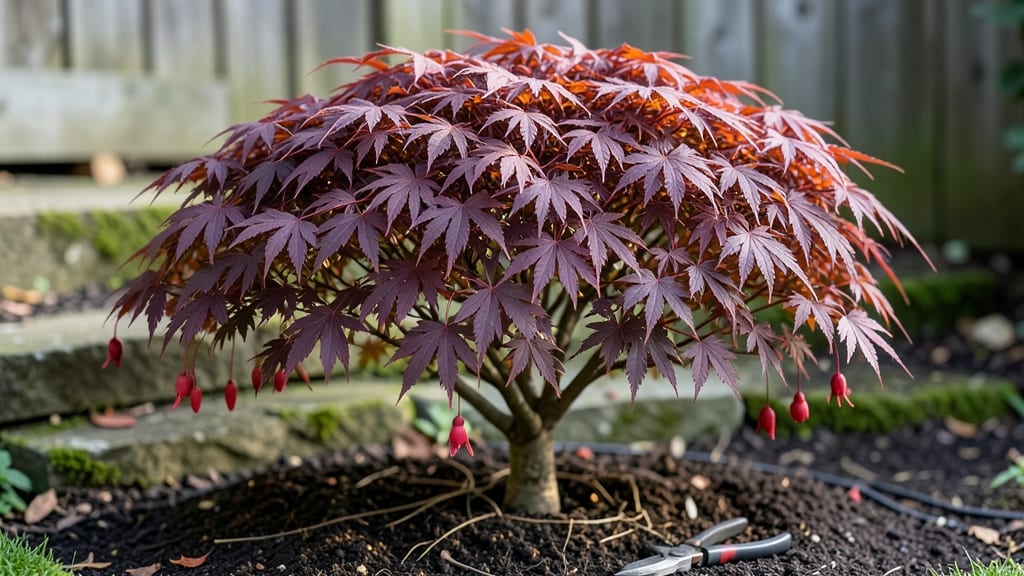
The low growing Japanese maple tree transforms tight spaces into serene mini-forests with its delicate lace-like foliage. 🌿 I remember the first time I spotted one in a courtyard—it felt like a tiny Japanese garden tucked into an urban alley. That moment changed how I saw small gardens forever.
These trees thrive in containers or as ground covers, their vibrant colors—from fiery reds to soft greens—adding drama without overwhelming. They love partial shade and well-draining soil, making them perfect for patios, entryways, or even bonsai-style displays. Pair them with moss or ferns for a lush, layered look.
What you'll get is a year-round focal point that grows only 3-6 feet tall, its branches arching gracefully. In autumn, the leaves turn fiery hues that rival any large tree, but on a much smaller scale. The texture alone—those tiny, serrated leaves—makes them irresistible for any garden style.
Whether you're working with a balcony, a front yard corner, or a courtyard, these trees adapt beautifully. They even work as understory plants for larger trees, creating natural tiers. Let's explore how to make them the star of your space!
📚 In This Guide
- What you need
- Instructions
- Tips and common mistakes
- Wrapping up and next steps
What you need
- ● Low-growing Japanese maple tree (Acer palmatum variety) – Choose a dwarf cultivar like 'Bloodgood', 'Emperor I', or 'Tamukeyama' (3–6 ft mature height).
- ● Container (if planting in a pot) – 15–20 gallon pot with drainage holes (or a 24" diameter for larger varieties). Use glazed ceramic or UV-resistant plastic.
- ● Well-draining potting mix – 1 part peat moss or coconut coir, 1 part perlite or pumice, and 1 part compost.
- ● Native soil (for in-ground planting) – Amend with compost (20%) and sand (10%) if soil is heavy clay.
- ● Organic mulch – 2–3 inches of shredded bark or pine needles to retain moisture.
- ● Garden trowel or spade – For digging and transplanting.
- ● Pruning shears – Sharp, bypass-type (avoid anvil pruners).
- ● Gloves – Heavy-duty gardening gloves for protection.
- ● Watering can or hose with gentle nozzle – Japanese maples hate soggy roots!
- ○ pH testing kit (optional) – Aim for slightly acidic soil (pH 5.5–6.5).
- ○ Slow-release fertilizer (optional) – Balanced 10-10-10 or acid-loving plant fertilizer.
- ● Sunlight – Partial shade (4–6 hours of dappled sun) or morning sun only in hot climates.
- ● Moisture control – Consistent even moisture (never let soil dry out completely).
- ● Wind protection – Avoid exposed areas (use a windbreak if needed).
- ● Patience – Low-growing varieties mature slowly—enjoy the journey!
Step-by-step guide for planting and caring for a low growing Japanese maple tree
Here's how to establish a stunning dwarf Japanese maple that thrives in tight spaces.
🪴 Step 1: Select and Prepare the Planting Site
Choose a location with partial shade—at least 4-6 hours of morning sun and afternoon shade to prevent leaf scorch. Japanese maples hate hot afternoon sun, which burns their delicate foliage. Test the spot by observing how long it stays moist; the soil should drain well but retain moisture.
Dig a hole twice as wide as the root ball but only as deep as the container's depth. Loosen the sides of the hole with a shovel to encourage root spread. I always add 2 inches of organic compost to the bottom of the hole—this gives roots a nutrient boost right away without overwhelming the tree.
🌱 Step 2: Plant with Proper Spacing and Support
Remove the tree from its container and gently loosen the roots if they're circling. Place it in the hole so the top of the root ball sits 1 inch above ground level—this prevents water from pooling around the trunk and causing rot. Backfill with the native soil, tamping lightly every 2 inches to remove air pockets.
Water deeply to settle the soil, then add a 3-inch layer of mulch (like wood chips) around the base, keeping it 6 inches away from the trunk. Mulch helps retain moisture and regulates soil temperature. For young trees, I install a small stake and tie the trunk loosely with soft garden twine to prevent wind damage during the first growing season.
☀️ Step 3: Water and Fertilize for Healthy Growth
Water twice weekly for the first month, giving 1 gallon per week to establish the root system. After that, water once weekly or when the top 2 inches of soil feel dry. Overwatering is the biggest mistake—Japanese maples prefer consistent moisture but won't tolerate soggy roots.
Fertilize once in early spring with a balanced, slow-release fertilizer (like 10-10-10). I avoid high-nitrogen fertilizers—they promote leafy growth at the expense of vibrant fall color. A light application of fish emulsion in midsummer gives a gentle nutrient boost without stressing the tree.
✂️ Step 4: Prune and Maintain Year-Round
Prune in late winter or early spring before new growth appears. Remove any dead, crossing, or rubbing branches first, then shape lightly to maintain the tree's natural form. Japanese maples respond well to pruning, but I never cut more than 25% of the foliage in one season—this keeps the tree healthy and encourages dense growth.
Check for pests like aphids or spider mites in early summer. A strong spray of water usually dislodges them, but severe infestations may need neem oil treatment. I also monitor for powdery mildew on leaves—this fungal issue thrives in humid conditions, so proper spacing and airflow help prevent it.
⏰ Step 5: Protect Through Seasonal Changes
In fall, reduce watering as temperatures drop, but keep the soil slightly moist until the ground freezes. Apply a 3-inch layer of mulch around the base to insulate roots during winter. For young trees in cold climates, wrap the trunk with burlap to protect against harsh winds.
In spring, remove winter protection once buds begin to swell. Watch for new growth—this signals it's safe to resume regular care. Japanese maples reward patience with stunning foliage, but they need consistent attention to thrive in small spaces.
Tips & tricks for perfect low growing Japanese maple tree planting
Here's what nobody tells you about making your dwarf Japanese maple thrive in small spaces.
Sunlight Strategy: That 4-6 hours of morning sun is non-negotiable—afternoon shade is what prevents leaf scorch. I've seen beautiful maples ruined by hot afternoon rays, so test your spot by observing how long it stays shaded. If you're in a particularly sunny area, consider planting near a north-facing wall or under larger trees that provide afternoon shade naturally.
Root Ball Preparation: When you remove your tree from the container, gently tease apart any circling roots you find. These roots can strangle your tree as it grows. I always make small vertical cuts with a clean knife around the root ball to encourage outward growth into the surrounding soil. This simple step makes all the difference in establishing a strong root system.
Mulching Magic: That 3-inch layer of mulch isn't just decoration—it's insulation for your tree's roots. I recommend using wood chips because they break down slowly and improve soil structure over time. Keep it 6 inches away from the trunk to prevent rot, and refresh it annually. Mulch helps maintain consistent soil moisture and temperature, which is especially important during our hot summers.
Watering Wisdom: The first month is critical—those twice-weekly waterings with 1 gallon establish the root system. I've learned the hard way that overwatering is worse than underwatering. Let the top 2 inches dry out between waterings, and always water deeply rather than giving shallow drinks. This encourages roots to grow deeper into the soil where they'll find more stability.
Pro Tips for Low Growing Japanese Maple Tree
- Here's what nobody tells you about making your dwarf Japanese maple thrive in small spaces.
- Sunlight Strategy: That 4-6 hours of morning sun is non-negotiable—afternoon shade is what prevents leaf scorch.
- Root Ball Preparation: When you remove your tree from the container, gently tease apart any circling roots you find.
Frequently asked questions
Got questions about keeping a low-growing Japanese maple tree thriving in small spaces? Here are some common concerns—and practical answers—to help you grow with confidence!
What’s the best way to prune a low-growing Japanese maple to keep it compact?
Prune in late winter or early spring (before buds swell) to shape your tree. Use clean, sharp shears to trim back overgrown branches by about one-third of their length. Avoid heavy pruning in fall—it can stress the tree before winter. Focus on removing dead or crossing branches first for a natural, tidy look.
How do I protect my low-growing Japanese maple from harsh winters?
Japanese maples are cold-hardy, but young trees or container-grown varieties need extra care. Mulch the root zone with 2–3 inches of organic mulch (like shredded bark) to insulate roots. For potted trees, move them to a sheltered spot (like against a wall) or wrap the container in burlap to shield from wind. Avoid pruning in late fall—wait until spring!
Can I grow a low-growing Japanese maple in a container forever, or will it outgrow it?
While these trees stay small (6–10 feet tall), they’ll eventually need upgraded containers (aim for 10–15 gallons for mature trees). Repot every 2–3 years in spring, using a well-draining potting mix with added organic matter. If roots circle the pot, trim them gently and refresh the soil to prevent stress.
Why are the leaves on my Japanese maple turning yellow or brown?
Yellow leaves often signal overwatering or poor drainage, while brown edges can mean underwatering or sunburn. Check the soil—it should stay evenly moist but not soggy. If your tree is in full sun, provide afternoon shade to prevent leaf scorch. Nutrient deficiencies (like iron chlorosis) may also cause yellowing; use a chelated iron supplement if needed.
What are some great low-maintenance alternatives to a Japanese maple?
If you want a compact, colorful tree with less fuss, consider:
- Dwarf Korean Lilac (Acer truncatum ‘Drummondii’) – Tiny, fragrant, and drought-tolerant.
- Crape Myrtle ‘Yuki Cherry’ – Cold-hardy, with stunning spring blooms.
- Dwarf Ninebark – Tough, multi-season interest, and great for containers.
- Boxwood ‘Green Mountain’ – Evergreen, dense, and perfect for hedging.
Wrapping up and next steps
A low-growing Japanese maple tree is a stunning, space-saving addition that brings elegance and color to even the smallest gardens or containers. With the right variety, care, and placement, you can enjoy its delicate foliage and seasonal beauty without sacrificing precious outdoor space.
Whether you're a seasoned gardener or just starting out, now is the perfect time to plant yours and transform your patio, balcony, or yard into a serene retreat.
Ready to get started? Visit your local nursery or explore online plant shops to find the ideal low-growing Japanese maple for your space. Happy planting! 🌿✨