
Pruning
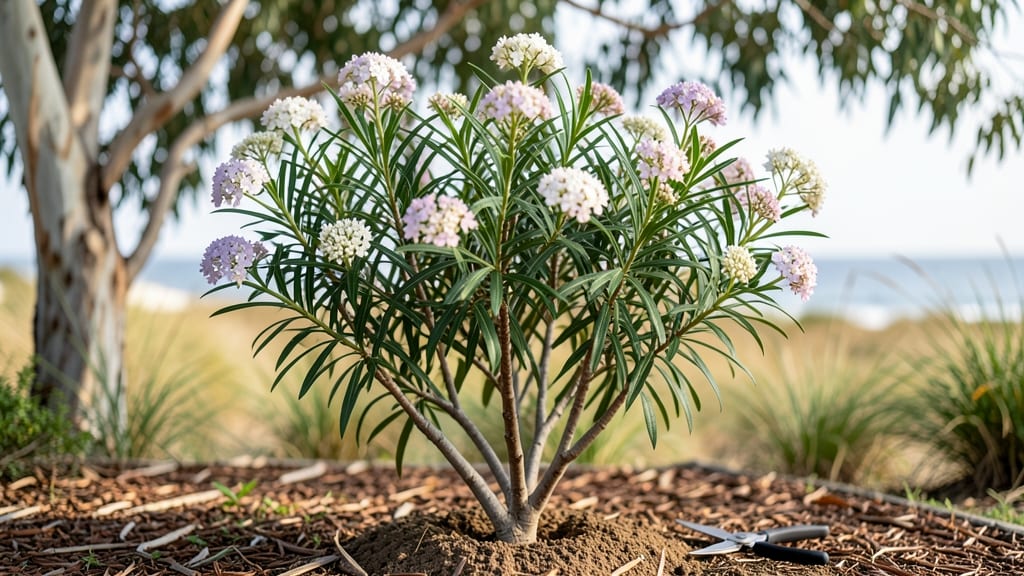
Your coastal tea tree (Leptospermum) won’t just survive pruning—it’ll reward you with shockingly lush growth and that signature honey-scented fragrance all year. 🌿 I’ve pruned mine every March for five years, and the difference between a neglected shrub and a thriving specimen is just a few strategic cuts.
The key? Timing, tools, and knowing where to stop before you strip the plant bare.
You’ll need basic pruning shears, a pair of gloves, and a clear morning to work—coastal tea trees respond best when pruned after flowering but before summer heat sets in. The goal is to shape the plant while encouraging new growth from the base, not just the tips.
Most gardeners over-prune, so I’ll show you how to recognize when you’ve done enough (hint: it’s when you see fresh green buds along the stems).
By summer’s end, you’ll have a vibrant green shrub with dense foliage and clusters of tiny white flowers that fill the air with fragrance. The pruning also keeps the plant compact, making it perfect for hedges, borders, or even as a standalone specimen.
Plus, you’ll avoid the woody, leggy look that plagues neglected tea trees.
Works in coastal climates from zones 9–11, though hardy varieties handle mild winters too. For those in colder regions, a little extra mulch in winter protects the roots. Let’s get those shears sharp and your tea tree thriving!
📚 In This Guide
- What you need
- Instructions
- Tips and common mistakes
- Wrapping up and next steps
What you need
- ● Pruning shears or secateurs: Sharp, bypass-style shears (to avoid crushing stems). Size: 6–8 inches for medium branches.
- ● Loppers: For thicker branches (½–1 inch in diameter). Quantity: 1 pair.
- ● Hand pruners: For small, precise cuts. Quantity: 1 pair.
- ● Gloves: Heavy-duty gardening gloves (to protect from thorns and sap). Material: Leather or reinforced fabric.
- ● Disinfectant (70% rubbing alcohol or bleach solution): To sterilize tools between cuts. Ratio: 1 part bleach to 9 parts water.
- ○ Pruning saw: Optional, for stubborn, thick branches (1–2 inches).
- ● Rag or paper towels: For wiping tools and absorbing sap.
- ● Marking twine or flags: To tag branches for removal (if planning a major shape-up).
- ● Compost bin: For collecting pruned branches (great for mulch!).
- ● Safety glasses: If dealing with large branches or debris.
Step-by-Step instructions for pruning coastal tea trees
Here's how to keep your leptospermum thriving with simple, seasonal cuts.
✂️ Step 1: Prune Lightly After Spring Flowering
Timing is everything with coastal tea trees. Wait until 2-3 weeks after flowering—when blooms fade but new growth hasn't started. This ensures you don't cut off next year's flowers. I like to work on a dry morning when the air feels crisp and still. Grab your bypass pruners and make clean cuts just above a leaf node or bud. Avoid cutting into old wood—you'll notice it's harder and darker than new growth.
Remove only 10-15% of the plant's total volume at this stage. Focus on shaping rather than heavy pruning. Look for branches that cross or rub against others—these are prime candidates for removal. You'll see where the natural shape wants to go once you start trimming. Thin out crowded areas to improve airflow and reduce disease risk.
🌿 Step 2: Light Summer Maintenance for Shape
In mid-summer, take a quick walk around your tea tree with your pruners. This isn't about heavy cuts—just tidy up any leggy growth or branches growing inward. I usually do this in July or August when the plant has established new growth but before fall dormancy begins. Use your fingers to gently bend branches—if they snap easily, they're ready to be trimmed back to a stronger growth point.
Watch for any dead or diseased branches. These will appear brown and brittle, often with no leaves. Cut these out completely at the base. Avoid cutting into healthy wood—you'll see the contrast immediately. A light summer trim keeps your tea tree looking neat without stressing the plant. Never remove more than 5-10% of the foliage during this maintenance.
⏰ Step 3: Prepare for Winter with Strategic Cuts
As temperatures drop below 45°F at night, it's time for your final pruning of the year. This isn't about shaping—it's about preparing the plant for dormancy. Focus on removing any remaining dead wood and any branches that grew too vigorously during the summer. Cut back these branches by one-third to encourage bushier growth next spring. I always do this in late October or early November before the first hard frost.
Pay special attention to the plant's center. Tea trees naturally grow outward, so the center can become dense and shaded. Thin out 2-3 of the oldest, thickest branches at the base to open up the center. You'll see where the light struggles to reach—this is your cue to make cuts. Avoid heavy pruning now, as new growth won't have time to harden off before winter.
☀️ Step 4: Post-Winter Inspection and Light Pruning
In early spring, before new growth begins, do a final inspection of your tea tree. This is your chance to clean up any winter damage and remove any branches that died back during the cold months. Use your pruners to make clean cuts just above a bud or leaf node. You'll notice new growth starting at the tips—wait until you see this before pruning.
If you notice any branches that look weak or diseased, remove them completely. You'll see these as branches with no leaves, brown color, or unusual spots. After pruning, give your tea tree a light application of organic mulch around the base to protect roots. This is the final step before the growing season kicks in—your plant will thank you with vigorous new growth and beautiful spring flowers.
Tips & tricks for pruning coastal tea trees
Keeping your leptospermum healthy year-round starts with these simple but powerful pruning strategies.
Timing is Everything: The 2-3 week window after spring flowering is non-negotiable for coastal tea trees. I've learned this the hard way—pruning too early cuts off next year's blooms, while waiting too long stresses the plant. Look for faded flowers but no new growth as your cue. This timing ensures you're working with the plant's natural cycle rather than against it.
Visual Cues for Clean Cuts: When making those clean cuts just above a leaf node in Step 1, here's what to watch for: new growth appears softer and lighter green than old wood. If you're unsure, gently scrape the bark with your fingernail—old wood will be harder and darker. This simple test prevents accidental damage to healthy branches that could take years to recover.
Seasonal Pruning Percentage Guide: The 10-15% rule in spring and 5-10% in summer might seem arbitrary, but it's based on how much stress your tea tree can handle. Think of it like a haircut—you wouldn't shave your head in one session! For a mature 5-foot tree, that's about 6-9 inches of growth you'd remove in spring. In summer, you're just doing maintenance, so think 3-4 inches total. Small cuts mean big results over time.
Winter Preparation Insight: That one-third cut back for winter branches might seem drastic, but it's about quality over quantity. You're not removing whole branches—just encouraging the plant to focus its energy on developing stronger, bushier growth next spring. The key is to make these cuts before the first hard frost when temperatures consistently drop below 45°F at night. This gives the plant time to heal before winter dormancy begins.
Pro Tips for Leptospermum Coastal Tea Tree
- Keeping your leptospermum healthy year-round starts with these simple but powerful pruning strategies.
- Timing is Everything: The 2-3 week window after spring flowering is non-negotiable for coastal tea trees.
- Visual Cues for Clean Cuts: When making those clean cuts just above a leaf node in Step 1, here's what to watch for: new growth appears softer and lighter green than old wood.
Frequently asked questions
Got questions about keeping your Leptospermum coastal tea tree thriving?
Here are answers to the most common ones—so you can prune with confidence and enjoy that signature eucalyptus-citrus scent all year!
When is the best time to prune my coastal tea tree?
The ideal time is late winter to early spring (just before new growth starts). This helps the tree recover quickly and avoids stressing it during hot summers. A light trim in summer can also encourage bushier growth, but avoid heavy pruning then—it’s tough on the tree!
How much can I trim without harming the tree?
You can safely remove up to 1/3 of the tree’s foliage in one session, but avoid over-pruning. Focus on shaping, removing dead branches, and thinning out crowded areas. Never cut into old wood—coastal tea trees struggle to regrow from mature branches. Think "less is more" for long-term health!
Why is my coastal tea tree dropping leaves after pruning?
This is normal if you pruned too aggressively or in peak summer. The tree may shed leaves to conserve energy, but it should recover in 4–6 weeks. To help, water deeply and avoid fertilizing until new growth appears. If leaves stay yellow or wilt, check for pests or root stress.
Can I propagate my coastal tea tree from cuttings?
Take 4–6 inch semi-hardwood cuttings in spring or early summer, strip the lower leaves, and dip in rooting hormone. Plant in a mix of perlite and peat, keep moist, and place in bright, indirect light. Roots should form in 4–8 weeks. A great way to share your favorite tree!
Does coastal tea tree need full sun, or can it tolerate shade?
While it thrives in full sun (6+ hours/day), coastal tea trees can handle partial shade, especially in hot climates. However, shade reduces flowering and fragrance. If growing in shade, prune lightly to encourage air circulation and prevent fungal issues. Morning sun is ideal—it balances growth and scent!
Wrapping up and next steps
Your Leptospermum coastal tea tree is now ready to thrive with year-round health and intoxicating fragrance! 🌿 By mastering the art of pruning—whether it’s shaping for aesthetics, promoting blooms, or maintaining vigor—you’ve given your tree the best care possible.
Remember, consistency is key, so check your tree regularly and adjust your approach based on its growth habits.
Now that you’re equipped with the knowledge, why not share your green thumb success? Snap a photo of your pruned tea tree in full bloom and tag us—we’d love to see your progress!
Or, if you’re feeling inspired, explore advanced pruning techniques to take your gardening skills to the next level. Happy pruning! ✂️🌸