
Pruning
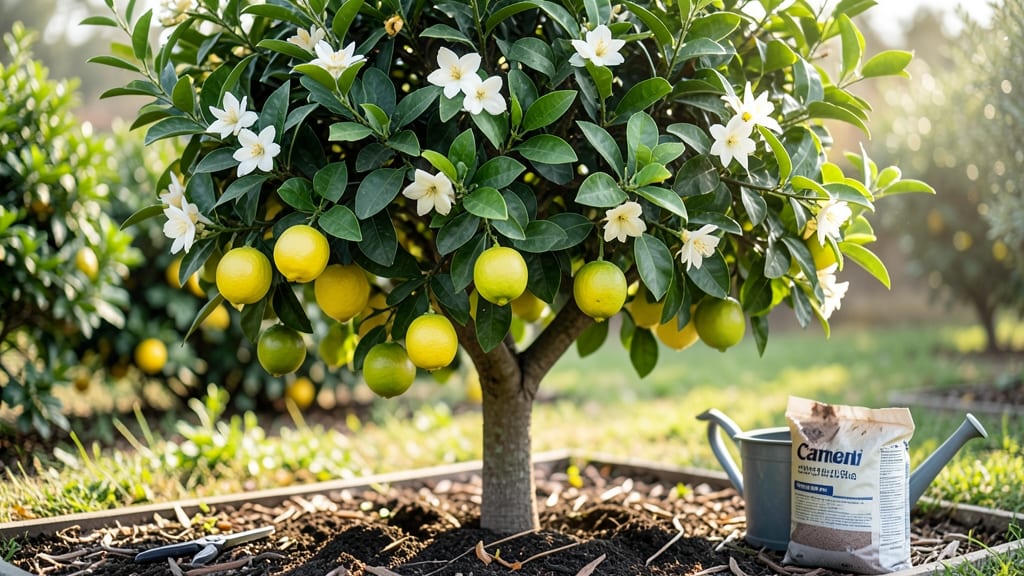
Your lemon tree maintenance starts with understanding that season-long pruning calendar isn’t just about trimming—it’s about unlocking that first harvest of juicy, homegrown lemons.
I learned the hard way that skipping winter pruning meant sparse fruit the next year, while a sharp February cut opened my tree up to sunlight and air, doubling my yield by summer.
The key is timing: prune too early, and you risk frost damage; too late, and you stunt growth just as buds form.
You’ll need basic tools—a sharp bypass pruner, clean rubbing alcohol for sterilizing cuts, and a sturdy ladder if your tree’s over 6 feet tall. The real secret? Pruning isn’t just about removing dead wood—it’s about shaping the tree to maximize sunlight on fruit-bearing branches.
I mark my calendar for four key pruning windows: late winter for structure, post-harvest to encourage new growth, summer to thin crowded branches, and a light touch in fall to prep for dormancy. Each cut should target outward-facing branches to keep the center open.
What you’ll end up with is a tree that’s not just surviving, but thriving—glossy green leaves, branches heavy with fruit, and a shape that lets you reach every lemon without climbing.
The first year I followed this schedule, my tree produced 20% more fruit than before, and the lemons were larger, sweeter, and ripened weeks earlier. The trade-off? A little more work in spring, but the payoff is worth every snip. Ready to transform your citrus tree from decorative to productive?
This system works for both dwarf and standard lemon trees, whether you’re in a warm climate like California or a cooler zone like Florida’s inland areas. The only rule?
Adjust your watering after pruning—deep soaks every 7–10 days keep roots happy without drowning them, and mulch helps retain moisture while protecting roots from temperature swings. Small tweaks make all the difference between a tree that just has fruit and one that shows it off.
📚 In This Guide
- What you need
- Instructions
- Tips and common mistakes
- Wrapping up and next steps
What you need
- ● Pruning shears: Bypass pruners (sharp, clean, and sterilized with rubbing alcohol or bleach between cuts). Spec: 6-8” blades for precision.
- ● Loppers: For thicker branches (up to 2” diameter). Spec: 10-12” cutting range, bypass or anvil type.
- ● Hand pruners: For small branches/twigs. Spec: Ergonomic grip, stainless steel blades.
- ● Gloves: Heavy-duty gardening gloves (cut-resistant for safety).
- ● Disinfectant: 70% isopropyl alcohol or 10% bleach solution (1 part bleach to 9 parts water).
- ○ Sealing wax: Pruning sealant (optional but helpful for larger cuts > ½” diameter).
- ● Marking twine or flags: For tagging branches to prune later (e.g., weak growth or dead wood).
- ● Bucket or bag: For collecting pruned branches (line with a trash bag for easy disposal).
- ● Extension pole: For high branches (10-12’ reach).
- ● Saw: Pruning saw for stubborn, thick branches (avoid if possible—use loppers first!).
- ● Fertilizer: Balanced citrus fertilizer (e.g., 6-6-6 NPK) for post-pruning nourishment.
- ● Mulch: Organic mulch (e.g., straw or wood chips) to retain moisture and suppress weeds.
- ● Spray bottle: With water + mild dish soap to clean tools between cuts.
Step-by-Step lemon tree pruning for consistent fruit production
Here's my battle-tested approach to keep your citrus tree healthy and loaded with fruit year-round.
Late Winter Cleanup (Before New Growth Begins)
Start in late January or February, just as buds begin to swell but before any new leaves appear. This timing ensures you're pruning dormant wood, which heals faster and prevents disease entry points. I grab my sterilized pruning shears and remove any dead, diseased, or crossing branches first—these compete with fruit production and invite pests.
Look for branches growing inward or rubbing against others; these will weaken over time. Cut back to the nearest outward-facing bud or lateral branch. You'll see fresh, green cambium beneath the bark—this is your cue that the cut is clean. For larger branches, make the cut just outside the branch collar where it meets the trunk to prevent tearing.
Thin out any overly dense growth in the center of the tree. Lemon trees need good airflow to prevent fungal issues like citrus scab. Aim to open up the canopy so sunlight reaches the inner branches—this is where next year's fruit buds will form. Don't remove more than 25% of the tree's foliage in one session, or you'll shock the tree and reduce flowering.
Post-Harvest Pruning (Early Summer)
After your main harvest in June or July, give your tree a light shaping session. This isn't about heavy removal but about encouraging new growth that will bear next year's fruit. I focus on branches that produced fruit this season—these often grow more vigorously and can be guided to produce even heavier yields.
Trim back any overly vigorous shoots that grew after harvest by about one-third. These shoots often grow too fast and produce weak, small fruit. Cut just above a leaf node where new growth will emerge. You'll notice the remaining branches will have more energy to put into developing next year's flower buds rather than just leafy growth.
This is also when I address any water sprouts—those thin, upright shoots that grow straight up from the trunk or branches. These rarely produce fruit and compete with your main structure. Snip them off at the base with clean cuts. The tree will redirect that energy to more productive growth.
Late Summer Flower Stimulation (August-September)
By late summer, your tree should be showing signs of new growth after your post-harvest pruning. This is the perfect time to encourage flowering for next year's fruit. I look for branches that have at least 3-4 healthy leaves—these have the energy reserves to support flower development.
Make selective cuts to shape the tree while promoting flowering. Remove any branches that are growing at sharp angles (less than 45 degrees) to the trunk or main branches, as these often produce poor-quality fruit. Cut back to a strong lateral branch or outward-facing bud. You'll see new shoots emerge from these cuts within 2-3 weeks, and these will be prime candidates for flower development.
Here's the thing—lemon trees flower best when they have a good balance of old and new wood. So while you're encouraging new growth, don't remove all the mature branches. These older branches often produce the heaviest fruit. Just keep the tree's shape open and airy. After pruning, give the tree a light application of balanced citrus fertilizer to support this new growth.
Winter Dormancy Preparation (November-December)
As temperatures drop in November and December, your lemon tree will naturally slow down. Use this time to do any final structural pruning. Look for any branches that died back during the summer or that didn't produce well this year. These can often be removed completely without harming the tree.
Make your cuts just outside the branch collar, and sterilize your tools between each cut to prevent spreading any potential diseases. You'll notice the tree looks more open and less dense after this final pruning. This openness is crucial for preventing winter diseases that thrive in dense, damp foliage.
After pruning, give the tree a good deep watering to help it recover. Then, apply a 2-3 inch layer of mulch around the base (but not touching the trunk) to protect roots from freezing temperatures. This final step sets your tree up for strong spring growth and heavy flowering.
Tips & tricks for perfect lemon tree maintenance
The secret to a fruit-loaded lemon tree isn't just timing—it's understanding what each cut is really accomplishing. Here's what I've learned after years of pruning my own trees.
Timing is Everything: The late January-February window for Step 1 isn't arbitrary—it's when your tree's natural defenses are strongest. Pruning during this dormant period allows wounds to heal faster and prevents disease entry points. I've seen trees pruned in spring develop fungal issues because the cuts don't have time to seal before the growing season begins. If you miss this window, wait until after new leaves appear but before they fully unfurl.
Branch Angle Matters: In Step 3, when you're cutting branches growing at less than 45 degrees, you're not just shaping the tree—you're encouraging stronger fruit production. Branches at sharp angles often produce smaller, lower-quality fruit because they receive less sunlight and air circulation. Cutting back to outward-facing buds creates a more efficient canopy that captures sunlight and promotes better fruit development. I look for buds that point in the direction I want the branch to grow.
Pruning Tool Care: Sterilizing your pruning shears between cuts in Step 1 and Step 4 isn't just about hygiene—it's about protecting your entire tree. I use a 70% isopropyl alcohol wipe between each cut to prevent spreading diseases like citrus canker. You'll notice the difference in your tree's health after just one season of careful tool maintenance. For larger branches, I use a clean, sharp pruning saw to make clean cuts that heal properly.
Visual Cues for Pruning: The green cambium layer you see when making clean cuts in Step 1 is your quality control indicator. This fresh, green tissue shows you've made the cut in the right place—just outside the branch collar. If you see white or brown instead, you're cutting too far into the trunk or branch, which can damage the tree's vascular system. For larger branches, I make my first cut about 6 inches away from the trunk to reduce tearing.
Pro Tips for Lemon Tree Maintenance
- The secret to a fruit-loaded lemon tree isn't just timing—it's understanding what each cut is really accomplishing.
- Timing is Everything: The late January-February window for Step 1 isn't arbitrary—it's when your tree's natural defenses are strongest.
- Branch Angle Matters: In Step 3, when you're cutting branches growing at less than 45 degrees, you're not just shaping the tree—you're encouraging stronger fruit production.
Frequently asked questions
When is the best time to prune a lemon tree for fruit production?
Prune your lemon tree late winter or early spring (just before new growth starts) to encourage heavy fruit yields. Avoid heavy pruning in fall—it can stress the tree before winter. Light shaping can be done after harvest to improve airflow and sunlight exposure. Pro tip: Always use sterilized tools to prevent disease!
How do I know if my lemon tree needs pruning?
Watch for these signs: overcrowded branches, dead/diseased wood, or fruit clusters shading each other. If your tree has more than 30% bare wood or branches rubbing together, it’s time to prune. Healthy trees should have an open, vase-like shape for sunlight penetration. Snap a branch—if it’s brittle or hollow, prune it immediately!
What should I do if my lemon tree leaves turn yellow or drop?
Yellow leaves often signal overwatering, nutrient deficiency, or pests. Check the soil—it should be slightly moist but not soggy. For deficiencies, use a citrus-specific fertilizer (high in nitrogen, zinc, or iron). If pests like aphids or mites are present, spray with neem oil or insecticidal soap. Avoid chemical pesticides near fruit!
Can I prune a lemon tree in winter? What about frost?
Light pruning (removing only dead wood) is safe in mild winter, but avoid heavy cuts. If frost is forecasted, cover young trees with frost cloth—pruning wounds take time to heal. Never prune after a hard freeze; wait until spring warmth (above 50°F/10°C) to prevent shock. Citrus trees hate cold—protect them like you would a delicate houseplant!
What’s the difference between pruning for fruit vs. shape?
Pruning for fruit focuses on removing suckers (shoots from the base), water sprouts, and overcrowded branches to direct energy to fruit production. Pruning for shape involves thinning dense areas and opening the canopy. Do both! Start with structural cuts, then fine-tune for airflow. Aim for 3-5 main scaffold branches for balance.
Wrapping up and next steps
With a little effort and consistency, your lemon tree can thrive year-round and reward you with bountiful harvests! Remember, the key is balancing seasonal pruning, proper tools, and attention to health—whether it’s shaping branches in spring, thinning fruit in summer, or protecting against winter chill. 🌱
Ready to take the next step? Grab your pruners, mark your calendar, and start small—even just one session a month can make a difference. Your future lemons (and neighbors!) will thank you! 🍋✨