
Pruning
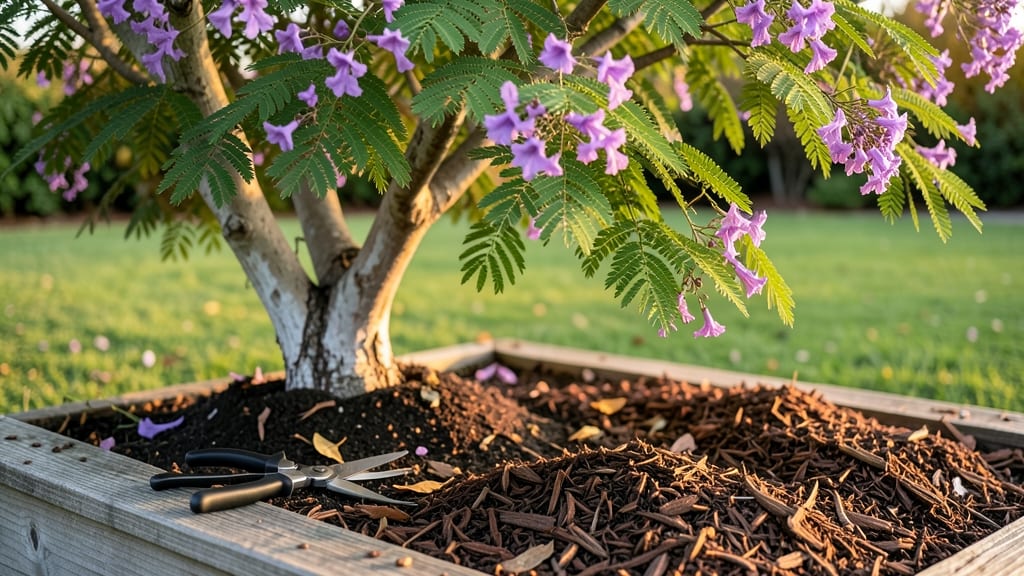
Jacaranda tree maintenance keeps those stunning purple blooms coming back year after year, and I’ve learned the hard way what works—and what doesn’t. The key isn’t just cutting branches but understanding when, how, and why to shape this drought-loving beauty.
My first jacaranda nearly lost its form after aggressive pruning, so I’ve since perfected a gentle, seasonal approach that preserves both health and those breathtaking cascades of flowers.
You’ll need sharp pruning shears, a ladder for higher branches, and a clear plan for timing—spring and summer are critical windows, while winter pruning risks frost damage. Jacarandas reward patience with vigorous growth and disease resistance, but they hate over-trimming.
Focus on removing dead wood, thinning crowded branches, and shaping for airflow, all while leaving enough foliage to fuel next season’s blooms.
By following this blueprint, you’ll end up with a tree that bursts into color every spring and stays strong through summer’s heat. The secret? Light touches, not heavy cuts—think sculpting, not hacking. You’ll notice new growth within weeks, with flowers appearing even more abundantly the following year.
Works for urban landscapes, suburban yards, or even large containers—just adapt the timing to your climate. Let’s get those branches looking intentional, not chaotic.
📚 In This Guide
- What you need
- Instructions
- Tips and common mistakes
- Wrapping up and next steps
What you need
- ● Pro Tip: 💡 Sharpen your tools beforehand! Dull blades tear bark and stress the tree—always keep shears and saws in top shape for clean cuts.
Seasonal trimming blueprint for healthy jacaranda trees
Here's how to keep your jacaranda thriving through every season with precision pruning.
Assess Growth and Identify Pruning Windows
The jacaranda's natural growth cycle dictates when you should prune—never cut back during late winter when buds are forming or summer when flowers are present. Instead, focus on early spring (just as new leaves emerge) and late fall (after foliage drops but before hard frost). Look for dead or crossing branches—these are your first targets, as they compete with healthy growth for nutrients.
Use a magnifying glass to examine branch junctions. Healthy growth shows smooth, green bark at the base of branches, while dead wood appears dry, cracked, or dark. Mark these branches with colored twine before you start cutting to avoid confusion mid-prune. This pre-assessment prevents over-trimming and ensures you only remove what's necessary for the tree's health.
Prune for Structure and Airflow
Begin by removing dead, diseased, or damaged branches first—these are the easiest to spot and should be cut back to the main trunk or lateral branch. Use clean, sharp pruning shears to make cuts at a 45-degree angle, about ¼ inch above a lateral bud or branch collar. This angle helps water runoff avoid pooling at the wound site, reducing rot risk.
Next, focus on thinning the canopy to improve airflow and sunlight penetration. Select branches that are growing inward or rubbing against others—these create weak points and encourage disease. Cut these back to the main trunk or a strong lateral branch, never leaving stubs. Aim to reduce the canopy by no more than 25% in a single session to avoid shocking the tree. You'll see new green shoots within weeks as the tree responds to improved light exposure.
Shape and Encourage Flowering
Jacarandas produce their iconic purple blooms on new wood, so avoid heavy pruning in the year you want a full display. Instead, lightly trim to shape the tree after flowering (late summer) by shortening overlong branches to encourage bushier growth. Use hand pruners for branches under ½ inch thick and loppers for thicker stems, always cutting just above a leaf node or bud.
To enhance flowering, prune selectively—remove only the oldest, woodiest branches that no longer produce blooms. These branches often appear thicker and less flexible than newer growth. After pruning, apply a wound sealant (like tree paint) only to cuts larger than ½ inch in diameter to prevent disease entry. The tree will reward you with more vibrant blooms the following spring if pruned correctly.
Clean Up and Monitor for Pests
After pruning, sterilize your tools with rubbing alcohol to prevent spreading disease between cuts. Collect all clippings and debris and dispose of them in a sealed trash bag—never leave them beneath the tree, as they can harbor pests like jacaranda psyllids or fungal spores. Rake away any fallen leaves or twigs to keep the base of the tree clean and dry.
Inspect the tree for signs of pests like aphids, scale, or borers—look for sticky residue (honeydew), tiny white insects, or sawdust-like frass near branch junctions. If you spot issues, treat with neem oil or insecticidal soap as needed. A healthy jacaranda should show fresh green foliage by early summer, with no visible signs of stress like yellowing leaves or excessive sap oozing from pruning wounds.
Adjust for Seasonal Needs
In winter, avoid pruning unless you must remove storm-damaged branches—jacarandas are dormant and heal slowly. Instead, focus on mulching the base with 2-3 inches of organic mulch to protect roots from freezing. In spring, resume light pruning to encourage new growth and shape the tree for the season ahead.
If your jacaranda is young (under 5 years old), limit pruning to removing only dead wood—these trees establish their root systems slowly and benefit from minimal intervention. Older trees can handle moderate pruning every 2-3 years to maintain their shape. Always prune after a rain when the tree is well-hydrated, as this reduces stress and promotes faster healing.
Tips & tricks for healthy jacaranda tree maintenance
Here's what I've learned from years of keeping jacarandas vibrant—these details make all the difference between a struggling tree and one that blooms spectacularly.
Timing is Everything: The early spring and late fall windows are non-negotiable for jacarandas. In Step 1, I can't stress enough how critical this is—pruning during these periods aligns with the tree's natural growth cycles. If you must trim outside these windows (like removing storm damage in winter), do so minimally and only when absolutely necessary. The tree's healing process slows dramatically during dormancy, making it far more vulnerable to stress.
Precision Cutting Technique: When you're making those 45-degree cuts in Step 2, focus on the angle's purpose: it directs water runoff away from the wound. I've seen too many pruning wounds develop rot because this basic technique was overlooked. Always cut just above a lateral bud or branch collar—this ensures new growth emerges in the right direction. For branches thicker than ½ inch, take your time; a clean cut prevents jagged edges that invite pests and disease.
Selective Pruning for Blooms: This is where most people go wrong in Step 3. Jacarandas bloom on new wood, so aggressive pruning the year you want flowers is a common mistake. Instead, focus on removing only the oldest, woodiest branches—those that appear thicker and less flexible. These are the branches that have stopped producing vibrant blooms. The selective approach maintains your tree's flowering potential while still improving its overall health and structure.
Post-Pruning Care: After you've finished in Step 4, don't just walk away. Sterilizing your tools with rubbing alcohol prevents cross-contamination between cuts, which is especially important when dealing with multiple branches. I've found that collecting all clippings in sealed bags makes a surprising difference in pest control—jacaranda psyllids and other insects often hide in fallen debris. The clean-up phase is just as important as the pruning itself for long-term tree health.
Pro Tips for Jacaranda Tree Maintenance
- Here's what I've learned from years of keeping jacarandas vibrant—these details make all the difference between a struggling tree and one that blooms spectacularly.
- Timing is Everything: The early spring and late fall windows are non-negotiable for jacarandas.
- Precision Cutting Technique: When you're making those 45-degree cuts in Step 2, focus on the angle's purpose: it directs water runoff away from the wound.
Frequently asked questions
Got questions about keeping your jacaranda tree thriving? Here are some of the most common concerns—and practical answers—to help you maintain this stunning tree with ease!
When is the best time to trim a jacaranda tree?
The ideal time to trim your jacaranda is right after it finishes blooming (usually late spring or early summer). This encourages fresh growth for next year’s vibrant purple flowers. Avoid heavy pruning in fall or winter, as it can stress the tree.
How do I prune a jacaranda tree without harming it?
Use clean, sharp pruners to make cuts just above a leaf node or bud. Never remove more than 25-30% of the canopy at once—this prevents shock. Focus on dead, diseased, or crossing branches first, then shape lightly for airflow and sunlight.
Why are my jacaranda leaves turning yellow or brown?
Yellowing leaves often signal overwatering, underwatering, or nutrient deficiencies. Check soil moisture (it should be dry but not bone-dry 2–3 inches deep). Brown edges may mean underwatering or sunburn. Adjust care and monitor for pests like jacaranda moths, which can also cause stress.
Can I grow a jacaranda tree in a container?
Yes! Jacarandas thrive in large containers (at least 18–24 inches wide) with well-draining soil. Use a fast-draining mix (like cactus/succulent blend) and repot every 2–3 years. Just know they’ll need regular pruning to control size and winter protection in cold climates.
What pests should I watch for in my jacaranda tree?
Common pests include:
- Jacaranda moths: Their larvae eat leaves—handpick or use neem oil.
- Scale insects: Sticky residue on branches? Scrape off or spray with horticultural oil.
- Spider mites: Tiny webs + speckled leaves? Blast with water or apply insecticidal soap.
Wrapping up and next steps
Caring for your jacaranda tree doesn’t have to be overwhelming—just follow the seasonal blueprint we’ve shared! With the right tools, timing, and techniques, you’ll keep your tree thriving and dazzling with vibrant blooms year after year. 🌿✨
Ready to take the next step? Start small: tackle one season’s tasks at a time, and soon, your jacaranda will be the envy of the neighborhood. Happy pruning!