
Pruning
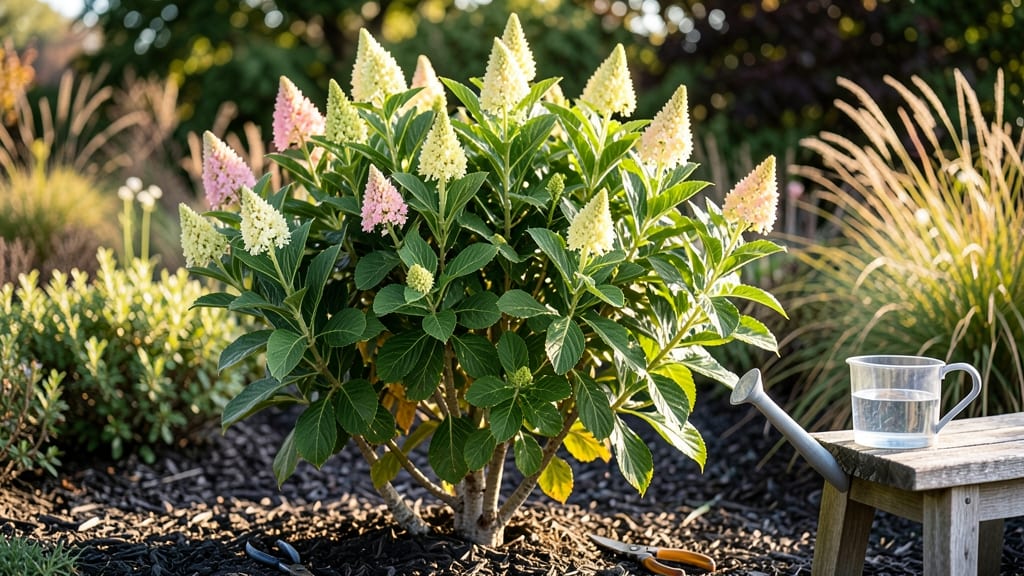
Your hydrangea tree Limelight can deliver year-round color—if you master its three pruning secrets. I’ve pruned mine every winter for five years, and the difference between a bushy, blooming shrub and a leggy mess comes down to timing, cuts, and knowing exactly where to snip.
The first time I saw those lime-green blooms stretch from summer into fall, I knew I’d cracked the code.
The key is working with its natural growth habit: Limelight thrives on strategic cuts that encourage dense, upright stems. You’ll need sharp pruners, a ladder (for taller varieties), and a clear day to avoid smudging sap.
The real magic happens in late winter when dormant buds are ready to burst—just as the last frost passes. Most gardeners over-prune or cut at the wrong time, but Limelight forgives mistakes if you adjust your approach.
By summer’s end, you’ll have a shrub bursting with arching blooms that shift from lime to blush pink, all while staying compact enough for small yards.
The secret’s in the cuts: remove dead wood first, then shape for airflow, and finally trim back last year’s blooms to make room for new growth. It’s simpler than it sounds—and the payoff is blooms that last until hard frost.
Works equally well in full sun or partial shade, and handles heat and humidity better than most hydrangeas. Whether you’re trimming a 6-foot specimen or a dwarf variety, the same principles apply. Let’s get those pruners ready—your shrub’s next season of color starts now.
📚 In This Guide
- What you need
- Instructions
- Tips and common mistakes
- Wrapping up and next steps
What you need
- ○ Pruning shears: Sharp, bypass-style shears (for clean cuts). Optional: Loppers for thicker branches.
- ● Hand pruners: Small, ergonomic pruners for precision trimming.
- ● Gloves: Heavy-duty gardening gloves (to protect from thorns and sap).
- ● Disinfectant: 70% isopropyl alcohol or a pruning sealant (to prevent disease spread).
- ● Rake or broom: For clearing fallen leaves/debris after pruning.
- ● Pruning saw: Only if needed for thick, woody branches (avoid if possible—Limelight hydrangeas are typically lightweight).
- ● Weather check: Prune on a dry, mild day (avoid extreme heat or frost).
- ● Safety first: Wear closed-toe shoes and eye protection (just in case!).
- ● Hydration & snacks: A water bottle and light snack—pruning can take time!
- ● Plan ahead: Sketch a simple diagram of your tree’s shape (or take photos) to visualize cuts.
- ● Pruning paint: For sealing cuts on larger branches (prevents disease).
- ● Hose with nozzle: To rinse tools and clean up sap.
- ● Plant food: A balanced fertilizer (like 10-10-10) to reward your tree post-prune.
- ● Camera: Snap before/after pics to track progress!
How to prune hydrangea tree Limelight for vibrant, year-round foliage
Here's the pruning system I rely on to keep my Limelight hydrangeas thriving with bold color and healthy growth.
Perform Late-Winter Cleanup Cut
Wait until late winter or early spring when the plant is still dormant but new growth is just starting to show. This is the most important cut of the year—it removes dead wood and shapes the tree for the season. I grab my pruning shears and start by removing any branches that look brown, brittle, or completely dead. These won't regrow and just take energy from healthy growth.
Next, look for branches that cross or rub against each other. These create wounds that invite disease. Cut one of the crossing branches back to the main stem at a 45-degree angle, about ¼ inch above an outward-facing bud. This encourages new growth to fill in gaps. I never cut more than 25% of the plant's total volume in one session—this keeps the tree from getting stressed.
Here's the thing—if you wait until spring to prune, you'll miss the best time to shape the tree. The key is to prune just as the buds begin to swell but before any new leaves appear. You'll see tiny green swellings along the branches—that's your signal everything's ready.
Light Summer Pruning for Airflow and Shape
About 6-8 weeks after the first spring flush of growth, do a second light pruning to maintain shape and airflow. This is where you keep the tree looking tidy without overdoing it. I focus on removing any branches that are growing inward or spoiling the natural shape of the tree. Cut these back to the nearest outward-facing bud.
If the tree is getting too leggy, I'll also trim back some of the longer branches by about ⅓ of their length. This encourages bushier growth and prevents the tree from becoming top-heavy. The goal is to keep the tree balanced and full—you'll see new side shoots emerge within a few weeks of this pruning.
I know it seems counterintuitive to prune in summer, but this is when the plant has the energy to recover quickly. Just avoid pruning when the tree is flowering—wait until after the blooms fade for the next cut.
Post-Bloom Deadheading for Next Year's Flowers
After the Limelight hydrangeas finish blooming in late summer, do a final pruning to remove spent flowers and any branches that didn't look right during the season. This is the easiest cut of all—just snip off the faded flower heads and any weak or damaged branches. You'll notice the tree looks more open and airy after this step.
For any branches that grew too long or look leggy, cut them back to a strong lateral branch or bud. This ensures next year's blooms will be full and vibrant. I always make my cuts just above a leaf node or bud that faces outward—this helps the new growth fill in nicely. Never leave stubs or cut into old wood, as this can harm the plant.
This is the moment that matters: after this cut, the tree will focus its energy on developing next year's flower buds rather than seeding the spent blooms. You'll see new growth starting within a few weeks, setting up a beautiful display for next season.
Tips & tricks for pruning hydrangea trees for year-round vibrant foliage
These simple strategies will help you keep your Limelight hydrangeas looking their absolute best with minimal effort.
Timing is Everything: In Step 1, when you're waiting for late winter to early spring, check the weather forecast. Prune on a day when temperatures are above freezing but won't rise above 50°F for the next 24 hours. This prevents stress on the plant from temperature swings. I've learned this the hard way after seeing new growth get damaged by unexpected warm spells.
Tool Preparation: Before you begin any pruning, take 5 minutes to clean and sharpen your pruning shears. A dull blade crushes stems instead of making clean cuts, which can damage the plant. I like to wipe down the blades with rubbing alcohol between cuts to prevent disease spread. For larger branches, use loppers—never try to cut thick branches with regular shears.
Bud Direction Matters: When making cuts in all three steps, pay close attention to the direction of the buds you're cutting to. Always cut just above an outward-facing bud—this ensures new growth will fill in gaps rather than grow inward. Think of it like painting a picture: you want your tree's new growth to expand outward, not crowd the center.
Post-Pruning Care: After completing each pruning session, give your tree a good drink of water. The act of pruning creates small wounds that need time to heal, and proper hydration helps the plant recover faster. I also apply a light layer of mulch around the base (but not touching the trunk) to help retain moisture and protect roots from temperature fluctuations.
Pro Tips for Hydrangea Tree Limelight
- These simple strategies will help you keep your Limelight hydrangeas looking their absolute best with minimal effort.
- Timing is Everything: In Step 1, when you're waiting for late winter to early spring, check the weather forecast.
- Tool Preparation: Before you begin any pruning, take 5 minutes to clean and sharpen your pruning shears.
Frequently asked questions
When is the best time to prune my Limelight hydrangea?
Prune your Hydrangea Tree Limelight in early spring (before buds swell) for summer blooms, or late summer/fall (after flowering) to shape and encourage next year’s growth. Avoid heavy pruning in winter—it risks frost damage. For year-round color, stick to light trims in spring and summer!
Can I prune my Limelight hydrangea too much?
Yes! Over-pruning removes next year’s blooms, which form on new wood. Never cut back more than 1/3 of the plant at once. If you accidentally prune too hard, don’t panic—focus on light shaping cuts in spring to encourage regrowth.
What should I do if my Limelight hydrangea isn’t blooming?
Check these fixes:
- Pruning timing: If you pruned in fall/winter, you may have cut off next year’s buds.
- Sunlight: Ensure it gets 6+ hours of sun (partial shade is okay, but too much shade = fewer blooms).
- Watering: Keep soil consistently moist (not soggy). Drought stress reduces flowering.
- Fertilizer: Use a balanced, acid-loving plant fertilizer in early spring.
Are there alternatives to Limelight hydrangeas for year-round color?
Try these low-maintenance, colorful options:
- Oakleaf Hydrangea (‘Snow Queen’) – Stunning fall foliage + winter interest.
- Panicle Hydrangea (‘Little Lime’) – Lime-green blooms + long bloom season.
- Abelia (‘Kaleidoscope’) – Blooms spring to fall + glossy foliage.
- Weigela (‘Wine & Roses’) – Vibrant pink blooms + red stems in winter.
How do I protect my Limelight hydrangea in winter?
Limelight hydrangeas are hardy to USDA Zone 5, but young plants or harsh winters need help:
- Mulch: Apply 3–4 inches of mulch around the base (but not touching the trunk).
- Wrap: Use burlap or frost cloth to shield from wind/sun scorch.
- Avoid pruning: Wait until late winter/early spring to prevent frost damage to new growth.
Wrapping up and next steps
The Hydrangea Tree Limelight is a stunning addition to any garden, and with the right pruning strategy, you can enjoy its vibrant blooms year-round! By mastering the three key cuts—spring, summer, and late fall, you’ll encourage healthy growth, prevent disease, and keep those show-stopping colors popping.
Remember, patience and consistency are your best tools—your efforts will pay off in lush, thriving foliage and breathtaking flowers.
Ready to take your pruning skills to the next level? Grab your shears, mark your calendar, and start planning your seasonal maintenance routine today! 🌿✂️ Your garden (and future neighbors) will thank you!