
Pruning
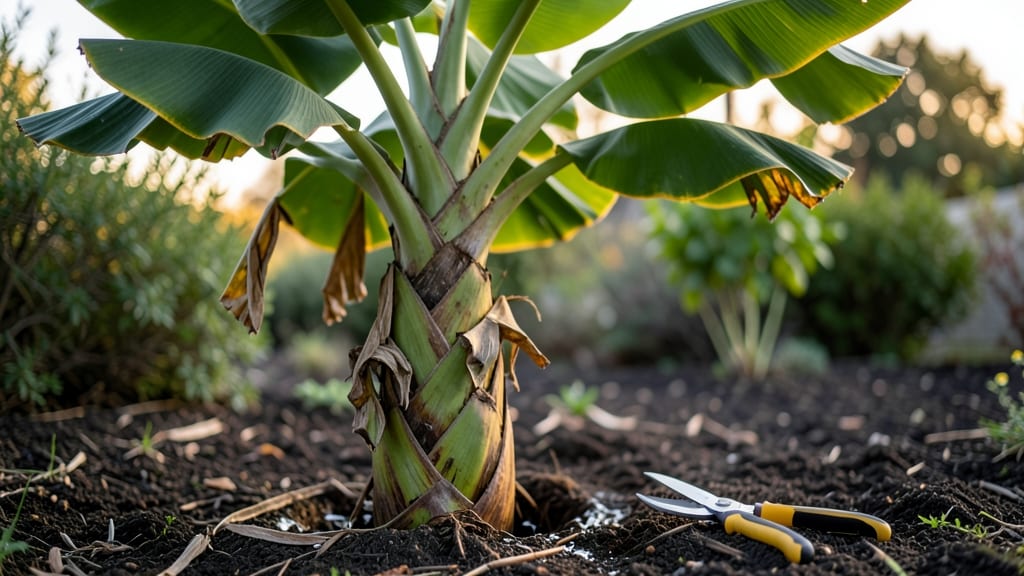
Trimming back a banana tree isn't just about tidying up—it's the secret to keeping your plant productive and healthy year after year.
I learned this the hard way when my first banana tree sent up a single, sad flower stalk after years of neglect, while my neighbor's tree produced three bunches in a single season. The difference? Strategic pruning that encourages regrowth while preventing disease.
You'll need just a few basic tools: sharp pruners for clean cuts, a disinfectant to prevent spreading disease between cuts, and a pair of gloves to protect your hands from the sharp edges of the pseudostem.
The key is timing—prune after harvest or during the dry season, never when the plant is actively fruiting. This gives the tree energy to recover and send up new shoots.
What you'll end up with is a banana tree that looks like a well-groomed palm, not a tangled mess. The new growth will be stronger, the fruit production will increase, and you'll avoid the common problem of the plant rotting from the inside out.
Plus, those fresh banana leaves make the best temporary shade for your patio or a stunning addition to your compost pile.
This method works for both dwarf and large banana varieties, whether you're growing in a tropical climate or a sunny container in zone 9. The principles stay the same—just adjust the scale of your cuts to match your plant's size. Let's get those pruners ready!
📚 In This Guide
- What you need
- Instructions
- Tips and common mistakes
- Wrapping up and next steps
What you need
- ● Pruning shears or loppers: Choose bypass pruners (for clean cuts) or loppers with 8–12" handles (for thicker stems). Disinfect blades with rubbing alcohol before and after use to prevent disease.
- ● Heavy-duty pruning saw: A bow saw or pruning saw with a 10–12" blade for cutting through thick pseudostems (trunks). Opt for a fine-tooth blade to avoid splintering.
- ● Gloves: Wear thick, cut-resistant gardening gloves (e.g., mechanics’ gloves) to protect against jagged edges and sap irritation.
- ● Ladder or step stool: A stable, 6–8 ft. ladder (with non-slip feet) or a telescoping step stool for reaching tall branches.
- ● Sharpie or marker: A permanent marker to label cuts (e.g., "harvest ready" or "disease-prone").
- ○ Disinfectant (optional but recommended): 70% isopropyl alcohol or a 10% bleach solution (1 part bleach to 9 parts water) to sterilize tools between cuts.
- ● Rake or broom: For clearing debris and fallen fronds after trimming.
- ● Compost bin or bag: To collect pruned material for mulch or disposal.
- ● Safety glasses: Protect your eyes from sap splashes or flying debris.
- ● Hose or bucket: A quick rinse can help remove sticky sap from tools and skin.
- ● Pruning sealant (for wounds): Tree wound paint (e.g., Tanglefoot Tree Wound Pruning Sealer) to coat large cuts and prevent rot.
- ● Timing: Trim during the dry season or when the tree is not actively fruiting (avoid heavy pruning during flowering).
- ● Weather: Choose a cloudy or overcast day to reduce stress on the tree (direct sun can scorch fresh cuts).
- ● Tree health check: Inspect the tree for pests (e.g., banana weevils) or diseases (e.g., Panama wilt) before pruning. Quarantine infected plants if needed.
- ● First aid kit: Keep antiseptic wipes and bandages handy for sap burns or minor cuts.
Step-by-step guide for pruning a banana tree
Here's how to keep your banana tree thriving with clean, strategic cuts that boost fruit production.
🌿 Step 1: Identify Healthy and Dead Growth
Start by examining the entire plant. Healthy leaves are upright, vibrant green, and firm to the touch. Look for leaves that are completely brown, yellowed at the edges, or hanging limp—they're ready for removal. I always check the pseudostem (the trunk-like structure) for any signs of rot or pests, which often appear as dark spots or webbing.
Use your fingers to gently test leaf stiffness. A healthy leaf should feel sturdy and slightly leathery, while dead leaves will crumble or feel brittle. Mark the leaves you plan to trim with a small piece of twine or a plant marker to avoid confusion later. This step ensures you only remove what's truly necessary, preserving the tree's energy for new growth.
✂️ Step 2: Remove Dead and Damaged Leaves
Grab a sharp pair of pruning shears or a clean, sterile knife. Hold the leaf at its base where it meets the pseudostem and make a clean cut about 1 inch above the point where the leaf meets the trunk. Avoid tearing the leaf—this can damage the pseudostem and invite disease. Work your way around the tree, removing all dead or damaged leaves systematically.
As you trim, notice how the tree's structure becomes more visible. The goal is to create an open, airy canopy that allows sunlight to reach the center of the plant. This encourages new, healthy leaves to grow from the heart of the tree. If you're unsure whether a leaf is dead or just struggling, wait a few days—sometimes leaves recover if given time and proper care.
🌱 Step 3: Trim Overcrowded or Weak Leaves
Now focus on the live leaves that are overcrowded or growing in weak, thin clusters. These leaves compete for sunlight and nutrients, weakening the tree's overall health. Look for leaves that are smaller than average or growing at odd angles. These are the ones to remove to encourage stronger, more productive growth.
When trimming, cut back to the point where the leaf stem is about half the size of a pencil. This ensures you're not removing too much of the pseudostem, which can harm the tree. After trimming, step back and observe the tree's shape. You should see a more balanced, open structure that allows light to penetrate evenly. This step is crucial for fruit production, as bananas grow best when the tree has plenty of light and air circulation.
☀️ Step 4: Clean Up and Monitor for New Growth
Once you've finished trimming, gather all the cut leaves and dispose of them in a sealed bag or compost pile. This prevents pests and diseases from spreading back to your tree. Wipe down your pruning tools with rubbing alcohol to sterilize them before storing. A clean workspace is just as important as clean cuts.
After pruning, keep an eye on the tree for new growth. Within 2-4 weeks, you should see fresh, vibrant leaves emerging from the center of the plant. These new leaves are a sign that the tree is healthy and recovering well. Water the tree deeply after pruning to help it adjust, but avoid overwatering, as this can lead to root rot. This final step ensures your banana tree stays on track for strong, productive growth throughout the year.
Tips & tricks for pruning a banana tree
These simple strategies will help you prune your banana tree like a pro—keeping it healthy and productive year after year.
Timing Secret: The best time to prune is right after your tree produces fruit, typically in late winter or early spring. This gives the tree energy to focus on new growth before the growing season kicks in. Avoid pruning during extreme heat or cold, as the tree needs time to recover. If you notice dead or damaged leaves at other times, remove them immediately to prevent pests and disease from spreading.
Tool Tip: Always use sharp, clean pruning shears or a sterile knife to make precise cuts. Dull tools can tear the leaves, damaging the pseudostem and leaving jagged edges that invite infections. After each cut, wipe your tools with rubbing alcohol to keep them sterile. I also recommend wearing gloves—banana leaves can be sharp and abrasive, and they sometimes carry irritating sap.
Visual Cue: In Step 3, when you're trimming overcrowded leaves, focus on creating an open canopy. The goal is to see sunlight reaching the center of the plant—this is where new leaves and fruit bunches will emerge. If you're unsure about a leaf, gently tug on it. If it resists, it's healthy; if it pulls away easily, it's ready to go. This simple test saves time and prevents over-pruning.
Recovery Strategy: After pruning, give your tree a deep watering to help it recover. The first 2-4 weeks are critical for new growth, so keep an eye out for fresh, vibrant leaves emerging from the center. If you notice yellowing or wilting during this time, it could signal overwatering or stress—adjust your care routine accordingly. A healthy tree will bounce back quickly with the right conditions.
Pro Tips for Trim Back A Banana Tree
- These simple strategies will help you prune your banana tree like a pro—keeping it healthy and productive year after year.
- Timing Secret: The best time to prune is right after your tree produces fruit, typically in late winter or early spring.
- Tool Tip: Always use sharp, clean pruning shears or a sterile knife to make precise cuts.
Frequently asked questions
Got questions about trimming your banana tree? You’re not alone! Here are answers to the most common concerns—so you can prune with confidence and keep your plant thriving.
When is the best time to trim a banana tree?
Trim your banana tree after it’s produced fruit (usually in late winter or early spring) or when fronds turn brown and die back. Avoid heavy pruning during active growth or flowering—this can stress the plant. For tropical climates, year-round light maintenance is fine, but major cuts should align with the plant’s natural cycle.
How do I know which fronds to cut back?
Remove only the oldest, outermost fronds (the ones closest to the trunk) that are completely brown and dry. Healthy green fronds should stay—these are still photosynthesizing! If you’re unsure, wait until a frond is fully dead before cutting. Never trim more than one-third of the plant at once to avoid shocking it.
Can I trim a banana tree too much?
Yes! Over-pruning—especially removing too many green fronds or cutting into the pseudostem (the trunk-like structure)—can weaken the plant, reduce fruit production, or even kill it. Stick to selective, strategic cuts and avoid "haircuts." If you’ve already trimmed too much, focus on care (water, fertilizer, shade) to help it recover.
What should I do with the cut fronds?
Use them! Compost the healthy, clean fronds to enrich your soil, or repurpose them as mulch for other plants. If fronds show signs of disease (spots, mold), dispose of them in the trash (not compost) to prevent spreading pests. Bonus: The fiber from banana fronds can even be used for crafts!
My banana tree has no fruit—did I prune wrong?
Not necessarily! Banana trees often need 1-2 years to mature before fruiting. If your plant is healthy but still not producing, check for:
If the tree is older and still barren, light pruning (not aggressive cuts) can encourage new growth—but don’t blame pruning alone!
Wrapping up and next steps
Trimming your banana tree isn’t just about aesthetics—it’s a year-round ritual that keeps your plant thriving, productive, and pest-free! 🌿 By following these steps—whether you’re pruning for health, fruit production, or aesthetics—you’ll ensure your banana tree stays strong and vibrant.
Remember, the key is timing, tools, and technique, so don’t hesitate to roll up your sleeves and get hands-on.
Now that you’re armed with the know-how, take action! Grab your pruners, pick a sunny day, and give your banana tree the TLC it deserves. And if you’re feeling inspired, why not share your progress or explore more banana tree care tips?
Your green thumb is about to shine brighter than ever! 🌟