
Pruning
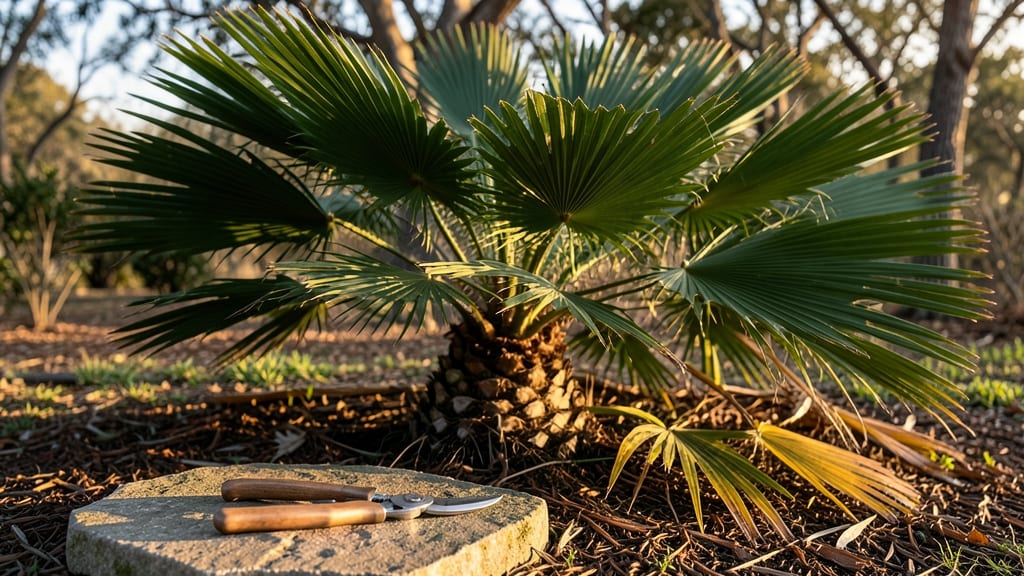
Trimming a palm tree isn't just about aesthetics—it's about keeping your tree thriving for decades. ✂️ I've learned that skipping this task leads to brown fronds piling up and stressing the trunk, but doing it right transforms your palm into a lush, healthy centerpiece.
The key is patience and precision, not hacking away like I used to.
You'll need sharp pruning shears, a sturdy ladder, heavy-duty gloves, and a bucket for debris. Timing matters too—remove dead fronds year-round, but avoid heavy pruning during droughts or extreme heat. Most palms tolerate light trimming any season, but spring is ideal for major work when new growth is starting.
What you'll achieve is a tree that looks naturally balanced with clean lines and vibrant new fronds emerging. The first cut reveals fresh green underneath those dried-out browns, and with proper technique, you'll encourage stronger growth at the crown.
Just avoid cutting into the trunk or removing more than a third of the fronds at once.
This method works for both indoor palms and outdoor varieties, though larger species might need professional help. The payoff? A palm that stays healthy, grows stronger, and keeps your landscape looking polished without the mess of old fronds dragging on the ground.
📚 In This Guide
- What you need
- Instructions
- Tips and common mistakes
- Wrapping up and next steps
What you need
- ● Pruning saw or handsaw – A bow saw (18-24" blade) or pruning saw with a fine-tooth blade for clean cuts (avoid dull tools—splintering = bad!).
- ● Heavy-duty gloves – Cut-resistant (e.g., mechanic’s or palm-tree-specific gloves) to protect from sharp fronds and sap.
- ● Safety goggles – ANSI-rated to shield eyes from debris and sap splatters.
- ● Ladder or lift (if needed) – Extension ladder (20-30 ft, aluminum or fiberglass for safety).
- ○ Palm tree trimmer (optional but handy for high-reach trimming without a ladder).
- ● Disposable pruning shears – For smaller cuts (e.g., dead fronds or suckers).
- ● Heavy-duty trash bags or tarp – To collect 30+ lbs of debris (palm fronds are heavy!).
- ● Rope or bungee cords – For securing debris or stabilizing the tree if needed.
- ● First-aid kit – Just in case (palm sap can irritate skin!).
- ● Pole saw – Extends reach for ground-level trimming (great for tall palms).
- ● Sap remover (e.g., citrus solvent) – Helps clean tools and prevent sticky buildup.
- ● Tree wound dressing (e.g., Tanglefoot) – For large cuts to prevent disease (use sparingly!).
- ● Work partner – Two hands are better than one for heavy fronds!
- ● Check local regulations – Some areas require permits for tree trimming over a certain height.
- ● Best time to trim – Late winter or early spring (avoid drought or extreme heat).
- ● Weather conditions – No wind or rain (slippery ladders + flying debris = recipe for disaster).
- ● Tree health check – Look for pests, disease, or structural issues before cutting.
Step-by-step instructions for trimming a palm tree safely
Here's the method I rely on to keep palms healthy and thriving year-round.
🌿 Step 1: Assess the Tree and Gather Tools
Start by examining your palm from the ground up. Look for dead fronds (brown, brittle leaves), hanging fronds (draping toward the ground), and crossing fronds (leaves growing directly over others). These are your targets. I always wear gloves and sturdy shoes—palm fronds have sharp edges that can cut through skin or even puncture shoes.
Gather your tools: a sharp pruning saw (for thick fronds), pruning shears (for smaller branches), and a ladder tall enough to reach the highest fronds you'll trim. I like to use a pole pruner for high branches to avoid climbing entirely. Safety first—if your tree is over 30 feet tall, consider hiring a professional arborist.
✂️ Step 2: Remove Dead and Hanging Fronds
Begin by cutting dead fronds at their base where they meet the trunk. These are the brown, dry leaves that no longer contribute to the tree's health. Make a clean cut just above the frond collar (the swollen area where the leaf attaches to the trunk). Avoid cutting into the trunk itself—this can introduce disease. I always cut parallel to the trunk to prevent tearing.
Next, tackle hanging fronds—these can become trip hazards and harbor pests. Cut them at the base, but leave 2-3 inches of the stalk attached. This prevents water from pooling in the cut and causing rot. If a frond is too heavy, cut it into 2-foot sections and lower them down piece by piece. Never drop large fronds—they can damage the tree or injure someone below.
🌱 Step 3: Thin the Canopy for Airflow and Light
Now focus on crossing fronds or overly dense areas. These block sunlight and airflow, which can lead to fungal issues. Use your pruning shears to trim smaller branches within the canopy, cutting just above a leaf node (where new growth emerges). For larger branches, use the pruning saw and make the cut at a 45-degree angle to shed water away from the cut.
Here's the thing—never remove more than 1/3 of the canopy at once. Palms are sensitive to over-trimming, and aggressive cuts can stress the tree or even kill it. I space out trimming sessions over several months if the tree looks crowded. Watch for new fronds emerging—this is your sign the tree is healthy and recovering well.
💧 Step 4: Clean Up and Protect the Tree
After trimming, remove all debris from the base of the tree. Leaving fronds on the ground can attract pests or fungi. I use a leaf blower to clear away small pieces and a rake for larger ones. Disinfect your tools with rubbing alcohol or a 10% bleach solution to prevent spreading disease between cuts.
Finally, apply a palm fertilizer (like a slow-release, balanced fertilizer) around the drip line (the edge of the tree's canopy). Water the tree deeply to help it recover. Avoid fertilizing immediately after heavy trimming—wait 2-3 weeks to let the cuts heal. You'll know you've done it right when the tree produces new, vibrant fronds within 3-6 months.
Tips & tricks for perfect palm tree trimming
Here's what nobody tells you about keeping your palm healthy after trimming—these tricks make all the difference.
Tool Prep is Non-Negotiable: Before you climb, sharpen your pruning saw and check your shears for rust. Dull tools tear fronds instead of making clean cuts, which stresses the tree. I always wipe blades with rubbing alcohol between cuts to prevent spreading disease from one frond to another. A 10% bleach solution works too, but rinse tools thoroughly after. This simple step prevents fungal infections that can kill your palm over time.
The 2-3 Inch Rule for Hanging Fronds: When removing hanging fronds, leaving that 2-3 inch stalk isn't just a suggestion—it's how you prevent water from pooling in the cut. I've seen too many palms develop rot because someone cut too close. Make your cut just above where the frond collar meets the trunk, then step back to check for any water collection spots. If you notice moisture pooling, trim another ½ inch higher.
Canopy Thinning Strategy: That 1/3 canopy rule isn't arbitrary—it's based on how palms photosynthesize. Remove more than that in one session, and you're essentially starving the tree. Here's my trick: mark your cuts with a piece of tape before making them. This visual guide prevents over-trimming when you're up in the tree. For large palms, I spread trimming over two seasons rather than one.
Post-Trim Recovery Hack: After cleaning up, mix your palm fertilizer with water and create small trenches around the drip line. This directs nutrients straight to the roots where they're needed most during recovery. I add a handful of compost to each trench—it's like giving your palm a vitamin boost. The key is patience: wait those 2-3 weeks before fertilizing, even if the tree looks sad. New fronds will emerge when it's ready.
Pro Tips for Trim A Palm Tree
- Here's what nobody tells you about keeping your palm healthy after trimming—these tricks make all the difference.
- Tool Prep is Non-Negotiable: Before you climb, sharpen your pruning saw and check your shears for rust.
- The 2-3 Inch Rule for Hanging Fronds: When removing hanging fronds, leaving that 2-3 inch stalk isn't just a suggestion—it's how you prevent water from pooling in the cut.
Frequently asked questions
Got questions about trimming your palm tree?
Here are some of the most common concerns—plus expert answers to keep your tree thriving safely and efficiently.
When is the best time of year to trim a palm tree?
The ideal time is late winter or early spring (just before new growth starts), when the tree is dormant but not yet stressed by summer heat. Avoid trimming during extreme weather—like drought or heavy storms—to prevent shock. Pro tip: If you spot dead fronds year-round, remove them promptly to prevent pests or disease.
How do I know if I’m over-trimming my palm tree?
Over-trimming happens when you remove more than 1/3 of the fronds at once or cut healthy green fronds. Signs include yellowing leaves, stunted growth, or exposed trunk. Always prioritize dead or brown fronds first—never trim live ones unless they’re obstructing views or power lines.
Can I use regular pruning shears instead of a chainsaw?
For small palms (like pygmy date palms), hand pruners or loppers work fine for fronds under 2 inches thick. But for mature palms with thick stalks, a chainsaw is safer and faster. Never use a chainsaw near power lines—hire a pro if you’re unsure. Safety first!
What should I do if my palm tree develops brown spots after trimming?
Brown spots often signal fungal infection or pest damage (like palm weevils). Clean cuts with a 10% bleach solution to prevent rot, and remove heavily infected fronds. Apply a copper fungicide if needed. If the issue persists, consult a local arborist.
Do I need to fertilize my palm tree after trimming?
Yes! Trimming stresses the tree, so apply a balanced palm fertilizer (high in potassium and magnesium) 4–6 weeks post-prune. Use a slow-release formula in early spring and fall. Avoid over-fertilizing—it can burn roots. Think of it as a post-surgery boost!
| Quick Troubleshooting Guide |
|---|
| Problem: Fronds won’t drop naturally |
| Fix: Use a clean cut near the trunk (don’t leave stubs). If fronds stay green but droop, they’re likely dead—trim them! |
| Problem: Sawdust or resin buildup |
| Fix: Wear gloves and goggles. Clean up debris promptly to avoid mold or pests. |
Wrapping up and next steps
Trimming your palm tree doesn’t have to be intimidating—with the right tools, timing, and technique, you can keep it healthy and stunning all year long! 🌿 Remember to prioritize safety (wear gloves and goggles!), selectivity (focus on dead or overgrown fronds), and patience (don’t rush those stubborn cuts).
Now that you’re armed with knowledge, grab your pruners and give your palm tree the care it deserves. Pro tip: Schedule a quick check every few months to spot early signs of trouble—prevention is always easier than a full-scale rescue! 💡
Ready to tackle the task? Start small, stay consistent, and watch your palm thrive!