
How To
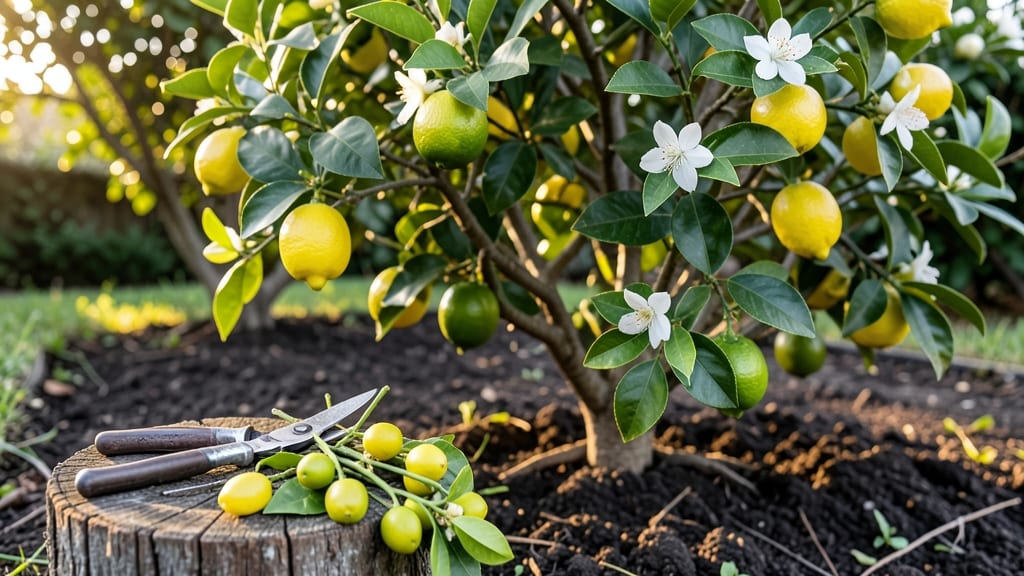
Pruning your lemon tree isn’t just about shaping it—it’s about unlocking bigger fruit, stronger growth, and fewer pests year-round. 🌿 I’ve pruned citrus for over a decade, and the difference between a neglected tree and one that bears lemons like a pro comes down to three strategic cuts.
The best part? You can do it in just 20 minutes with the right tools.
Timing matters most: prune lightly after harvest (late winter) to encourage spring blooms, then again in summer to shape the canopy and remove dead wood. Indoor trees need the same approach, but watch for drafts—citrus hate sudden temperature swings.
One wrong cut can stress the tree, so we’ll focus on clean, angled snips that heal fast and stimulate new growth where you want it.
📚 In This Guide
- What you need
- Instructions
- Tips and common mistakes
- Wrapping up and next steps
What you need
- ● Pruning shears (bypass or anvil type) – Choose sharp, clean shears (4–6 inches) for small branches. Disinfect with rubbing alcohol between cuts to prevent disease.
- ● Loppers (for thicker branches) – Opt for bypass loppers (18–24 inches) for branches ½ to 1.5 inches thick—they make cleaner cuts.
- ● Pruning saw (for large limbs) – A curved-tooth handsaw for branches over 1.5 inches in diameter. Never use a chainsaw!
- ● Gloves (cut-resistant or gardening gloves) – Protect your hands from thorns and sap. Leather or heavy-duty fabric works best.
- ● Disinfectant (rubbing alcohol or 10% bleach solution) – Sterilizes tools between cuts to avoid fungal/bacterial spread.
- ● Rag or paper towels – For wiping down tools and hands.
- ● Bucket or trash bag – Collect pruned branches for compost or disposal.
- ● Pole pruner (for high branches) – Extendable shears (10–12 feet) for hard-to-reach limbs.
- ● Ladder (stable, non-slip) – Only if your tree is over 6 feet tall. Safety first!
- ● Hand sanitizer or soap – Keeps your hands clean after handling sap.
- ○ Tree wound sealant (optional) – Only use on large cuts (2+ inches) to prevent disease. Skip for small pruning cuts!
- ● Notebook & pen – Jot down notes on cuts made for future reference.
Step-by-step guide to pruning your lemon tree
Here’s the method I’ve used for years—simple, effective, and tailored to keep your tree thriving.
✂️ Step 1: Remove Dead or Diseased Branches First
Start by scanning the tree for any branches that are brown, brittle, or showing signs of disease like black spots or mold. These are your top priority—they won’t recover and can spread problems to healthy wood. Use sharp, clean pruning shears to make a clean cut just outside the branch collar, where the branch meets the trunk or larger branch.
I always work from the bottom up. This way, you won’t accidentally block access to higher branches with fallen debris. If a branch is thicker than your shears can handle, use a pruning saw instead—never tear it off. You’ll know you’ve done it right when the cut is smooth and the tree’s structure looks more open.
✂️ Step 2: Thin Out Overcrowded or Crossing Branches
Next, focus on branches that are rubbing against each other or growing inward toward the center of the tree. These compete for sunlight, water, and nutrients, and they’re prone to splitting or breaking. Look for branches that are growing at sharp angles or directly into the heart of the tree—these are the ones to remove.
When thinning, cut back to a healthy outward-facing branch or bud. Aim for an open, vase-like shape that allows sunlight and air to reach the center. I like to step back every few cuts to visualize the tree’s form. If you’re unsure, less is more—you can always prune more later, but you can’t undo a hasty cut.
☀️ Step 3: Shape the Tree for Light and Airflow
Now, it’s time to shape the tree for better fruit production and overall health. Focus on reducing the density of foliage, especially in the lower third of the tree. This encourages sunlight to reach the lower branches, where fruit often ripens best. Cut back any branches that are growing straight up—these are called “water sprouts” and drain energy from the tree.
For structural branches, aim to create a balanced shape with a strong central leader (the main upward-growing branch). If your tree is mature, you might also prune to remove older branches that are no longer producing well. Always make cuts at a 45-degree angle just above a leaf node or bud. This ensures the tree can seal the wound quickly and regrow properly.
⏰ Step 4: Time Your Pruning for Best Results
The best time to prune a lemon tree is in late winter or early spring, just before new growth begins. This gives the tree time to heal before the growing season kicks in. Avoid heavy pruning in fall, as it can stimulate new growth that won’t harden off before winter. Light pruning to remove dead or diseased branches can be done year-round, though.
If you’re pruning in summer, do it early in the morning to reduce stress on the tree. Water deeply before and after pruning to help the tree recover faster. You’ll notice new shoots emerging within a few weeks—that’s a sign your pruning is working. Just keep an eye out for any signs of stress, like yellowing leaves, and adjust your care accordingly.
Tips & tricks for perfect lemon tree pruning
Pruning your lemon tree right makes all the difference between a struggling bush and a fruit-bearing powerhouse. Here's what I've learned from years of trial and error.
Tool Prep is Critical: Before you even touch a branch, sterilize your pruning shears and saw with rubbing alcohol. Diseased branches can spread pathogens through your tools. I keep a small bottle of alcohol in my gardening toolkit for quick clean-ups between cuts. Also, make sure your blades are sharp—dull tools crush wood instead of making clean cuts, which stresses the tree and invites infection.
Step 2 Visualization Hack: When thinning branches in Step 2, imagine you're looking at the tree through a donut—you want sunlight and air to flow through the center. Hold your arms out like a goalpost and step back frequently. If you can't see through the center, you haven't thinned enough. I've learned this the hard way after ending up with a dense center that never produced fruit.
The 45-Degree Angle Secret: That precise 45-degree angle in Step 3 isn't just about looks—it's about the tree's healing process. Cutting just above a leaf node at this angle creates a natural shield that protects the wound from rain and pests. If you're struggling to visualize 45 degrees, try this trick: make your cut so the top edge is about the width of your thumbnail from the branch collar, then angle it down toward the bud.
Seasonal Timing Reminder: While late winter/early spring is ideal, don't stress about getting it perfect. The instructions mention you can do light pruning year-round, but here's the thing: if you must prune in summer, limit yourself to removing only dead or diseased branches. New growth stimulated by summer pruning won't have time to harden off before winter, making it vulnerable to cold damage.
Pro Tips for Prune Lemon Tree
- Pruning your lemon tree right makes all the difference between a struggling bush and a fruit-bearing powerhouse.
- Tool Prep is Critical: Before you even touch a branch, sterilize your pruning shears and saw with rubbing alcohol.
- Step 2 Visualization Hack: When thinning branches in Step 2, imagine you're looking at the tree through a donut—you want sunlight and air to flow through the center.
Frequently asked questions
Got questions about pruning your lemon tree? You’re not alone! Here are answers to the most common concerns—so you can keep your citrus thriving without the guesswork.
When is the best time to prune a lemon tree?
Prune your lemon tree three times a year: late winter (before new growth starts), summer (after harvest), and early fall (to shape for winter). Avoid pruning in extreme heat or cold—aim for mild, dry days to prevent stress.
Can I prune a lemon tree too much?
Yes! Over-pruning (removing more than 25-30% of foliage at once) weakens the tree, reduces fruit production, and invites pests. Stick to strategic cuts—focus on dead wood, crossing branches, and shaping—rather than drastic trims.
What if my lemon tree bleeds sap after pruning?
Sap bleeding (a sticky residue) is normal for citrus trees and harmless. It’s the tree’s way of sealing wounds. To minimize it, prune during dry weather and use clean, sharp tools. Avoid fertilizing right after pruning—wait 4-6 weeks to let cuts heal.
Should I prune flowering branches?
Yes, but selectively! Remove only spent or weak flowering branches to encourage healthier, fruit-bearing growth. Leave vigorous blooms intact—they’ll produce your next harvest. Pro tip: Prune after flowers fade to avoid cutting off potential fruit.
What if my lemon tree doesn’t fruit after pruning?
Several factors could be at play: age (young trees need 2-3 years to bear fruit), light (6+ hours of sun daily), or nutrients (check soil pH and fertilizer). If pruning was too aggressive, give the tree 1-2 seasons to recover. For stubborn cases, test soil and adjust care.
Do I need special tools for pruning?
Not necessarily! Start with clean, sharp bypass pruners (for small branches) and loppers (for thicker stems). For large limbs, a pruning saw works best. Sterilize tools with rubbing alcohol between cuts to prevent disease. No fancy tools? Even a sharp knife works in a pinch—just disinfect it first!
Wrapping up and next steps
Pruning your lemon tree isn’t just about shaping—it’s about revitalizing your plant for healthier growth, sweeter fruit, and a stronger structure. 🌿 With the right tools, timing, and techniques (like thinning cuts, heading back, and removing dead wood), you’ll keep your tree thriving year-round.
Remember, consistency is key, so schedule those seasonal checks and enjoy the rewards of your hard work!
Ready to take the next step? Grab your pruners, review your supplies, and start pruning with confidence. Your lemon tree—and your future harvest—will thank you! 🍋✨