
How To
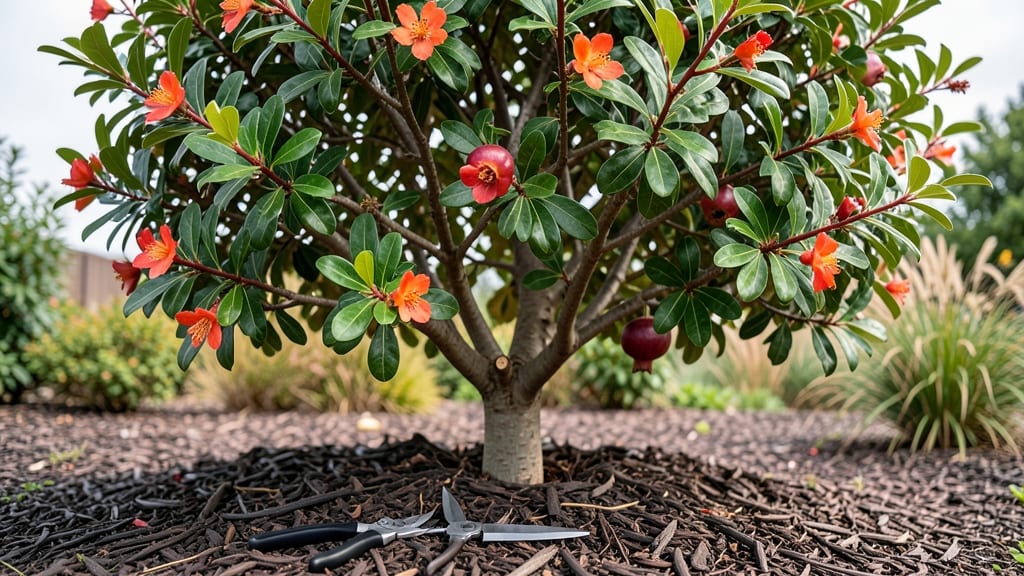
Pruning a pomegranate tree boils down to three strategic cuts that unlock bigger fruit and sturdier branches. 🌱 I’ve watched my own tree go from scraggly to productive after mastering these simple moves—no fancy techniques, just sharp cuts at the right time.
The key? Timing matters more than technique, and winter’s the perfect window to shape your tree without stressing it.
You’ll need just three tools: pruning shears for small branches, loppers for thicker limbs, and gloves to handle the thorns. The real work happens in late winter or early spring, when the tree’s dormant and vulnerable cuts won’t trigger disease.
Focus on removing dead wood first, then thin crowded branches to let sunlight reach the center—this is where the magic happens for fruit production.
📚 In This Guide
- What you need
- Instructions
- Tips and common mistakes
- Wrapping up and next steps
What you need
- ● Pruning shears – Bypass pruners (sharp, clean, and 5-7 inches long) for small branches (up to ½ inch thick). Anvil pruners can crush stems, so avoid them!
- ● Loppers – Bypass-style (not anvil!) for branches ½ to 1.5 inches thick. Look for long handles (18+ inches) for leverage.
- ● Pruning saw – A curved-tooth handsaw for branches over 1.5 inches thick. Dull saws tear wood, so keep it sharp!
- ● Disinfectant – 70% isopropyl alcohol or a 10% bleach solution to sterilize tools between cuts (prevents disease spread).
- ● Gloves – Heavy-duty, cut-resistant gloves (pomegranate thorns are no joke!).
- ○ Rubbing alcohol or hand sanitizer – For cleaning cuts on the tree (optional but helps prevent infection).
- ● Sealing wax or pruning paste – Apply to large cuts (½ inch or wider) to protect the tree from pests and disease.
- ● Tarp or drop cloth – Lay beneath the tree to catch fallen branches and debris (makes cleanup a breeze!).
- ● Marking spray or twine – Useful for tagging branches to remove before making cuts (helps avoid mistakes).
- ● Safety glasses – Protects your eyes from flying debris, especially when sawing thick branches.
- ● Ladder or stool – If your tree is taller than 6 feet, use a stable, 3-sided ladder (never a step stool!).
Step-by-step guide to pruning a pomegranate tree
Pruning pomegranates isn't just about shaping—it's about unlocking bigger fruit and healthier growth.
✂️ Step 1: Remove Dead or Diseased Wood First
Start by scanning the tree for any branches that are brown, brittle, or showing signs of disease like black spots or oozing sap. These are your top priority—cut them out completely at the branch collar, the swollen area where the branch meets the trunk. Use clean, sharp pruners to make a smooth cut at a 45-degree angle, about ¼ inch above the collar.
I always do this first because dead wood can harbor pests and diseases that spread to healthy branches. If you see any suckers growing from the base or trunk, snip those too—they sap energy from your main tree. Work methodically from the bottom up, so you don’t miss any hidden damage higher in the canopy.
✂️ Step 2: Thin Out Overcrowded Branches
Now focus on the tree’s structure. Pomegranates thrive when they have good airflow, so look for branches that cross each other or grow too close together. These compete for sunlight and nutrients, leading to smaller fruit. Select the weaker of the two branches—it’ll be thinner or less vigorous—and cut it back to the branch collar. Aim to space branches about 12-18 inches apart on mature trees.
Here’s the thing—pomegranates fruit on new wood, so you want to encourage outward growth. If you see a branch growing straight up (called a "water spout"), cut it back by ⅓ to ½ to redirect energy outward. You’ll know you’re doing it right when you see more light reaching the center of the tree.
✂️ Step 3: Shape for Light and Airflow
This is where you fine-tune the tree’s shape. Pomegranates naturally grow bushy, but they need occasional pruning to maintain an open center. Start by removing any branches that grow inward toward the trunk—these block sunlight and create shady spots where fruit won’t ripen well. Cut these back to the branch collar or to a lateral branch that grows outward.
For mature trees, limit your cuts to no more than 25% of the tree’s foliage in one season. Prune in late winter or early spring, just before new growth begins. Avoid pruning in fall, as it can stimulate tender new growth that won’t survive winter frosts. If you’re unsure about a cut, err on the side of caution—you can always prune more next year.
⏰ Step 4: Clean Up and Monitor
After pruning, rake up and dispose of all clippings—don’t leave them under the tree. They can harbor pests or diseases. Sterilize your pruners with rubbing alcohol between cuts to prevent spreading pathogens. Now’s also a great time to apply a balanced fertilizer (like 10-10-10) to support new growth, but hold off until you see fresh green shoots emerging.
Watch the tree closely after pruning. Within 2-3 weeks, you should see new buds forming at the pruning cuts. If you notice any oozing sap or unusual wilting, it could signal stress or infection. A light application of copper fungicide can help prevent disease if you’re in a humid climate. Pomegranates are tough, but they reward careful pruning with bigger, sweeter fruit.
Tips & tricks for pruning a pomegranate tree
Here's what nobody tells you about pruning that'll transform your tree's health and fruit production.
Tool Prep Matters: Sharpen your pruners before you start—dull blades tear wood instead of making clean cuts. I learned this the hard way after ruining three pruning sessions with jagged cuts that healed poorly. Sterilize blades with rubbing alcohol between cuts to prevent spreading disease from infected branches to healthy ones. A small investment in quality pruners makes all the difference—look for bypass pruners with comfortable grips for extended use.
Branch Collar Awareness: The branch collar is your guidepost for perfect cuts. Never cut flush with the trunk—always leave that ¼ inch above the collar. This swollen area contains protective tissues that help wounds heal faster. If you cut too close, you risk damaging the tree's natural defenses against infection. Think of it as the tree's bandage—preserve it to keep your pomegranate healthy.
Season Timing Secret: Late winter or early spring is ideal because the tree is dormant but about to burst with new growth. This timing gives your cuts plenty of time to heal before summer's heat stress. Avoid fall pruning—new growth stimulated by late cuts won't survive winter frosts. If you must prune in summer, do it on a cool, cloudy day to reduce stress on the tree.
Growth Monitoring: After pruning, watch for new buds forming within 2-3 weeks at your pruning cuts. These buds indicate successful pruning and signal the tree's recovery. If you notice excessive sap oozing or wilting, your cuts might be too severe. In humid climates, apply a light copper fungicide as a preventative measure—it's like giving your tree a protective shield against potential infections.
Pro Tips for Prune A Pomegranate Tree
- Here's what nobody tells you about pruning that'll transform your tree's health and fruit production.
- Tool Prep Matters: Sharpen your pruners before you start—dull blades tear wood instead of making clean cuts.
- Branch Collar Awareness: The branch collar is your guidepost for perfect cuts.
Frequently asked questions
Got questions about pruning your pomegranate tree? You’re not alone! Here are some of the most common concerns—and straightforward answers—to help you prune like a pro.
When is the best time to prune a pomegranate tree?
Prune your pomegranate tree late winter or early spring, just before new growth begins (typically February–March in most climates). Avoid pruning in fall, as this can stimulate tender new growth that may not survive winter. If you must prune for safety (e.g., removing dead branches), do it immediately—just keep cuts clean and minimal.
What if I prune at the wrong time?
Pruning at the wrong time (like summer or fall) won’t kill your tree, but it can stress it. Late-summer pruning may reduce next year’s fruit set, while fall pruning risks frost damage to fresh cuts. If you’ve already pruned outside the ideal window, don’t panic—just focus on minimizing stress by keeping cuts sharp and avoiding over-pruning.
Will pruning reduce my pomegranate harvest?
Not if done correctly! Pruning actually boosts fruit production by improving airflow and sunlight penetration. However, over-pruning (removing more than 25% of the canopy) can reduce yields. Aim for 3 key cuts: removing dead wood, thinning crowded branches, and shaping for sunlight access. Patience pays off—healthy trees reward you with bigger, sweeter fruit!
Do I need special tools to prune a pomegranate tree?
Basic tools work great! You’ll need:
- A sharp bypass pruner (for small branches)
- Loppers (for thicker branches, ½–1½ inches)
- Pruning saw (for stubborn, woody stems)
- Gloves (pomegranate thorns are no joke!)
- Disinfectant (rubbing alcohol or bleach solution to sterilize tools between cuts)
What if my pomegranate tree isn’t fruiting after pruning?
Several factors could be at play:
- Age: Young trees (under 3 years) focus on growth, not fruit. Be patient!
- Light: Pomegranates need full sun (6+ hours daily). If shaded, relocate or thin nearby branches.
- Soil/nutrients: Test soil pH (ideal: 5.5–7.0) and amend with compost or citrus-specific fertilizer if needed.
- Pollination: Pomegranates are self-pollinating, but bees help! Plant near other fruit trees or use a small brush to transfer pollen if bees are scarce.
Wrapping up and next steps
Pruning your pomegranate tree isn’t just about shaping—it’s about boosting fruit production and keeping your tree healthy! By mastering those three key cuts (removing dead wood, thinning crowded branches, and opening the canopy), you’ll encourage stronger growth and sweeter harvests. 🌱
Ready to see your tree thrive? Grab your pruners and start today! For even more tips, check out our guide on seasonal care for pomegranate trees—your next step to a flourishing garden. 🍇