Planting
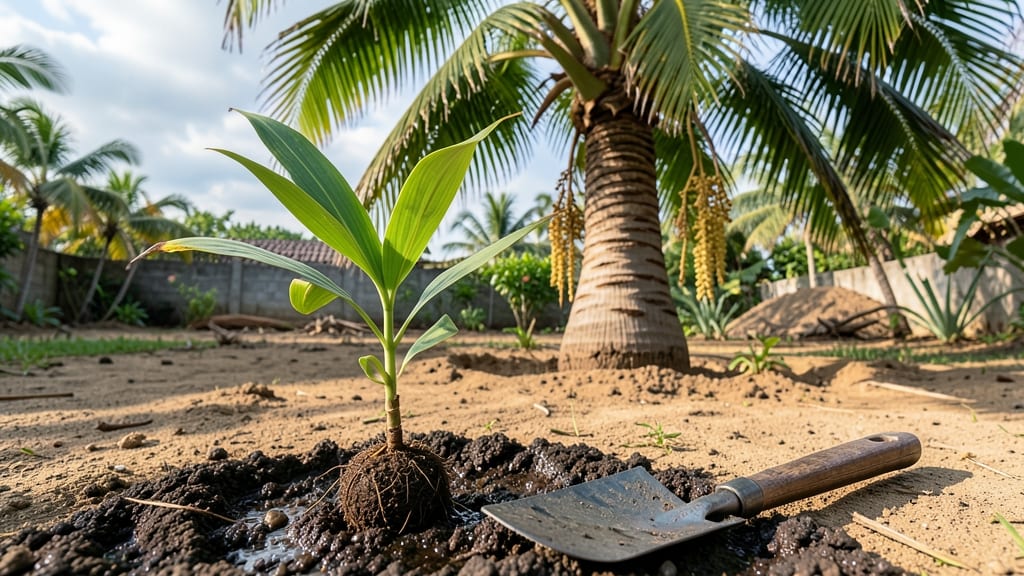
Planting a coconut palm tree brings a taste of paradise to your yard—if you nail the location, soil, and timing. 🌴 I’ve learned the hard way that these tropical giants demand perfect conditions, but with the right approach, they thrive even in subtropical zones.
The secret starts with well-draining soil and full sun exposure, or you’ll watch your palm struggle within months.
Most people overlook soil prep, but coconut palms hate soggy roots. Mix in sand or perlite to improve drainage, and plant at the same depth as the nursery container. In warmer climates, they’ll grow fast—6-10 feet in 5 years—but colder snaps mean container growing or heavy mulching.
The key is mimicking their natural habitat: heat, humidity, and sandy soil.
After planting, water deeply once a week for the first month, then taper off as roots establish. Yellowing fronds? Usually overwatering. Brown tips? Dry air or salt buildup.
With proper care, you’ll see that signature fan-shaped foliage within 3-6 months, and the trunk will thicken like a real tropical specimen. Patience is everything—these palms reward long-term commitment.
For cooler climates, opt for dwarf varieties like Cocos nucifera ‘Malayan Dwarf’ or grow in large containers you can winter-protect. Avoid planting near sidewalks—their roots spread aggressively. Once established, they’re low-maintenance, but early years are critical. Ready to turn your backyard into a mini paradise?
📚 In This Guide
- What you need
- Instructions
- Tips and common mistakes
- Wrapping up and next steps
What you need
- ● Coconut palm sapling or seed: 1 healthy sapling (3–5 feet tall, potted or bare-root) or
- ● 1 fresh coconut with a viable seed (check for a hollow sound when shaken)
- ● Shovel or trowel: Medium-sized (for digging holes 12–18 inches wide and deep)
- ● Well-draining potting mix or garden soil: 5–10 gallons (amend with compost or coconut coir for tropical palms)
- ● Organic fertilizer: Balanced (10-10-10 or 20-20-20) or palm-specific fertilizer (1–2 cups)
- ○ Mulch (optional but recommended): 2–3 inches of pine bark or wood chips to retain moisture
- ● Watering can or hose with gentle spray nozzle: For consistent hydration
- ○ Support stake (optional for saplings): 4–6 feet tall, 1–2 inches in diameter (if planting in windy areas)
- ● Climate: USDA Zones 10–12 or containers in colder zones (palms are frost-sensitive!)
- ● Sunlight: Full sun (6+ hours daily) – partial shade in extreme heat
- ● Soil pH: Slightly acidic to neutral (6.1–7.5)
- ● Space: Minimum 10–15 feet between trees (or other structures) for mature growth
- ● Water access: Regular irrigation (especially in the first 6 months)
Step-by-Step guide for planting a coconut palm tree
Here's my foolproof method for establishing a healthy coconut palm—tested in coastal climates where humidity and heat are your allies.
🌱 Step 1: Prepare the Planting Site and Soil
Coconut palms thrive in well-draining sandy soil with a pH between 6.1 and 7.5. If your soil is heavy clay, amend it with 2-3 inches of coarse sand or perlite mixed into the top 12 inches of soil. The hole should be twice as wide as the root ball but only 6-8 inches deep—palms hate being planted too deep, which can cause rot.
I always test drainage first by digging a 12-inch deep hole and filling it with water. If it drains completely within 30 minutes, your site is ready. If not, add more sand or consider a raised bed. The palm’s root system needs oxygen as much as water, so compacted soil is a silent killer.
🪴 Step 2: Remove the Palm from Its Container and Inspect Roots
Gently squeeze the sides of the container to loosen the root ball—don’t rip it out. If the roots are circling tightly (a common nursery issue), use a sterilized knife to make 2-3 vertical cuts along the root mass to encourage outward growth. This prevents the "strangulation" that stunts mature palms.
Shake off 50% of the old soil from the roots—this encourages new root growth into your prepared bed. If the root ball is dry, soak it in lukewarm water for 15-20 minutes before planting. You’ll know it’s ready when water runs freely from the bottom, but the root mass feels damp, not soggy.
☀️ Step 3: Position and Plant the Palm Correctly
Dig a hole 6-8 inches deep and place the palm so the top of the root ball sits 1-2 inches above ground level. Coconut palms are sensitive to root rot, and burying them too deep suffocates the trunk. Use a stake only if your climate has strong winds—drive it 12 inches deep at a 45-degree angle and tie the trunk loosely with soft plant tape (not wire, which cuts into the bark).
Backfill with the amended soil, tamping lightly every 2 inches to remove air pockets. Water deeply until the soil 1 foot below the surface is saturated. The goal is to eliminate air gaps while avoiding compaction. I always add a 3-inch layer of mulch (wood chips or pine straw) around the base, keeping it 6 inches away from the trunk to prevent moisture buildup.
💧 Step 4: Water and Fertilize for the First Critical Month
Water deeply every 3-4 days for the first 30 days, ensuring the soil stays evenly moist but never waterlogged. Coconut palms in containers or new plantings dry out faster than established ones. You’ll know you’ve got the right balance when the top 2 inches of soil feel dry to the touch but the 4-inch depth remains damp.
Wait 6-8 weeks before fertilizing—new roots need time to establish. Once they do, apply a balanced palm fertilizer (8-8-8 or 10-10-10) at half-strength every 4-6 weeks during the growing season. Over-fertilizing burns roots, and coconut palms are particularly sensitive to salt buildup from synthetic fertilizers. Organic options like fish emulsion or compost tea are gentler for young plants.
⏰ Step 5: Monitor and Protect Through the First Year
Watch for yellowing fronds—this usually means overwatering or poor drainage. If you see brown, crispy edges, it’s a sign of underwatering or sunburn (common in newly planted palms). Move the palm to partial shade for a week if temperatures exceed 95°F until it acclimates. Coconut palms are tropical but can scorch in intense afternoon sun during their first summer.
Remove any dead or damaged fronds with sterilized pruners, cutting 6 inches below the damaged area. This prevents disease from spreading to healthy fronds. By the end of the first year, your palm should have 3-4 healthy fronds and a trunk that’s 1-2 inches thicker than when you planted it. That’s your signal it’s thriving.
Tips & tricks for planting a thriving coconut palm
These insider tricks will help you avoid common pitfalls and give your tropical beauty the best possible start in your backyard.
Soil Science Matters: For the 30-minute drainage test in Step 1, use a clear container to monitor water level. If water disappears within 15 minutes, your soil drains too fast—mix in 1 part organic matter (like compost) to 3 parts sand to improve moisture retention. The goal is sandy but not desert-like soil. I've seen palms fail in both poorly draining clay AND overly fast-draining sand, so aim for that Goldilocks balance.
Root Ball Rescue: When making those 2-3 vertical cuts in Step 2, work quickly to minimize root exposure. Use a sharp, sterilized blade and make clean cuts rather than tearing. After cutting, immediately plant rather than leaving roots exposed—oxygen exposure can cause drying. This is especially critical for palms with tightly bound root systems you often find in nursery pots.
Staking Strategy: If you're in a windy coastal area and need to stake your palm in Step 3, use a flexible stake that won't snap in storms. I recommend bamboo stakes or soft plastic tree ties. The 45-degree angle creates better leverage against wind than vertical staking. Remember to remove stakes after 6-12 months when the palm establishes its own stability—circular growth patterns from stakes can weaken trunks over time.
Watering Wisdom: For the critical 30-day watering period in Step 4, consider installing a drip irrigation system near the base. This delivers water directly to roots while keeping fronds dry, preventing fungal issues. If using a hose, water slowly to avoid creating a muddy crater around the base—this can suffocate roots. The 2-inch dry top layer should be checked with your finger, not just visually.
Pro Tips for Plant A Coconut Palm Tree
- These insider tricks will help you avoid common pitfalls and give your tropical beauty the best possible start in your backyard.
- Soil Science Matters: For the 30-minute drainage test in Step 1, use a clear container to monitor water level.
- Root Ball Rescue: When making those 2-3 vertical cuts in Step 2, work quickly to minimize root exposure.
Frequently asked questions
Got questions about planting your coconut palm? You’re not alone!
Here are answers to the most common concerns—from timing to troubleshooting—so you can grow a thriving tropical tree with confidence.
Can I plant a coconut palm from a store-bought coconut?
Yes, but it’s tricky! Store-bought coconuts are often hybridized for drinking and won’t sprout. Look for green coconuts (not brown) with a soft husk—these are more likely to germinate. Soak the coconut in water for 3–5 days to speed up sprouting before planting. Patience is key—it can take 6–12 months for the first shoot to appear!
How long does it take for a coconut palm to grow?
Coconut palms grow slowly at first! Expect a 1–2 foot sprout in the first year, with steady growth (3–6 feet/year) once established. Full maturity—where you’ll see coconuts—takes 5–10 years, depending on climate and care. In tropical zones, they can grow 10+ feet per year once mature.
Can coconut palms survive cold weather?
Coconut palms are tropical and thrive in USDA zones 10–11 (30–40°F). Below 30°F (–1°C), they risk damage or death. If you live in a colder climate, grow them in containers and move them indoors during winter, or opt for cold-hardy alternatives like windmill palms (Trachycarpus fortunei), which tolerate 10°F (–12°C)!
Why isn’t my coconut palm growing?
Slow growth often stems from poor drainage, overwatering, or nutrient deficiencies. Check these fixes:
- Drainage: Ensure the soil is sandy/loamy and the pot/drainage hole has space.
- Water: Water deeply 1–2 times/week (less in winter). Yellow leaves = overwatering.
- Sunlight: Coconut palms need 6+ hours of full sun daily.
- Fertilizer: Use a balanced palm fertilizer (e.g., 8-2-12) every 2–3 months in growing season.
What’s a good alternative if I can’t grow a coconut palm?
If your climate or space is limiting, try these low-maintenance tropical palms:
Palm Type
Cold Hardiness
Height at Maturity
Pygmy Date Palm (Phoenix roebelenii)
Zone 9–11 (20°F / –7°C)
6–10 feet
Mediterranean Fan Palm (Chamaerops humilis)
Zone 8–11 (10°F / –12°C)
8–12 feet
Areca Palm (Dypsis lutescens)
Zone 10–11 (28°F / –2°C)
15–20 feet
Wrapping up and next steps
Planting a coconut palm tree is a rewarding way to bring a taste of the tropics to your backyard! 🌴 With the right location, soil prep, and care, you’ll watch it thrive and even enjoy its delicious coconuts in time. Remember: patience and consistency are key—your palm will thank you with lush growth and that iconic tropical charm.
Now that you’re ready to plant, take the next step! Research local climate zones to ensure your coconut palm’s long-term success, or explore other tropical plants to complement your new green friend. Happy growing! 🌱