
Pruning
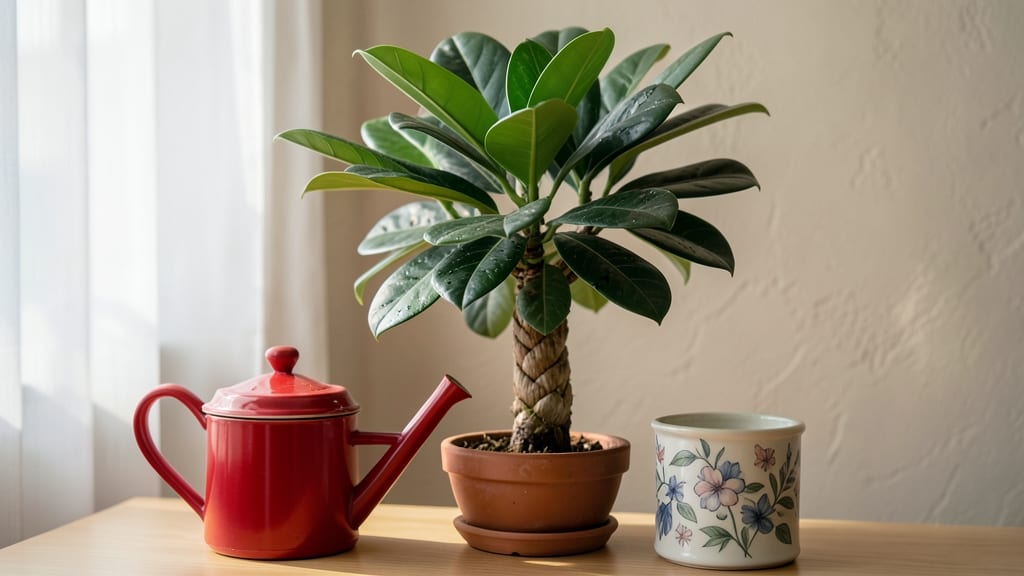
Here’s how to keep your money tree alive—its drooping leaves don’t mean it’s doomed, just neglected. 🌿 I’ve nursed back more of these plants than I can count, and the fixes are simpler than you’d think.
Most money trees (Pachira aquatica) suffer from two things: watering mistakes and light confusion. The good news? Both are easy to correct once you know what to watch for.
The first step is checking the soil—stick your finger in 1-2 inches deep. If it’s soggy, you’re overwatering; if it’s bone-dry, you’re underwatering. Money trees like their soil to stay lightly moist but never soggy, and they’ll bounce back faster than you’d expect once you get the rhythm right.
Pair that with bright, indirect light (no harsh sun), and you’ve already fixed 80% of the problems.
Within a week of adjusting water and light, you’ll start seeing new growth at the base of the trunk. The leaves will perk up, the stems will firm up, and that signature braided look will look healthier than ever. It’s like watching a slow-motion comeback—just give it time and consistency.
Bonus: Dust those leaves occasionally (a damp cloth works wonders) and keep humidity up if your air is dry. Money trees aren’t high-maintenance—they’re just picky about basics. Once you’ve got these down, your plant will thrive for years, bringing that satisfying "I’ve mastered this" feeling every time you walk by.
📚 In This Guide
- What you need
- Instructions
- Tips and common mistakes
- Wrapping up and next steps
What you need
- ● Money Tree Plant: A healthy Pachira aquatica (bought from a nursery or propagated from cuttings).
- ● Well-Draining Soil: 1 part cactus/succulent mix (for aeration)
- ● 1 part pepper potting mix (for nutrients)
- ● 1 part perlite or coarse sand (to prevent root rot)
- ● Pot with Drainage Holes: A container with holes (6–8" diameter for small plants, 10–12" for mature trees). Terracotta or ceramic pots work best!
- ● Watering Can or Spray Bottle: For gentle hydration (avoid soggy soil!).
- ● Balanced Liquid Fertilizer: A 10-10-10 or 20-20-20 formula (diluted to half-strength).
- ● Pruning Tools: Clean, sharp pruning shears (sterilized with rubbing alcohol)
- ○ Optional: Horticultural glue (for sealing cuts if propagating)
- ● Humidity Tray: A pebble tray filled with water to boost humidity in dry climates.
- ● Grow Lights: LED grow bulbs (12–14 hours/day) if natural light is <10,000 lux.
- ● Moss or Bark Mulch: For aesthetic appeal and slight moisture retention.
- ● Rooting Hormone: If propagating from cuttings (speeds up growth!).
- ● Decorative Pot: A stylish outer pot (ensure it’s slightly larger than the inner pot for airflow).
Step-by-Step instructions for reviving a struggling money tree
Here's how to nurse your drooping money tree back to health—no fancy tools, just smart care.
💧 Step 1: Check and Adjust Watering Routine
Money trees hate soggy roots but also dry spells. Stick your finger 1-2 inches deep into the soil—if it feels dry, water thoroughly until water drains from the bottom. If it's still damp, wait another 3-5 days before checking again. Overwatering is the #1 killer, so always let the top ½ inch dry out between waterings.
Use room-temperature water (cold shocks roots) and avoid letting the plant sit in standing water. A pot with drainage holes prevents root rot, but if yours doesn’t, water sparingly and let excess drain completely. You’ll know you’ve got it right when the leaves perk up within 24-48 hours—no more limp, yellowing fronds.
☀️ Step 2: Evaluate Light Exposure
Money trees thrive in bright, indirect light—think near an east or north window where sunlight filters through sheer curtains. If leaves are yellowing or stretching toward the light (called "leggy"), your plant’s too far away. Move it within 3-5 feet of a window or supplement with a grow light for 12-14 hours daily.
Here’s the trick: Rotate the pot ¼ turn weekly so all sides get even light. You’ll notice new growth emerging from the topmost leaves first—that’s your sign the light’s just right. Avoid harsh afternoon sun, which burns leaves and causes brown patches. If your home is dim, a simple LED bulb keeps your money tree happy year-round.
🌿 Step 3: Dust Leaves and Trim Damaged Foliage
Dust blocks sunlight and clogs stomata (those tiny pores on leaves). Wipe each leaf gently with a damp microfiber cloth or give it a quick shower in the sink. Avoid harsh sprays—just let water run off naturally. You’ll see a difference immediately: leaves will look glossy and vibrant instead of dull and lifeless.
Snip off any brown, crispy, or yellow leaves with clean pruning shears at the base of the stem. This might sound scary, but pruning encourages new growth. Focus on the bottom third of the plant first—it’s where old leaves gather. After trimming, mist the remaining leaves lightly to help them recover faster. Within 1-2 weeks, you’ll spot fresh, green shoots pushing through.
Tips & tricks for perfect money tree care
Real talk: I've nursed back more money trees than I can count, and these are the secrets that actually work.
Watering Wisdom: The 1-2 inch soil check in Step 1 is your golden rule. I learned this the hard way after ruining three plants by guessing—always wait until that top ½ inch feels dry. For extra peace of mind, use a moisture meter ($10 at garden stores) if you're still unsure. And here's what nobody tells you: tap the pot gently after watering. If it feels light, you're good. If it's heavy, you've overdone it.
The Light Test: When evaluating light in Step 2, hold your hand about 3 feet from the plant—if you can't see your shadow clearly, it's too dark. For windows without indirect light, place a mirror at a 45-degree angle to bounce light onto the plant. I've seen dramatic turnarounds in just 7 days with this simple trick. And if you must use artificial light, LED grow bulbs are your best bet—they're energy-efficient and mimic sunlight perfectly.
Pruning Strategy: When trimming in Step 3, focus on the bottom third first. This might seem counterintuitive, but it encourages new growth from the top. I've found that cutting just above a leaf node (where leaves grow out) gives you the best chance for regrowth. And here's my pro move: after trimming, place cuttings in water to propagate new plants—you'll have backups and gifts for friends!
Pro Tips for Keep Money Tree Alive
- Real talk: I've nursed back more money trees than I can count, and these are the secrets that actually work.
- Watering Wisdom: The 1-2 inch soil check in Step 1 is your golden rule.
- The Light Test: When evaluating light in Step 2, hold your hand about 3 feet from the plant—if you can't see your shadow clearly, it's too dark.
Frequently asked questions
Got questions about keeping your money tree thriving? Here are some of the most common concerns—and their easy fixes! Whether you're a first-time plant parent or just need a quick refresher, these answers will help you nurture your Pachira aquatica like a pro.
How often should I water my money tree?
Water your money tree when the top 1-2 inches of soil feel dry to the touch. Overwatering is the #1 killer—stick your finger in the soil to check! In summer, water every 7-10 days; in winter, reduce to every 2-3 weeks. Pro tip: Ensure the pot has drainage holes to prevent root rot.
Why are my money tree leaves turning yellow?
Yellow leaves usually mean overwatering or underwatering. Check the soil moisture first—if it’s soggy, let it dry out. If the leaves feel crispy, increase humidity (try a pebble tray or misting). Brown edges? It could be low humidity or fluoride in tap water. Switch to filtered or distilled water to play it safe!
Can a money tree survive in low light?
Money trees are adaptable but thrive in bright, indirect light. Low light slows growth and causes leggy stems. Place it near an east- or north-facing window. If your space is dim, supplement with a grow light 12-14 hours daily. Rotate the pot weekly for even growth.
What’s the best way to prune a money tree?
Prune in spring or early summer to shape your tree or encourage bushiness. Use clean, sharp scissors to trim just above a leaf node (where leaves grow). Never cut more than 1/3 of the foliage at once—this stresses the plant. You can also propagate cuttings in water!
Is a money tree hard to keep alive?
Not at all! Money trees are low-maintenance and forgiving if you avoid overwatering. With the right light, watering routine, and occasional pruning, they can live for years. Even if it drops leaves, it often bounces back—just adjust your care and give it time.
Wrapping up and next steps
Keeping your money tree thriving is all about consistency—watering wisely, trimming strategically, and giving it the right care. With these three simple steps, you’ll see those droopy leaves bounce back to vibrant life in no time! 🌱✨
Now that you’re armed with the knowledge, take action today. Grab your pruning shears, check your plant’s moisture, and give it the love it deserves. Your money tree will thank you—and who knows? You might just find yourself hooked on the joy of nurturing greenery! 💚
Pro tip: Snap a photo of your plant’s progress to track its transformation over time!