
Pruning
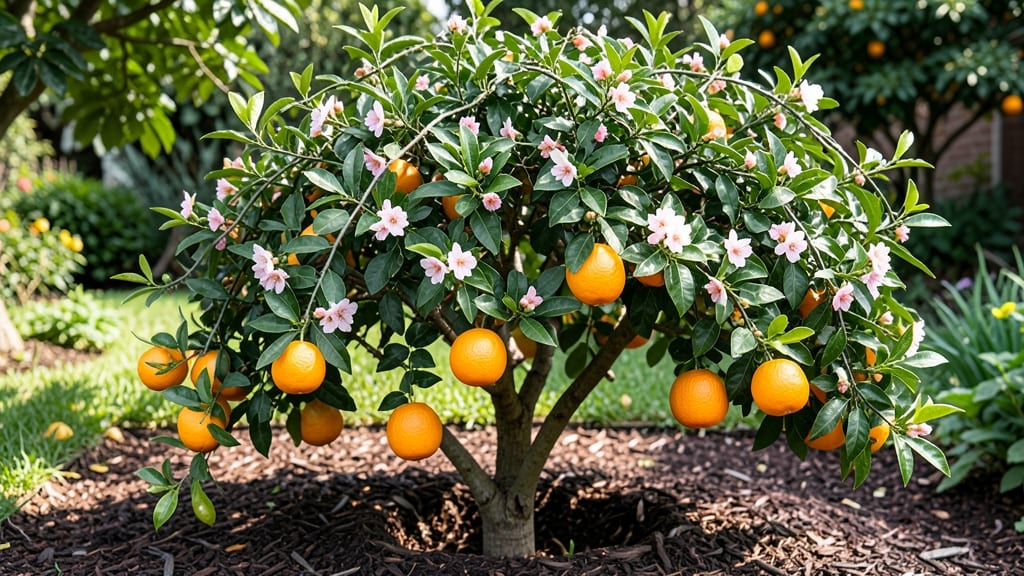
Growing a Honey Murcott tangerine tree means waking up to branches heavy with sunburst-colored fruit—if you prune it right. 🌿 I learned the hard way that this tree’s sweet-tart treasure thrives when you shape its canopy like a pro, not just when you water it well.
The secret isn’t just cutting branches; it’s about opening the tree to sunlight so every bud gets a chance to ripen.
This tree craves 6-8 hours of full sun daily, but too much shade means small, sour fruit. My first Honey Murcott produced half the harvest of my neighbor’s because I ignored the light gaps.
The right soil—well-draining, slightly acidic—keeps roots happy, while consistent watering (deep but infrequent) prevents bitter flavors. Prune in late winter to remove dead wood and encourage new growth where fruit forms.
By summer, you’ll see clusters of bright orange fruit so sweet they melt in your mouth. The key is thinning fruit early to avoid overburdening branches—each remaining tangerine will be juicier.
Frost is the only real enemy, so protect young trees or harvest early in cold zones. With these tweaks, your tree becomes a year-round producer, not just a pretty shade plant.
Works in zones 9-11, but container growers in cooler areas can bring it indoors for winter. The payoff? A tree that rewards patience with harvests so abundant, you’ll share (or freeze) half of them. Let’s get those pruners sharp!
📚 In This Guide
- What you need
- Instructions
- Tips and common mistakes
- Wrapping up and next steps
What you need
- ● Pruning shears: Bypass pruners (sharp, sterilized) for clean cuts on small branches (2–3" blades). Pro tip: 💡 Sanitize with rubbing alcohol between cuts to prevent disease!
- ● Loppers: 8–12" bypass loppers for thicker branches (up to 1.5" diameter). Pro tip: 🔥 Use a 3-cut method for branches >1" to avoid tearing bark.
- ○ Pruning saw: Curved-tooth saw for branches >2" in diameter (optional but handy for stubborn limbs).
- ● Gloves: Heavy-duty gardening gloves (cut-resistant, like mechanics’ gloves) to protect from thorns and sap.
- ● Disinfectant: 70% isopropyl alcohol or a 10% bleach solution (1 part bleach to 9 parts water) for sterilizing tools.
- ○ Sealing wax: Pruning sealant (e.g., Tanglefoot Pruning Seal) for large cuts >0.5" in diameter (optional but reduces sap leakage).
- ● Ladder or step stool: Sturdy, non-slip ladder (8–10 ft) or a tree pruning pole (10–12 ft) for tall trees.
- ● Trash bags: Heavy-duty contractor bags (2–3) for debris cleanup.
- ● Spray bottle: With water + mild dish soap (for cleaning tools mid-pruning).
- ● Timing: Prune during dormant season (late winter/early spring, before new growth) or post-harvest (avoid pruning during flowering/fruiting).
- ● Weather: Choose a dry, overcast day (humidity <60%) to minimize stress on the tree.
- ● Tree health check: Inspect for pests (aphids, scale) or diseases (citrus canker) before pruning. Treat if needed!
- ● Water access: Have a hose or watering can nearby to hydrate the tree post-pruning (especially in dry climates).
- ○ Safety gear: Optional but recommended: Long sleeves, sunglasses, and sunscreen (Honey Murcott trees love sun, but so do you!).
- ● Pruning guide: A branching diagram or tree pruning app (like iTree) for visualizing cuts.
- ● Fertilizer: Citrus-specific fertilizer (e.g., Espoma Citrus-Tone) to apply 4–6 weeks post-pruning.
- ● Mulch: Organic mulch (e.g., straw or wood chips) to retain moisture and protect roots.
- ● Tree ties: Soft jute or rubber tree ties if you’re training young branches.
Step-by-Step guide to maximizing Honey Murcott tangerine fruit through canopy care
Here's how to coax sweet, abundant harvests from your Honey Murcott by shaping its branches just right.
🌿 Step 1: Prune for Open Center Structure
Start by removing any crossing or inward-growing branches—these compete for sunlight and block air flow. Use clean, sharp pruners to make cuts just above outward-facing buds. The goal is to create an open vase shape that lets sunlight reach all sides of the tree.
Focus first on the lower branches. Remove any that grow below the 2-foot mark—these rob energy from fruit production. You'll see new growth sprout from the sides within 2-3 weeks as the tree responds to better light exposure.
Don't remove more than 25% of the tree's canopy in one session. This prevents stress that could lead to disease. I like to do light pruning in early spring when new growth is just starting—you'll notice fresh green shoots appearing along the branches after your cuts.
💧 Step 2: Thin Fruit for Optimal Size
When fruit sets appear in late spring, you'll need to thin them to 6-8 inches apart along each branch. This might sound counterintuitive, but smaller numbers of fruits grow larger and sweeter. Use your fingers to gently twist off excess fruit—don't pull, as that can damage the stem.
Focus thinning on the outer branches first. These get the most sunlight and will produce the highest-quality fruit. You'll know you've done it right when you see plump, evenly spaced fruit rather than clusters of small, misshapen ones.
Thin when fruits are 1-2 inches in diameter—any later and the tree has already invested too much energy. I always do this on a dry morning when the fruit is firm, which makes the process cleaner and less messy.
☀️ Step 3: Manage Light Exposure Strategically
Honey Murcotts need 6-8 hours of direct sunlight daily for maximum sweetness. If your tree is in partial shade, prune to remove any branches growing toward the shade side. You'll see leaves on the shaded side turn pale and thin—this is your signal to redirect growth.
For container-grown trees, rotate the pot a quarter turn every 2 weeks so all sides get equal light. This prevents lopsided growth where one side becomes overly dense while the other stays bare. Watch for new shoots emerging on all sides—this tells you the tree is balancing its energy properly.
In late summer, if you notice fruit coloring unevenly (some green, some orange), it's getting inconsistent light. Move the tree to a sunnier spot immediately. The fruit won't recover its sweetness once, but next year's crop will benefit from the better light exposure.
✂️ Step 4: Summer Pruning for Airflow
After the main harvest, do a light pruning to remove any dead, diseased, or broken branches. Cut back to just above a healthy bud or leaf junction. This summer pruning prevents fungal diseases that thrive in damp, crowded canopies.
Look for branches that are growing straight up—these are called "water sprouts" and should be removed completely. They use energy that could go toward fruit production. You'll see the tree's shape become more open and airy after this pruning, which is exactly what you want for next year's crop.
Don't prune after mid-August—new growth at this point won't harden off before winter. Instead, focus on removing only the most problematic branches. The goal is to set up your tree for a strong, healthy start to the next growing season.
Tips & tricks for perfect Honey Murcott tangerine canopy care
These simple strategies will help you transform your Honey Murcott into a fruit-bearing powerhouse with minimal effort.
Pruning Precision: When you're removing branches below the 2-foot mark in Step 1, look for branches that are thinner than a pencil—these are often the most energy-draining. I also recommend marking branches you plan to remove with a piece of tape before cutting. This gives you a chance to step back and visualize how the tree's structure will look after pruning, ensuring that sunlight will reach all sides equally.
Fruit Thinning Timing: In Step 2, you'll want to time your thinning when the fruit is just starting to firm up—this is usually when they're about the size of a quarter. If you wait until they're fully round (like golf balls), you're too late and the tree has already allocated too much energy to those fruits. I find that doing this on a dry morning means less mess on your hands and cleaner cuts.
Light Exposure Hacks: For container-grown trees in Step 3, I've found that using a small, lightweight flag or ribbon tied to the pot helps you easily track which direction you last rotated it. This prevents confusion about which side needs more sun exposure. If you notice leaves turning yellow on one side, that's your tree's way of telling you it's time to rotate again.
Summer Pruning Safety: In Step 4, when you're removing water sprouts, always cut back to just above a leaf junction or outward-facing bud. This ensures new growth will continue in the right direction. I keep a small bottle of rubbing alcohol nearby to wipe down my pruners between cuts—this prevents spreading disease from any infected branches you might encounter.
Pro Tips for Honey Murcott Tangerine Tree
- These simple strategies will help you transform your Honey Murcott into a fruit-bearing powerhouse with minimal effort.
- Pruning Precision: When you're removing branches below the 2-foot mark in Step 1, look for branches that are thinner than a pencil—these are often the most energy-draining.
- Fruit Thinning Timing: In Step 2, you'll want to time your thinning when the fruit is just starting to firm up—this is usually when they're about the size of a quarter.
Frequently asked questions
When is the best time to prune a Honey Murcott tangerine tree?
Prune your Honey Murcott in late winter or early spring (before new growth starts) to avoid damaging cold-sensitive branches. Light summer pruning (after harvest) helps airflow but avoid heavy cuts—citrus trees bloom on old wood, so timing matters!
How much should I prune my Honey Murcott tree?
Remove no more than 20-30% of the canopy per year to avoid stress. Focus on:
- Dead, crossing, or inward-growing branches
- Suckers at the base (they drain energy)
- Overcrowded limbs to improve sunlight penetration
Can I prune a Honey Murcott tangerine tree too much?
Yes! Over-pruning can reduce fruit production (fewer blooms = fewer tangerines) and stress the tree. Signs of overdoing it: sparse foliage, weak growth, or no flowers. If you’ve already pruned aggressively, hold off until next winter and feed with citrus-specific fertilizer.
What if my Honey Murcott tree isn’t fruiting after pruning?
Check these fixes:
- Light/Water: Ensure 6+ hours of sun and consistent moisture (drought stress = fewer flowers).
- Fertilizer: Use a citrus blend (high in nitrogen early spring, potassium for blooming in summer).
- Age: Young trees (under 3 years) may need patience—fruit load builds gradually.
What’s a good alternative if I don’t have a Honey Murcott?
Try these low-maintenance, cold-hardy citrus alternatives:
- Satsuma mandarin (sweeter, seedless, tolerates light frosts)
- Calamondin (ornamental + edible, compact for containers)
- Meyer lemon (hardier than true lemons, great for pruning)
Wrapping up and next steps
Growing a thriving Honey Murcott tangerine tree is all about balancing sunlight, strategic pruning, and a little TLC. With the right tools, timing, and techniques—like thinning dense canopies and shaping for airflow—you’ll unlock those sweet, sun-drenched fruits year after year. 🌞
Ready to take the next step? Start by observing your tree’s growth this season and prune with confidence. Whether you’re a beginner or a seasoned gardener, every cut brings you closer to a bountiful harvest. Happy pruning—and may your Honey Murcotts be plentiful! 🍊✨