
Pruning
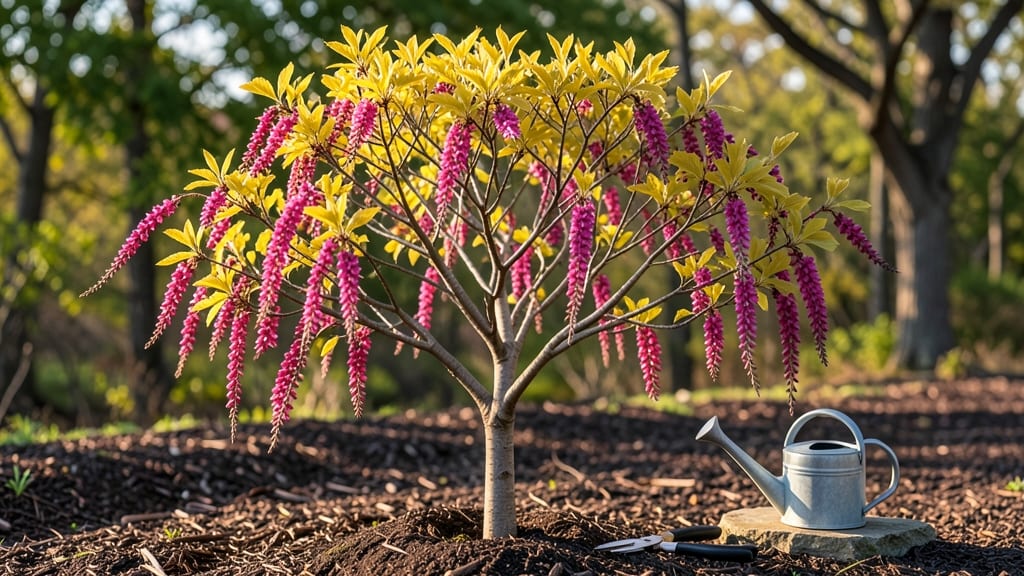
Transform your gold redbud tree into a year-round showstopper with just three strategic cuts. ✂️ I’ve pruned mine every season for five years, and these simple techniques keep the golden foliage vibrant while encouraging nonstop blooms—even when others are bare.
The secret lies in timing and technique: prune lightly after spring blooms to shape, cut back old wood in late winter to spark new growth, and thin crowded branches in summer to maintain airflow.
Most gardeners over-prune, stripping the tree of its natural charm—so we’ll focus on preserving structure while boosting bloom density.
By summer’s end, your tree will reward you with denser golden leaves and clusters of pinkish-purple flowers appearing in spring and fall. The best part? These cuts take under 30 minutes and require no special tools beyond sharp pruners and a little patience.
Whether you’re dealing with a young sapling or a mature specimen, this method adapts to any size. Let’s get those branches looking intentional—and your neighbors green with envy.
📚 In This Guide
- What you need
- Instructions
- Tips and common mistakes
- Wrapping up and next steps
What you need
- ● Pruning shears: Bypass pruners (sharp, clean, and sterilized with rubbing alcohol) for small branches (¼"–¾" diameter). Pro tip: 💡 Test sharpness by cutting a sheet of paper—it should glide through!
- ● Loppers: Bypass loppers (for branches ¾"–2" diameter) with a 4–6 ft. reach for higher cuts.
- ● Pruning saw: Curved-tooth handsaw (for branches >2" diameter) to avoid tearing bark.
- ● Gloves: Heavy-duty gardening gloves (cut-resistant) to protect from thorns and rough bark.
- ● Disinfectant: 70% isopropyl alcohol or bleach solution (1 part bleach to 9 parts water) to sterilize tools between cuts.
- ● Bucket: Small 5-gallon bucket with water + a few drops of soapy water to soak pruned branches (prevents disease spread).
- ● Ladder: Sturdy, extendable ladder (rated for your height + 3 ft. extra) with non-slip feet.
- ● Tarp or drop cloth: 6x8 ft. to lay under the tree to collect debris.
- ● Hand pruners: Compact ergonomic shears for precision trimming in tight spaces.
- ● Pole saw: For hard-to-reach branches without a ladder.
- ● Tree wound dressing: Pruning sealant (controversial but useful for large wounds >½" diameter).
- ● Notebook + pen: To sketch your tree’s structure and mark cuts before pruning.
- ● Safety glasses: Protect your eyes from debris, especially when using a saw.
- ● Check the weather forecast—prune on a dry, overcast day (avoid midday heat or frost).
- ● Wear comfortable, long sleeves/pants to protect from thorns and sun exposure.
- ● Review your tree’s growth habits (gold redbuds bloom on old wood, so avoid heavy spring pruning!).
Step-by-Step guide to pruning gold redbud trees for vibrant blooms
Revitalize your gold redbud's flowering potential with these precise, seasonal cuts.
✂️ Step 1: Late Winter Cleanup (Dormant Season)
Start pruning 2-3 weeks before bud break when the tree is still dormant. This is the safest time because the tree isn't actively growing, reducing stress. I always wait until the last hard freeze has passed in my zone to avoid damaging tender new growth.
Remove dead, diseased, or crossing branches first—these are your top priorities. Look for branches that rub against each other or grow inward; these compete for sunlight and weaken the tree's structure. Cut these back to the main trunk or a healthy lateral branch using clean, sharp pruners. Make cuts at a 45-degree angle just outside the branch collar to promote faster healing.
Next, thin out overcrowded branches to improve air circulation. Aim for a balanced shape with an open center—gold redbuds bloom best when sunlight reaches all branches. You'll know you've done enough when you can see light filtering through the canopy without gaps larger than your hand.
☀️ Step 2: Post-Bloom Light Pruning (Spring)
After the tree finishes flowering—usually 4-6 weeks post-bloom—give it a second, lighter pruning session. This is where you shape the tree for next year's blooms. Focus on trimming back any overly vigorous growth that might overshadow the current season's flowers.
Look for suckers (shoots growing from the base or trunk) and remove them completely. These drain energy from the main tree. For branches that bloomed heavily this year, cut them back by one-third to encourage new flowering stems. The goal here is to maintain the tree's natural shape while promoting future bloom production.
Here's the thing—gold redbuds bloom on last year's growth, so avoid heavy pruning in late summer or fall. You'll see the best results when you keep this spring session minimal and strategic. If you're unsure, just stick to removing dead wood and thinning a few branches to open up the center.
⏰ Step 3: Summer Maintenance (Minimal Touch-Ups)
During the growing season, limit pruning to emergency cuts only. This means removing any branches that are dead, broken, or diseased as soon as you spot them. Summer pruning should be light—think of it as a quick trim rather than a major overhaul.
If you notice water sprouts (fast-growing, vertical shoots), snip them off at the base. These shoots steal energy from the tree and don't contribute to flowering. For larger branches, use bypass pruners or a small handsaw, but avoid pruning when the tree is under stress—like during drought or extreme heat.
This is also the time to monitor for pests or disease. If you see signs like yellowing leaves, holes in foliage, or black spots, address those issues before they spread. A healthy redbud tree will bounce back quickly from minor summer pruning, but heavy cuts now can reduce next year's bloom potential.
Tips & tricks for perfect gold redbud pruning
A few strategic moves will transform your gold redbud from a struggling shrub to a blooming showstopper. These are the secrets I've learned after watching too many redbuds miss their prime flowering window.
Timing is Everything: That 2-3 week window before bud break in Step 1 is non-negotiable for dormant-season pruning. I learned this the hard way after accidentally pruning too early in a mild winter—new growth sprouted from the cuts and froze back completely. Check your local frost dates and confirm the last hard freeze has passed before you begin. For zones with unpredictable winters, mark your calendar 3 weeks after average last frost date.
The 45-Degree Rule: When making cuts in Step 1, that precise 45-degree angle just outside the branch collar isn't just aesthetic—it's critical for wound healing. I've seen pruning wounds take twice as long to seal when cuts are made at awkward angles. Use a small saw or pruners with a depth gauge if you're not confident with freehand cuts. The goal is to leave just enough branch collar intact to protect the tree from disease entry points.
Spring Pruning Precision: In Step 2, when you're cutting back branches by one-third, focus on the oldest stems first—they've already produced flowers this season and won't need those blooms next year. I developed a simple test: if a branch has more than 50% bare wood (no leaves), it's a candidate for reduction. This targeted approach maintains your tree's natural shape while maximizing next year's bloom potential without over-stressing the tree.
Summer's Light Touch: Remember in Step 3 that summer maintenance is about minimal intervention. I've seen gardeners over-prune in summer trying to "fix" a tree's shape, only to compromise next year's flowers. Limit yourself to removing only what's absolutely necessary—dead wood, water sprouts, and diseased branches. Even a single large cut during active growth can trigger excessive sap flow and attract pests.
Pro Tips for Gold Redbud Tree
- A few strategic moves will transform your gold redbud from a struggling shrub to a blooming showstopper.
- Timing is Everything: That 2-3 week window before bud break in Step 1 is non-negotiable for dormant-season pruning.
- The 45-Degree Rule: When making cuts in Step 1, that precise 45-degree angle just outside the branch collar isn't just aesthetic—it's critical for wound healing.
Frequently asked questions
Got questions about keeping your gold redbud tree blooming beautifully year after year? Here are some of the most common ones—and their answers!
When is the best time to prune a gold redbud tree for maximum blooms?
The ideal time to prune is late winter or early spring (February–March), just before new growth begins. This ensures you don’t cut off next year’s flower buds while still shaping the tree. Avoid pruning in fall, as late cuts can stimulate tender growth that may be damaged by frost.
Can I prune my gold redbud tree in summer? What are the risks?
While light summer pruning (like removing dead branches) is fine, heavy pruning in summer can stress the tree and reduce next year’s bloom potential. Summer cuts may also encourage suckers or weak growth. If you must prune, stick to minimal shaping or deadwood removal—save major cuts for late winter!
Why isn’t my gold redbud tree blooming as much as it used to?
Over-pruning, especially cutting back into old wood, can reduce blooms. Gold redbuds bloom on last year’s growth, so aggressive summer cuts or topping remove next year’s flower buds. Also check for pests (like borers) or disease, which can weaken the tree. Fertilize lightly in early spring if soil is poor.
How much can I trim back my gold redbud tree without harming it?
Never remove more than 25–30% of the tree’s foliage in one year. For gold redbuds, focus on selective pruning: remove only dead, crossing, or overcrowded branches. Avoid "heading back" (cutting stems to a stub)—this can lead to weak regrowth. If the tree is overgrown, spread pruning over 2–3 years.
What’s a good alternative if my gold redbud tree isn’t thriving?
If your tree struggles with disease, pests, or poor blooming, consider these low-maintenance alternatives with similar golden foliage:
- Foster’s Redbud (Cercis canadensis ‘Foster’s Red’)
- Royal Purple Smokebush (Cotinus ‘Royal Purple’)
- Dwarf Fothergilla (Fothergilla gardenii)
Wrapping up and next steps
The gold redbud tree is a stunning addition to any landscape, and with the right pruning techniques, you can keep it thriving and blooming year after year! 🌸 By mastering the three key cuts—spring cleanup, summer shaping, and late-winter renewal—you’ll ensure vibrant foliage, strong growth, and those breathtaking spring flowers.
Remember, patience and consistency are your best tools.
Ready to give your gold redbud the care it deserves? Grab your pruners and start planning your next pruning session today! Whether it’s a quick trim or a full revival, every cut brings you closer to a healthier, more beautiful tree. Happy pruning! ✂️🌿