Pruning
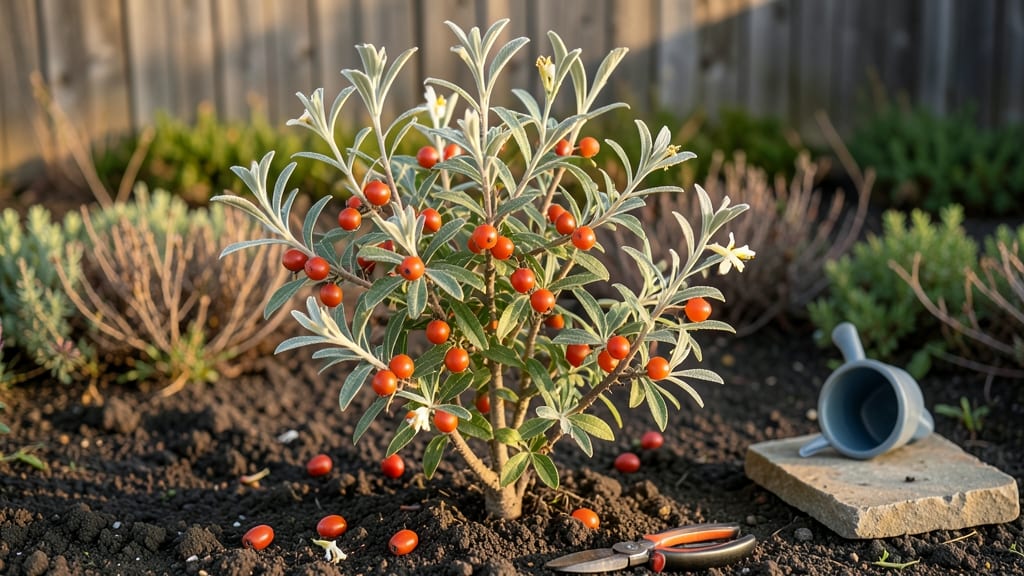
Proper goji berry tree care starts with pruning—three simple cuts now ensure bigger harvests for years. I learned this the hard way after my first tree produced sparse berries, but once I mastered these tricks, my branches burst with fruit.
The key isn’t just cutting back; it’s shaping the tree to maximize sunlight and airflow, which keeps pests away and berries plentiful.
Start with well-draining soil and full sun—goji berries hate soggy roots but love dry climates. Water deeply once a week (more in summer heat), then let the soil dry between waterings.
Fertilize lightly in spring with compost or a balanced organic feed, and skip heavy pruning in the first two years unless dead wood appears. That’s when you begin shaping the tree for maximum fruit production.
By late winter or early spring, you’ll see the difference: branches open to sunlight, new growth emerges faster, and berries form in clusters. The berries themselves turn a vibrant red-orange when ripe—sweet, tart, and packed with nutrients.
With these pruning tricks, you’ll turn a scraggly sapling into a productive tree that feeds you for decades.
Works in zones 5-9, handles drought like a champ, and even tolerates poor soil if you amend it well. The only real challenge? Patience—it takes 2-3 years before the first big harvest. But once those berries start dripping from the branches, you’ll wonder why you didn’t start sooner.
📚 In This Guide
- What you need
- Instructions
- Tips and common mistakes
- Wrapping up and next steps
What you need
- ● Goji berry tree (bare-root or potted, Lycium barbarum or Lycium chinense varieties)
- ● Well-draining soil (mix of 60% garden soil, 30% compost, and 10% perlite/sand)
- ● Organic mulch (straw, wood chips, or pine needles, 2–3 inches thick)
- ● Balanced fertilizer (10-10-10 or organic options like fish emulsion, applied in early spring)
- ○ Slow-release fertilizer (for optional mid-summer feeding)
- ● Pruning shears (sharp, bypass-type for clean cuts)
- ● Loppers (for thicker branches, 8–10 inch blades)
- ○ Hand pruners (for optional detailed trimming)
- ● Gloves (gardening gloves to protect from thorns)
- ● Watering can or hose with nozzle (for deep, 1–2 inch weekly watering)
- ● Trowel (for planting or amending soil)
- ● Measuring tape (to check branch spacing and tree height)
- ● Sunlight: Full sun (6+ hours daily)—goji berries love warmth!
- ● Climate zone: USDA Zones 5–9 (hardy to -15°F with proper care)
- ● Space: 5–10 feet wide (mature trees can spread!)
- ● Drainage: Avoid waterlogged soil—goji trees hate soggy roots!
How to prune and maintain a healthy goji berry tree
Here's the straightforward approach I've used to keep my goji berry trees fruiting heavily for years.
Prune for Structure in Late Winter
Use sharp pruning shears to remove dead, diseased, or crossing branches first—these compete with healthy growth. Cut just outside the branch collar where it meets the trunk, making clean 45-degree angles. This prevents water from pooling and rotting the wound.
Next, thin out overcrowded branches to improve airflow. Aim for an open center that lets sunlight reach all parts of the tree. You'll see strong new shoots emerge from the base within 4-6 weeks—this signals successful pruning. Avoid heavy pruning now, as goji berries form on new wood, and you want to preserve last year's fruiting branches.
Lightly Trim After Harvest to Encourage Next Year's Fruit
After picking berries in late summer, remove only weak, spindly growth and branches that produced poorly. Goji berries thrive on current-season growth, so you're shaping the tree for next year's harvest. Cut back one-third of the longest shoots to encourage bushier, more productive growth.
This is also the time to check for suckers—those vigorous shoots growing from the base. Remove them unless you're propagating new trees. You'll notice fewer leggy branches and more compact growth by next spring, which means better berry production.
Annual Maintenance Pruning in Early Spring
In early spring, just as buds begin to swell, do a final check for any damaged or weak branches from winter storms. Prune them out immediately to prevent disease from entering the tree. Keep the tree's shape balanced—goji berries grow best when they receive full sun (6+ hours daily) and good airflow.
This is also when I check for water sprouts—those fast-growing, vertical shoots that steal energy from fruiting branches. Snip them off at the base. You'll see fresh, green growth within 2 weeks of this pruning, and the tree will look fuller and more vigorous by summer.
Bonus: Winter Protection for Young Trees
If you're in a cold climate (below 10°F), wrap the trunk of young goji berry trees with burlap or tree wrap to prevent sunscald. Older trees handle cold better, but young ones need extra protection. Mulch around the base with 2-3 inches of organic mulch to insulate roots.
Here's the thing—goji berry trees are tough, but they reward careful pruning. If you follow these steps, you'll have a tree that produces abundant berries year after year with minimal effort.
Tips & tricks for perfect goji berry tree care
These simple strategies will help you keep your goji berry tree thriving and productive all year long—no green thumb required.
Timing is Everything: The late winter pruning in Step 1 should happen when your tree is fully dormant but before buds start swelling. This timing prevents stressing the tree too early in the season. I've found that pruning just after a hard frost (when temps drop below 20°F) gives the cleanest cuts and minimizes sap flow. The 4-6 week window for new shoots to emerge is your confirmation that you've done it right—don't rush this process.
Pruning Precision: When making those 45-degree cuts in Step 1, use a sharp pair of pruning shears to avoid tearing the bark. I like to make my cuts just outside the branch collar where it meets the trunk—this is where the tree's natural healing begins. For branches thicker than your thumb, make the cut at a slight angle to help water run off. The key is clean cuts that heal properly so the tree can focus its energy on fruit production rather than repairing wounds.
Seasonal Growth Strategy: In Step 2, when you're cutting back one-third of the longest shoots, focus on the ones growing straight up rather than outward. These vertical shoots compete for sunlight and nutrients with the fruiting branches. You'll notice a dramatic difference in next year's harvest—more compact growth means more energy directed toward berry production. This is also when I check for suckers at the base; removing them now prevents future overcrowding.
Cold Climate Protection: For those in climates below 10°F, the winter protection in Step 3 is non-negotiable for young trees. I've seen young goji berry trees suffer sunscald when the winter sun hits their thin bark after a cold snap. Wrap the trunk with burlap or tree wrap, leaving a small gap at the top for air circulation. The 2-3 inches of organic mulch around the base acts like a blanket, keeping roots insulated and preventing temperature fluctuations that can stress the tree.
Pro Tips for Goji Berry Tree Care
- These simple strategies will help you keep your goji berry tree thriving and productive all year long—no green thumb required.
- Timing is Everything: The late winter pruning in Step 1 should happen when your tree is fully dormant but before buds start swelling.
- Pruning Precision: When making those 45-degree cuts in Step 1, use a sharp pair of pruning shears to avoid tearing the bark.
Frequently asked questions
Got questions about keeping your goji berry tree happy and productive?
You’re not alone! Here are answers to the most common concerns—from pruning to pests and everything in between.
How often should I prune my goji berry tree?
Prune your goji berry tree twice a year: once in late winter or early spring (before new growth) to shape the tree and remove dead wood, and again in summer (after fruiting) to encourage bushier growth. Light trimming between seasons keeps it tidy without stressing the plant.
When is the best time to plant a goji berry tree?
The ideal time to plant is in early spring (after the last frost) or early fall (4-6 weeks before the first frost). This gives roots time to establish before extreme temperatures. Avoid planting in summer heat or winter cold, as young trees are more vulnerable.
What pests or diseases should I watch for?
Goji berry trees are hardy but can face aphids, spider mites, or powdery mildew. Check leaves regularly for signs like yellowing, webbing, or white powder. Treat aphids with a strong spray of water or neem oil, and ensure good airflow to prevent mildew.
Why isn’t my goji berry tree producing fruit?
Low fruit production often stems from young age, insufficient sunlight, or improper pruning. Goji berries typically fruit after 2-3 years. Ensure it gets 6+ hours of sun daily and prune to encourage airflow and light penetration. Over-fertilizing with nitrogen can also reduce fruiting—balance with potassium and phosphorus.
Can I grow a goji berry tree in a container?
Yes! Use a large pot (at least 15-20 gallons) with drainage holes and well-draining soil. Choose a fast-growing variety like 'Nanking' or 'Big Life' and move the container to a sunny spot. Repot every 2-3 years to refresh the soil, but know that container-grown trees may fruit less than in-ground plants.
Wrapping up and next steps
Caring for your goji berry tree is a rewarding journey that combines patience, precision, and a dash of seasonal know-how! 🌱 By mastering three key pruning tricks—spring shaping, summer thinning, and fall cleanup—you’ll ensure a bountiful harvest year after year.
Remember, every trim is a step toward healthier growth and sweeter berries.
Ready to level up your gardening game? Grab your pruners, roll up your sleeves, and give your goji berry tree the love it deserves. Next up: Watch those berries flourish and maybe even share the harvest with friends—or your favorite smoothie bowl! 🍓✨