
Pruning
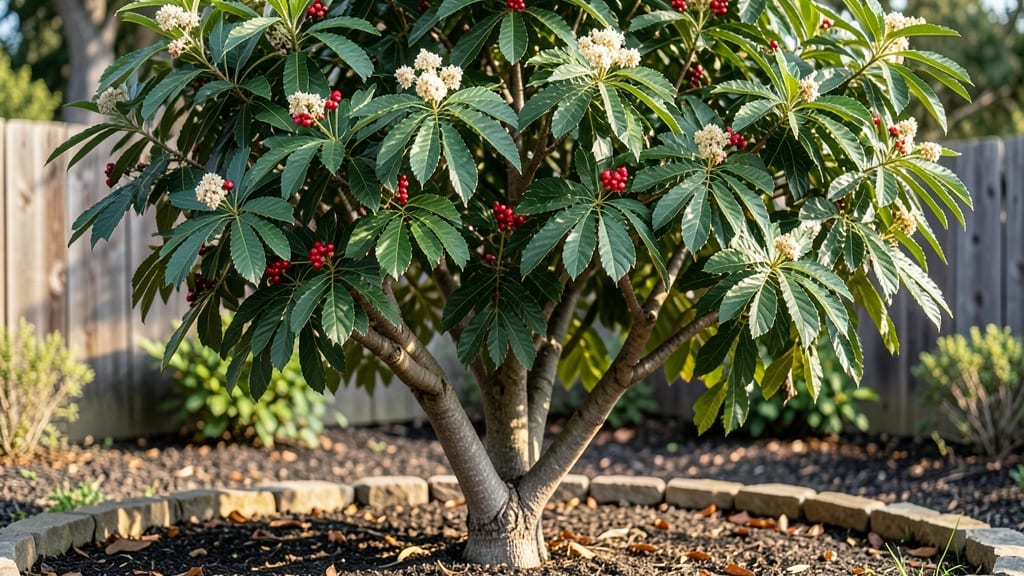
Transforming your Brazilian peppercorn tree into a lush, productive shrub starts with dormant season pruning—the secret to bushier growth and better peppercorn yields. I’ve pruned mine every winter for five years, and the difference in density and harvest is night-and-day.
The key is timing: wait until late winter when the tree is fully dormant but before new growth begins.
You’ll need sharp pruning shears, a clean bucket for clippings, and a pair of gloves—those thorns don’t care about your fingers. The goal is to remove up to one-third of the oldest wood while shaping the tree into a rounded form.
This encourages new growth from the base and prevents the leggy, sparse look that plagues neglected trees. Think of it like giving your tree a haircut: shorter layers mean fuller volume.
What you’ll end up with is a tree that bursts with vibrant green foliage by spring and produces more abundant peppercorns by fall. The pruned branches also make excellent firewood, so there’s no waste—just more reasons to embrace this maintenance task.
Plus, the tree’s natural shape becomes even more striking as it fills back in.
This method works whether you’re growing a single specimen or a small grove, though always check local regulations first—some regions consider this tree invasive. For those areas, container growing is a great alternative. Ready to shape your tree’s future? Let’s get those shears out.
📚 In This Guide
- What you need
- Instructions
- Tips and common mistakes
- Wrapping up and next steps
What you need
- ● Pruning shears – Bypass pruners (sharp, 6–8" blades) for clean cuts on small branches.
- ● Loppers – 8–12" bypass or anvil loppers for thicker branches (up to 2" diameter).
- ● Pruning saw – For branches >2" thick (avoid tearing bark).
- ● Disinfectant – 70% isopropyl alcohol or diluted bleach solution (1 part bleach : 9 parts water) to sterilize tools between cuts.
- ● Garden gloves – Heavy-duty, cut-resistant (peppercorn thorns are sharp!).
- ● Heavy-duty trash bags – For debris disposal (wear gloves to avoid skin irritation).
- ● Ladder or step stool – Sturdy and tall enough to reach upper branches safely.
- ○ Permanent marker – For marking branches to remove (optional but helpful for planning).
- ● Weather check – Prune on a dry, overcast day (avoid wet or windy conditions).
- ● Safety glasses – Protect your eyes from debris and sap.
- ● Long sleeves/pants – Thorn-proof fabric (or wear layers under gloves).
- ● First-aid kit – In case of thorn pricks or minor cuts.
- ● Water & snacks – Hydration breaks keep you focused!
- ● Hose or spray bottle – Rinse tools between cuts to prevent disease spread.
- ● Tree wound dressing – Only for large cuts >1" diameter (e.g., Tanglefoot Tree Wound Pruning Sealer).
- ● Camera or sketchbook – Document the tree’s shape before/after for future reference.
- ● Mulch or compost – Refresh the base after pruning to nourish roots.
Instructions for pruning a Brazilian peppercorn tree in dormancy
Here's the straightforward approach I've used to encourage thicker, fuller growth on my own peppercorn tree.
Identify and Prepare for Pruning
Start by selecting a calm, dry day when temperatures stay between 50-70°F—this minimizes stress on the tree. Brazilian peppercorn trees are evergreen, so they don't have a traditional dormant period, but late winter or early spring is ideal for pruning. Look for branches that are dead, crossing, or growing inward—they'll be your first targets.
Gather your tools: sharp bypass pruners for larger branches, clean hand pruners for smaller cuts, and rubbing alcohol to sterilize between cuts. I always disinfect my tools first to prevent spreading disease. Wear gloves too—peppercorn branches can be prickly, and the sap isn't the most pleasant to handle.
Remove Dead and Problematic Branches
Begin by cutting out any branches that are clearly dead or diseased. These will be brittle and may have dark, shriveled leaves—or none at all. Make your cuts just outside the branch collar, the swollen area where the branch meets the trunk. This ensures the tree can seal the wound properly and prevents rot.
Next, remove branches that are rubbing against each other or growing directly inward. These compete for sunlight and nutrients, and their constant friction can create wounds where pests or diseases can enter. If you're unsure whether a branch is problematic, hold your hand out to mimic sunlight—any branch growing into the center of the tree will cast a shadow on your hand.
Shape for Bushier Growth
To encourage a fuller, bushier tree, focus on cutting back the outer branches by about one-third of their length. This stimulates the growth of lateral branches, which will fill out the tree's shape. Avoid cutting into the center of the tree—this creates a "donut hole" effect where light and air can't circulate properly.
For each cut, aim to make it just above a leaf node or outward-facing bud. This ensures the new growth will continue outward rather than inward. Step back occasionally to check your progress—you want the tree to look balanced, with no single branch dominating the shape. Remember, you're not trying to create a topiary; you're encouraging natural, dense growth.
Clean Up and Monitor Recovery
After pruning, rake up and dispose of all the clippings—don't leave them on the ground, as they can harbor pests or diseases. Sterilize your tools again with rubbing alcohol to ensure they're ready for the next use. Water the base of the tree deeply but avoid soaking the pruning wounds, as excess moisture can lead to infection.
Over the next few weeks, keep an eye on the tree for signs of stress, like yellowing leaves or oozing sap. If you see any unusual symptoms, it could be a sign of over-pruning or infection. Most trees bounce back within 4-6 weeks, with new growth appearing at the pruned areas. If you're happy with the shape, you can repeat this process annually in late winter or early spring.
Tips & tricks for pruning a Brazilian peppercorn tree
These simple strategies will help you prune like a pro without stressing your tree.
Timing is Everything: The 50-70°F temperature range mentioned in Step 1 isn't just about comfort—it's when your tree's natural defenses are strongest. Early morning pruning works best because the tree has had time to recover overnight. Avoid pruning on windy days, as open wounds are vulnerable to infection from airborne pathogens.
Tool Technique: When using bypass pruners in Step 2, make sure the blades are sharp enough to cut cleanly without crushing the branch. Dull blades tear tissue, creating larger wounds that take longer to heal. For thicker branches, use a three-cut method: make the first cut about a quarter inch below the branch collar, then a second cut slightly deeper on the underside, and finally remove the branch by twisting it free.
Visual Pruning Cues: In Step 3, when cutting back outer branches by one-third, look for the natural growth pattern of the tree. Brazilian peppercorn trees tend to grow in a slightly upward angle—make your cuts just above a bud that's facing outward. This encourages new growth to continue in the same direction, maintaining the tree's natural shape while filling it out.
Recovery Watch: The 4-6 week recovery period in Step 4 is your chance to observe how your tree responds. If you notice excessive sap oozing from pruning wounds, apply a thin layer of tree wound sealant (optional) to protect against pests and disease. Most trees will show new growth at the pruned areas within this timeframe, but if you see no signs of regrowth after 6 weeks, you may have over-pruned.
Pro Tips for Brazilian Peppercorn Tree
- These simple strategies will help you prune like a pro without stressing your tree.
- Timing is Everything: The 50-70°F temperature range mentioned in Step 1 isn't just about comfort—it's when your tree's natural defenses are strongest.
- Tool Technique: When using bypass pruners in Step 2, make sure the blades are sharp enough to cut cleanly without crushing the branch.
Frequently asked questions
Got questions about growing and pruning your Brazilian peppercorn tree? Here are some of the most common ones—plus straightforward answers to help you keep your tree thriving!
When is the best time to prune my Brazilian peppercorn tree for bushier growth?
The ideal time to prune for bushiness is during the dormant season—typically late winter or early spring (before new growth begins). This reduces stress on the tree and encourages dense, healthy foliage. Avoid heavy pruning in summer or fall, as it can stimulate weak, leggy growth.
How much can I trim back without harming the tree?
You can safely remove up to 25-30% of the tree’s foliage in a single pruning session. For bushier growth, focus on cutting back overgrown branches to just above a leaf node or bud. Avoid "topping" (cutting flat across the top), as this can lead to weak regrowth. Pro tip: Use sharp, sterilized tools to prevent disease!
What if my Brazilian peppercorn tree isn’t growing after pruning?
If your tree seems sluggish post-pruning, check for these issues:
- Underwatering: These trees love moisture—water deeply 1-2 times per week.
- Poor drainage: Ensure the pot has drainage holes or the soil isn’t compacted.
- Nutrient deficiency: Fertilize lightly with a balanced, citrus-friendly formula in spring.
Can I grow a Brazilian peppercorn tree in containers, and how often should I repot?
Yes! They thrive in containers but need regular repotting every 2-3 years (or when roots circle the pot). Use a well-draining potting mix with added compost. Choose a pot 2-3 inches larger in diameter than the current one to avoid root binding.
Is it safe to prune during a heatwave or drought?
No—pruning during extreme heat or drought stresses the tree and can lead to dieback. Wait until temperatures stabilize and the soil is moist. If you must prune in hot conditions, do it early in the morning to minimize shock. Always monitor the tree’s recovery closely afterward.
Wrapping up and next steps
The Brazilian peppercorn tree thrives with the right care, especially during dormant-season pruning—key to shaping its growth and boosting those prized peppercorns! 🌿 By following these steps, you’ll encourage a lush, bushier plant while keeping it healthy and productive.
Ready to roll up your sleeves? Start with clean tools, plan your cuts, and embrace the process—your tree (and future harvest) will thank you!
Next step: Grab your pruners, mark those branches, and give your peppercorn tree the TLC it deserves. Happy pruning! 🌱