
Pruning
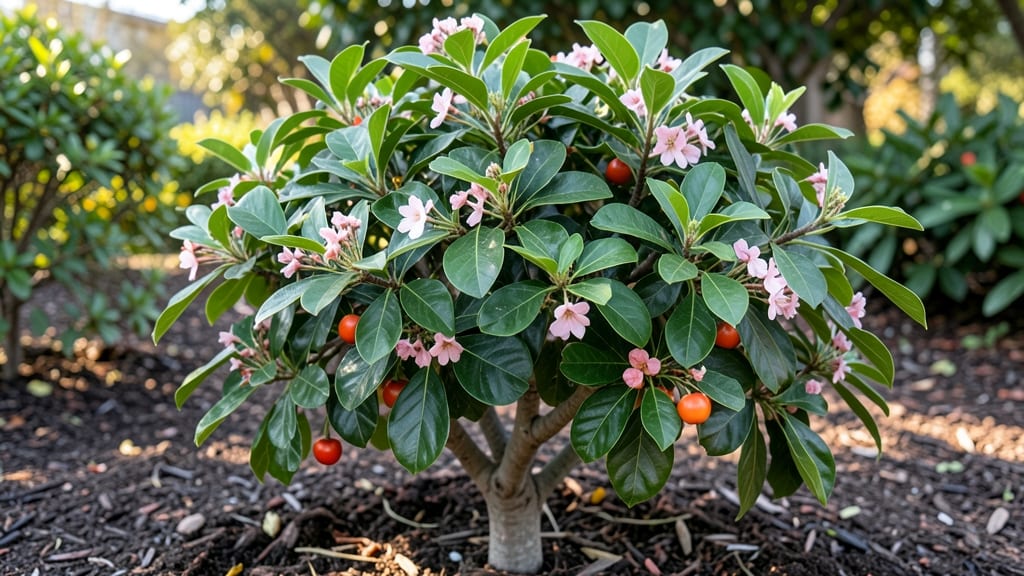
Pruning a Brazilian cherry fruit tree (Eugenia uniflora) isn’t just about shaping branches—it’s the secret to balancing those sweet, tart fruits with a strong, healthy structure.
I’ve watched mine go from a tangled mess to a productive powerhouse in just two seasons, and the key was learning when and how to cut without weakening the tree. The worst mistake? Over-pruning too early, which robs the tree of energy when it’s already working hard to fruit.
Start with the right tools: sharp pruners for clean cuts and a 30-degree angle to prevent water pooling on wounds. Brazilian cherries thrive in subtropical climates but can handle mild winters if protected—just don’t prune in frost risk zones.
The goal is to open the canopy for airflow, which cuts down on fungal issues and lets sunlight reach lower branches where fruit often hides. Think of it like giving your tree a spa day: less stress, more rewards.
You’ll know you’re doing it right when you see new growth spurring in spring and fewer dropped fruits by summer. The tree’s natural habit is dense, so strategic cuts—especially removing water sprouts and crossing branches—keep it from becoming a tangled mess.
Even better, the fruit becomes more accessible, and you’ll avoid the heartbreak of rot from overcrowded branches. This method works for both young trees and mature ones struggling under heavy loads.
For those in cooler climates, focus on winter pruning after the last frost, while warmer zones can prune year-round with light maintenance. The first year is about establishing shape; after that, it’s about refinement.
Patience pays off—within two seasons, you’ll have a tree that’s both ornamental and bountiful, with fewer pests and more fruit than you thought possible.
📚 In This Guide
- What you need
- Instructions
- Tips and common mistakes
- Wrapping up and next steps
What you need
- ● Pruning shears: Bypass pruners (sharp, 6-8" blade) for small branches. Pro tip: Sanitize with rubbing alcohol between cuts to prevent disease! 💡
- ● Loppers: 1 pair (8-10" blade) for thicker branches (½"–1.5" diameter).
- ○ Pruning saw: 1 handheld saw (for branches >1.5" diameter). Optional: A folding pruning saw for portability.
- ● Gloves: Heavy-duty gardening gloves (cut-resistant, long cuffs) to protect against thorns and sap.
- ● Ladder or step stool: Sturdy, tall enough to reach the tree’s canopy safely.
- ● Disposable pruning bags: 2-3 bags (13-gallon size) for collecting debris.
- ● Rag or paper towels: For wiping tools and cleaning sap.
- ○ Marking twine or tags: To label branches for future reference (optional but helpful!).
- ● Safety gear: Closed-toe shoes, long sleeves/pants, and safety glasses (if using a saw).
- ● Weather check: Prune on a dry, calm day (avoid rain or high winds).
- ● Tree assessment: Inspect the tree for pests/diseases (e.g., Pseudocercospora spots) before pruning.
- ● Clean workspace: Lay down a tarp or old sheets under the tree for easy cleanup.
- ● Handheld leaf blower or broom for clearing debris.
- ● Tree wound dressing (e.g., pruning sealant) for large cuts (controversial—skip if your tree is young/healthy!).
- ● Camera or sketchbook to document the tree’s structure before/after pruning.
Instructions for pruning your Brazilian cherry tree for balance and abundance
Here's how to keep your tree bearing fruit without overburdening its branches.
Assess the Tree's Structure and Fruit Load
Start by examining your Brazilian cherry tree in early spring, just as new growth begins. Look for branches that sag under the weight of last season's fruit or show signs of stress—these are your first targets. I focus on three key areas: the central leader (main trunk), scaffold branches (major limbs), and smaller fruiting spurs. Hold each branch gently to feel its weight; a healthy branch should spring back slightly when released.
Note where fruit clusters are heaviest. Brazilian cherries tend to form dense clusters, and too many in one spot can break branches. I mark these areas with a small piece of twine or a colored dot on my notes—this helps me visualize where to thin out. If you see any dead, crossing, or diseased branches, these need immediate attention before addressing fruit load.
Thin Out Fruit Clusters for Even Distribution
Begin thinning fruit clusters when they're about 1 inch in diameter, which is typically 4-6 weeks after flowering. This timing ensures you don't remove too many flowers or small fruit, which can stress the tree. I work in sections, moving from the bottom of the tree upward. Use clean, sharp pruning shears to remove entire clusters rather than individual fruits—this prevents energy loss from multiple small cuts.
Leave 3-5 fruit clusters per branch, spaced evenly along the branch's length. This spacing ensures sunlight reaches all fruit and reduces the risk of branch breakage. If a branch is particularly weak, reduce the number of clusters by half. You'll know you've done well when the remaining clusters look evenly spaced and the branches hold their shape without sagging.
Prune for Airflow and Light Penetration
Next, focus on improving airflow and light penetration within the canopy. Remove any branches that rub against each other—they create wounds that attract pests and diseases. I also look for "water sprouts," which are fast-growing, vertical shoots that steal energy from fruiting wood. These should be cut back to their point of origin or a lateral branch.
Thin out any dense growth inside the tree to let light reach the center. Brazilian cherry trees need good airflow to prevent fungal issues, especially in humid climates. Aim to open up the canopy so you can see light filtering through to the inner branches. If you're unsure, step back and look at the tree from a distance—you should see an open, airy structure rather than a thick, impenetrable mass.
Strengthen the Tree's Framework
Now, turn your attention to the tree's structural integrity. Look for branches that are growing at sharp angles (less than 45 degrees) or are too close together. These are weak points and should be pruned back to a stronger, more outward-growing branch. I make these cuts just above a lateral bud or branch that grows in a better direction.
If a branch is too heavy or weak, you may need to shorten it by 1/3 of its length to reduce weight and encourage stronger growth. Make your cut just above a bud that faces outward or upward. Avoid cutting back to a stub—this invites disease and slows healing. After pruning, the tree should look balanced, with no single branch dominating the structure.
Clean Up and Monitor Progress
Finish by removing all pruned material from the area to prevent pests and diseases from taking hold. Sterilize your pruning tools with rubbing alcohol or a bleach solution to avoid spreading pathogens. I also apply a thin layer of pruning sealant to larger cuts (over ½ inch in diameter) to protect the tree from moisture loss and infection.
Monitor your tree over the next few weeks. You should see new growth emerging from the pruned areas, and the remaining fruit clusters should be evenly spaced and well-lit. If you notice any branches bending under the weight of fruit, thin out a few more clusters immediately. With time, your Brazilian cherry tree will develop a stronger structure and produce even more abundant, high-quality fruit.
Tips & tricks for pruning your Brazilian cherry tree
Real talk: Pruning a Brazilian cherry tree isn't just about cutting branches—it's about creating a balanced, productive tree that thrives for years. Here's what I've learned from years of working with these fruit-bearing beauties.
Timing is Everything: That 4-6 week window after flowering is critical for thinning fruit clusters. I've seen trees stressed beyond recovery when pruned too early or too late. If you miss this window, wait until the fruit is about 1 inch in diameter next year—don't rush it. The tree's energy needs to focus on fruit development, not recovery from aggressive pruning.
Visual Cues Over Guesswork: When assessing branch strength in Step 1, trust your hands and eyes more than the calendar. A healthy branch should spring back slightly when you press it gently—this is your "golden rule." I've made the mistake of cutting branches that were actually stronger than they appeared, only to have them snap later under fruit weight. If a branch bends but doesn't spring back, it's time for thinning.
The 1/3 Rule for Framework: Shortening branches by 1/3 of their length in Step 4 might seem arbitrary, but there's real science behind it. This ratio maintains the tree's natural growth hormones while encouraging stronger, more outward growth. I've seen trees where branches were cut back too aggressively—resulting in weak regrowth that never bore fruit. Always cut just above an outward-facing bud to guide new growth in the right direction.
Seasonal Pruning Strategy: While spring is ideal for most pruning, you can do light maintenance in late winter (just before buds swell) to remove any dead or crossing branches you missed. This prevents disease buildup over winter. I always carry a small pair of clean pruners with me during the growing season to do quick touch-ups—removing water sprouts or crossing branches as I notice them keeps the tree healthy year-round.
Pro Tips for Brazilian Cherry Fruit Tree
- Real talk: Pruning a Brazilian cherry tree isn't just about cutting branches—it's about creating a balanced, productive tree that thrives for years.
- Timing is Everything: That 4-6 week window after flowering is critical for thinning fruit clusters.
- Visual Cues Over Guesswork: When assessing branch strength in Step 1, trust your hands and eyes more than the calendar.
Frequently asked questions
Got questions about managing your Brazilian cherry fruit tree (Eugenia uniflora)? Whether you're a first-time grower or a seasoned pruner, these answers will help you navigate common challenges—from fruit loads to seasonal care.
How do I tell if my Brazilian cherry tree is overloaded with fruit?
Watch for drooping branches or stunted growth—signs the tree is struggling to support its weight. Heavy fruit clusters (especially in young trees) can also cause splitting bark or weakened wood. Prune strategically to balance fruit and foliage, focusing on thinning clusters rather than just trimming leaves.
When is the best time to prune for heavy fruit loads?
Prune late winter to early spring (before buds swell) for structural shaping, or right after harvest (late summer) to reduce next year’s load. Avoid pruning during peak flowering—this can stress the tree and reduce fruit set. For emergency thinning (e.g., storm damage), act immediately but prioritize sterilized cuts to prevent disease.
Can I prune too aggressively and kill my Brazilian cherry tree?
Yes! Never remove more than 25% of the canopy in one season—this stresses the tree and may reduce flowering. Focus on selective thinning: cut back overcrowded branches or water sprouts (shoots growing straight up) while preserving the tree’s V-shaped structure. If you’re unsure, start small and monitor regrowth.
What should I do if my tree isn’t fruiting despite good care?
Check these 3 common culprits:
- Age: Young trees (under 3 years) focus on growth—be patient!
- Light: Brazilian cherries need 6+ hours of sun daily. Shade = fewer flowers.
- Nutrients: Test soil for low phosphorus (key for blooms) or zinc deficiency (yellow leaves between veins). Fertilize with a balanced 10-10-10 blend in early spring.
Are there alternatives to pruning for reducing fruit load?
Yes! Try these low-stress methods:
- Hand-thin fruit: Gently twist off excess clusters when they’re pea-sized (early summer). Leave 1–2 cherries per cluster to maximize size.
- Hormone sprays: Apply thinning sprays (like hydrogen cyanamide) post-bloom to reduce fruit set naturally.
- Cage branches: For small trees, use tree ties or stakes to support heavy branches and prevent breakage.
Wrapping up and next steps
Growing a thriving Brazilian cherry fruit tree with a balanced structure and abundant harvests is absolutely within reach!
By mastering the art of strategic pruning—like thinning out overcrowded branches, maintaining an open canopy, and avoiding heavy cuts—you’ll ensure both fruit quality and tree longevity. Your patience and care will pay off with delicious, sun-ripened cherries year after year. 🌿✨
Ready to take the next step? Grab your pruners, review your notes, and schedule your first pruning session during the dormant season. Start small, observe how your tree responds, and adjust your technique as you go—you’ve got this!