Planting
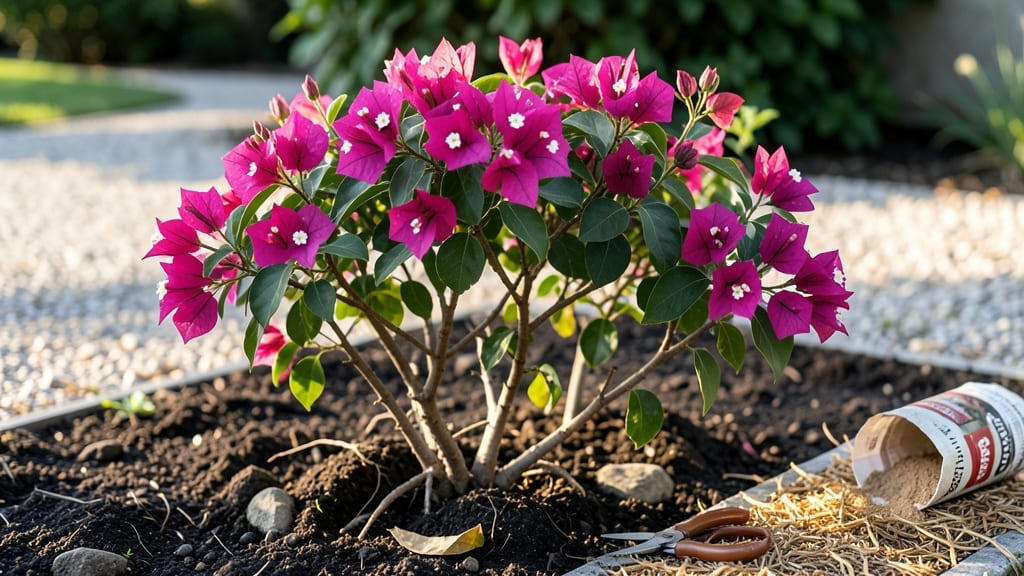
Planting a bougainvillea tree isn’t just about sticking a cutting in the ground—it’s about unlocking those vibrant magenta blooms in just three months using the right technique. I’ve learned that proper soil, sunlight, and timing make all the difference, especially in warmer climates where bougainvilleas thrive.
The key is mimicking their natural habitat: well-draining soil, full sun, and minimal fuss once established.
You’ll need fast-draining potting mix, a well-draining container or hole, and a sunny spot that gets at least six hours of direct sunlight daily. Bougainvilleas hate soggy roots, so if your soil stays damp, amend it with perlite or sand.
Once planted, water deeply but infrequently—overwatering is the fastest way to kill these drought-loving plants. Within weeks, you’ll see new growth, and with the right care, those showy bracts will appear in 8-12 weeks.
The real magic happens when you prune strategically—cutting back in late winter encourages bushier growth and more blooms. A balanced fertilizer applied every 4-6 weeks during growing season keeps them thriving, while winter dormancy (in colder zones) ensures they return stronger.
By summer, your bougainvillea will be a bold, blooming centerpiece that turns heads—and no, it’s not as complicated as it seems.
This method works for containers, ground plantings, or even as a climbing vine with trellis support. Whether you’re in Zone 9-11 or a cooler microclimate, the principles stay the same.
The only mistake you’ll make is waiting to plant—these beauties reward patience with nonstop color once they get settled. Let’s get started.
📚 In This Guide
- What you need
- Instructions
- Tips and common mistakes
- Wrapping up and next steps
What you need
- ● Bougainvillea plant: 1 healthy nursery-grown plant (choose a variety like ‘Thornless’ or ‘San Diego Red’ for easier care).
- ● Well-draining potting mix: 5–10 gallons (or enough to fill your container). Look for a blend labeled for cactus/succulents or amend garden soil with perlite or sand (20% mix).
- ● Container or planting area: For containers: 1–3 gallon pot (minimum 12" deep) with drainage holes.
- ● For in-ground: Full-sun spot with 6+ hours of sunlight daily and well-draining soil (avoid clay!).
- ● Fertilizer: 1 slow-release granular fertilizer (10-10-10 or 20-20-20) or liquid bloom booster (diluted to half-strength).
- ● Pruning shears: 1 pair of sterilized, sharp shears (for trimming dead blooms or shaping).
- ● Watering can or hose: With a gentle spray nozzle (bougainvilleas hate soggy roots!).
- ○ Mulch (optional): 1–2 inches of gravel or bark chips to retain moisture and deter weeds.
- ● Climate: Bougainvilleas thrive in USDA Zones 9–11. If you’re in a cooler zone, grow in a container and bring indoors in winter.
- ● Sunlight: Full sun is non-negotiable—partial shade = fewer blooms!
- ● Watering know-how: Water deeply but infrequently (let soil dry out between waterings). Overwatering = root rot.
- ● Patience: With proper care, you’ll see vibrant blooms in 8–12 weeks (not 3 months—magic doesn’t happen that fast, but close! 😉).
- ● Epsom salt: 1 tbsp mixed into soil monthly for magnesium boost (encourages blooms).
- ● Trellis or support: For climbing varieties (e.g., ‘California Gold’).
- ● Soil pH test kit: Ideal range is 6.0–7.0 (bougainvilleas aren’t picky, but this helps!).
- ● Plant support stakes: If your bougainvillea is young or top-heavy.
Step-by-step instructions for planting a thriving bougainvillea tree
Here's how to establish a bougainvillea that bursts with color in just three months.
🌱 Step 1: Choose the Perfect Planting Site
Bougainvillea demands full sun exposure—at least 6-8 hours daily—to produce vibrant blooms. Select a location with southern or western exposure where the plant will receive unobstructed sunlight. The soil should drain exceptionally well, as bougainvillea roots rot quickly in soggy conditions.
I always test drainage by digging a hole and filling it with water. If it doesn't drain within 15-20 minutes, amend the soil with 3-4 inches of coarse sand or gravel mixed into the top 12 inches of soil. This prevents waterlogging while maintaining aeration for the roots.
For container planting, choose a pot with drainage holes and a diameter of at least 18 inches to accommodate the plant's sprawling root system. The pot's depth should be 12-18 inches, allowing roots to establish without crowding.
🪴 Step 2: Prepare the Soil and Plant Correctly
Loosen the soil in the planting area to a depth of 12-18 inches, breaking up any compacted layers. Bougainvillea thrives in well-draining, slightly acidic to neutral soil (pH 6.0-7.0). If your soil is heavy clay, mix in 20% perlite or coarse sand to improve drainage.
Remove the bougainvillea from its container and gently tease the roots apart if they're circling the pot. Place the plant in the hole so the top of the root ball sits 1-2 inches below the soil line. This slight burial helps stabilize the plant and encourages root expansion.
Backfill the hole with the amended soil, pressing lightly to eliminate air pockets. Water deeply to settle the soil around the roots. Avoid compacting the soil too firmly—bougainvillea roots need room to breathe and spread.
☀️ Step 3: Establish Watering and Fertilizing Routines
Water the bougainvillea deeply once a week during the first 4-6 weeks to encourage root establishment. After this period, reduce watering to every 10-14 days, allowing the top 2-3 inches of soil to dry out between waterings. Overwatering is the fastest way to kill a bougainvillea.
Fertilize lightly 4-6 weeks after planting with a balanced, slow-release fertilizer (10-10-10 or 20-20-20). Apply half the recommended dose to avoid burning the roots. Bougainvillea is a heavy feeder but responds poorly to excessive nitrogen, which promotes leafy growth at the expense of blooms.
Here's the thing—bougainvillea blooms are technically modified leaves called bracts. To trigger flowering, the plant needs stress, such as drought or pruning. After the initial growing season, let the soil dry out completely between waterings, and prune back one-third of the plant in early spring to encourage bushier growth and more vibrant blooms.
✂️ Step 4: Prune and Train for Optimal Growth
Prune bougainvillea twice a year: once in early spring (just as new growth begins) and again after the first flush of blooms in late summer. Cut back one-third of the plant in spring to shape it and encourage dense growth. Remove any dead, diseased, or crossing branches to improve airflow and reduce pests.
Train the bougainvillea to grow along a trellis, fence, or wall if desired. Use soft ties or plant clips to guide the stems without damaging them. Bougainvillea grows aggressively, so provide support early to prevent sprawling or breaking branches.
Watch for new growth emerging from the base of the plant—this indicates successful root establishment. You'll see bright green, tender shoots within 4-6 weeks of planting. These shoots are your cue to ease up on watering and start introducing a light fertilizer to promote flowering.
🌿 Step 5: Monitor and Maintain for Long-Term Blooms
Inspect the plant weekly for signs of pests like aphids, mealybugs, or spider mites, which thrive in dry conditions. Treat infestations immediately with neem oil or insecticidal soap, applying in the early morning or late evening to avoid harming beneficial insects.
Bougainvillea is drought-tolerant once established, but mulch the base with 2-3 inches of organic mulch (like bark or straw) to retain moisture and regulate soil temperature. Keep the mulch 2-3 inches away from the trunk to prevent rot.
Real talk: Bougainvillea blooms best in warm climates (USDA zones 9-11). If you're in a cooler zone, treat it as an annual or overwinter it indoors with limited water and bright light. You'll see the most vibrant blooms when the plant is stressed slightly—just don't let it dry out completely.
Tips & tricks for perfect bougainvillea planting
Here's what I've learned from years of growing bougainvilleas—these small adjustments make all the difference between a struggling plant and one that bursts with color.
Sunlight Strategy: While the instructions call for 6-8 hours of sun, I've found that bougainvilleas actually thrive with even more exposure. If possible, aim for 8-10 hours of direct sunlight daily, especially in cooler climates. The more sun, the more vibrant those signature magenta blooms will become. Position your plant where it gets morning sun and afternoon shade if your climate gets extremely hot—this prevents leaf scorch while still maximizing bloom production.
Pruning Precision: When pruning back one-third of the plant in spring, focus on cutting just above a leaf node where new growth emerges. These nodes are typically where small buds form along the stems. I always use sharp, sterilized pruners to make clean cuts at a 45-degree angle. This technique encourages bushier growth and more abundant flowering. Avoid cutting into old wood—the newer, green stems produce the most vibrant blooms.
Watering Wisdom: The instructions mention letting the top 2-3 inches of soil dry between waterings, but I've learned to go by the plant's appearance too. Bougainvilleas are drought-tolerant once established, so if the leaves start curling slightly, that's actually a good sign—the plant is telling you it's ready for more water. Overwatering is the number one killer, so always check soil moisture before watering, especially in containers where soil dries out faster.
Fertilizer Timing: After the initial 4-6 week root establishment period, I wait until I see those bright green tender shoots before applying any fertilizer. This usually happens around 6-8 weeks after planting. I also switch to a low-nitrogen, high-phosphorus fertilizer (like 5-10-10) once flowering begins, as this promotes more blooms rather than leafy growth. The key is to fertilize lightly—bougainvilleas are heavy feeders but respond poorly to over-fertilization.
Pro Tips for Bougainvillea Tree Plant
- Here's what I've learned from years of growing bougainvilleas—these small adjustments make all the difference between a struggling plant and one that bursts with color.
- Sunlight Strategy: While the instructions call for 6-8 hours of sun, I've found that bougainvilleas actually thrive with even more exposure.
- Pruning Precision: When pruning back one-third of the plant in spring, focus on cutting just above a leaf node where new growth emerges.
Frequently asked questions
Got questions about growing your bougainvillea tree?
Whether you're a beginner or a seasoned gardener, these answers will help you plant and care for your vibrant new addition with confidence!
When is the best time to plant a bougainvillea tree?
The ideal time to plant bougainvillea is in early spring or late fall when temperatures are mild (between 60°F–75°F). This gives roots time to establish before extreme heat or cold. If you're in a warm climate, avoid planting during peak summer—it can stress the plant. Pro tip: Morning sun is best for planting to reduce transplant shock!
How often should I water my bougainvillea tree?
Water your bougainvillea deeply but infrequently—about once a week (adjust based on soil dryness). Overwatering is the #1 killer! Let the top 2–3 inches of soil dry out between waterings. Once established, bougainvillea is drought-tolerant, so less is often more. Warning: Yellow leaves? You’re likely overwatering.
Can I grow bougainvillea in a pot instead of the ground?
Bougainvillea thrives in containers with well-draining soil and a pot at least 12–18 inches wide. Use a mix of potting soil, perlite, and sand for aeration. Key tip: Move pots indoors (or to a garage) if temperatures drop below 40°F—bougainvillea is not frost-hardy.
Why aren’t my bougainvillea blooms vibrant?
Dull or sparse blooms often mean too much shade, over-fertilizing, or inconsistent watering. Bougainvillea loves full sun (6+ hours/day) and blooms best with low-nitrogen, high-phosphorus fertilizer (like 5-10-10). Try this: Trim back leggy growth in early spring to encourage bushier, flower-packed branches!
How cold can bougainvillea tolerate before it dies?
Most bougainvillea varieties cannot survive below 30°F—frost will kill the plant. If you’re in a cold climate, grow it in a large container** and bring it inside during winter. For outdoor plants, mulch heavily and cover with frost cloth if temps dip near freezing. Sign of trouble: Blackened leaves = frost damage.
Are bougainvillea trees toxic to pets?
Yes, bougainvillea is toxic to dogs and cats if ingested, causing vomiting, diarrhea, or lethargy. Keep plants out of reach or opt for pet-safe alternatives like hibiscus or butterfly bush if you have furry friends. Safety first!
Wrapping up and next steps
Planting a bougainvillea tree is a rewarding journey that brings bursts of color to your space in just three months! With the right soil, sunlight, and care, you’ll enjoy vibrant blooms that turn heads—and maybe even inspire your neighbors to try their own. 🌸
Ready to dive in? Start by gathering your supplies, then follow the step-by-step guide to give your bougainvillea the best possible start. Happy planting! 🌱