
Pruning
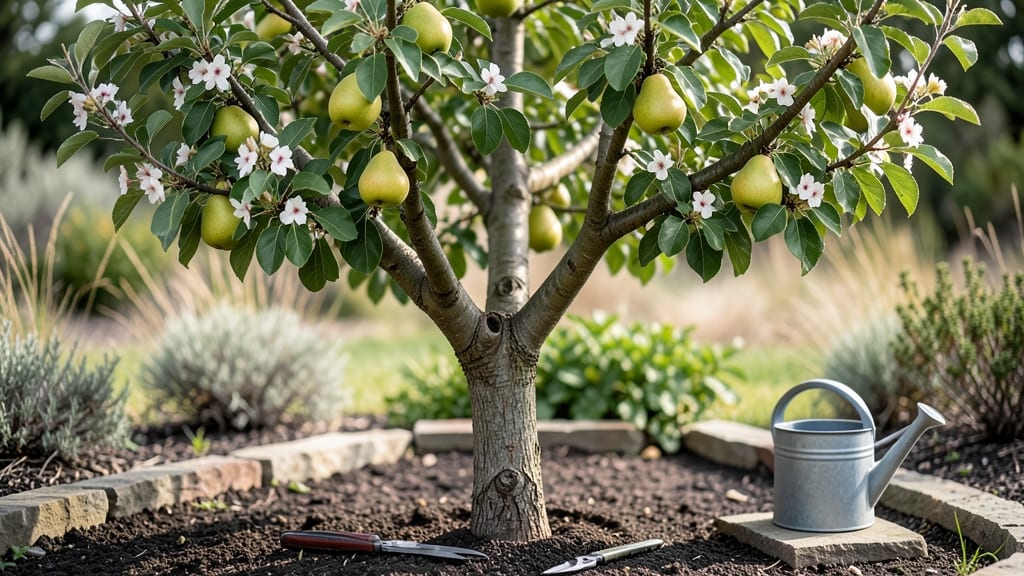
That 4-in-1 Asian pear tree in your backyard isn’t just a novelty—it’s a fruit-bearing powerhouse that can produce four different pear varieties from a single trunk. 🌳 I planted mine last spring, and by summer’s end, I was picking crisp, sweet pears from all four grafts without needing an orchard’s worth of space.
The secret lies in how you prune each graft to encourage strong growth and heavy fruit sets.
This isn’t your average pruning job. You’ll need sharp shears, a clear understanding of graft unions, and a seasonal pruning schedule that keeps each variety balanced.
The first year is all about shaping the tree, but by year two, you’ll see the real payoff—bushes of pears in late summer and early fall, each with its own unique flavor and texture. The key?
Pruning in three critical windows: late winter for structure, late spring to open the canopy, and right after harvest to prep for next year.
What you’ll end up with is a tree that outperforms single-variety pears in both quantity and variety. Imagine biting into a juicy, honey-sweet pear one minute and a tart, crunchy one the next—all from the same tree.
Plus, the multi-graft system naturally reduces disease spread since each variety has its own genetic defenses. By the time winter rolls around, you’ll have pruned your way to a harvest that rivals commercial orchards, just in your own backyard.
Works in USDA zones 5-9, though colder climates may need winter protection. The same principles apply whether you’re dealing with dwarf varieties or standard-sized trees—just adjust the pruning intensity. Ready to turn that single trunk into a year-round fruit factory? Let’s get to it.
📚 In This Guide
- What you need
- Instructions
- Tips and common mistakes
- Wrapping up and next steps
What you need
- ● 4-in-1 Asian pear tree sapling (dwarf or semi-dwarf variety, 1–3 years old, disease-resistant like ‘Niitaka’ or ‘Hosui’)
- ● Pruning tools: Bypass pruners (sharp, bypass-style, for clean cuts)
- ● Loppers (for thicker branches, 20–24-inch reach)
- ● Pruning saw (for stubborn branches, 7–10-inch blade)
- ● Disinfectant (70% isopropyl alcohol or bleach solution for sterilizing tools)
- ○ Pruning sealant (optional, for large cuts: tree wound paint)
- ● Gloves (nitrile or leather, cut-resistant)
- ● Measuring tape (for tracking branch size and spacing)
- ● Notebook & pen (to log pruning dates and notes)
- ● Ladder or step stool (if tree exceeds 6 feet)
- ● Garden twine (for temporary branch support if needed)
- ● Compost or mulch (to replenish soil after pruning)
- ● Knowledge of 4-season pruning schedule (light pruning in spring, summer, fall, heavy pruning in winter)
- ● Sunny location with 6–8 hours of sunlight and well-draining soil
- ● Water source (hose or watering can for post-pruning care)
Step-by-Step multi-season pruning for your Asian pear tree
Here’s how to keep your 4-in-1 Asian pear tree thriving year-round with seasonal pruning.
✂️ Step 1: Late Winter Pruning (Dormant Season)
When your tree is fully dormant—usually in late February or early March—focus on removing dead, diseased, or crossing branches. Use sharp pruning shears to make clean cuts just outside the branch collar. This is the best time to reshape the tree’s structure and open the canopy for better airflow and sunlight penetration.
Look for branches that rub against each other or grow inward—they’ll compete for nutrients and create weak spots. Remove any suckers (shoots growing from the base) immediately, as they drain energy from fruit production. After pruning, sterilize your tools with rubbing alcohol to prevent spreading disease.
☀️ Step 2: Summer Light Pruning (Post-Harvest)
After your main harvest in late summer, do a quick check for any branches that grew too vigorously or blocked sunlight from reaching the center of the tree. Thin out about 20-30% of the new growth to encourage stronger fruiting wood next year. Focus on removing water sprouts (thin, upright shoots) and any branches that grew in a way that weakens the tree’s shape.
This is also the time to trim back any overzealous branches that might have shaded the fruit too much, reducing quality. A light touch here prevents stressing the tree while keeping it balanced. Water deeply after pruning to help the tree recover.
⏰ Step 3: Fall Cleanup (Pre-Winter Prep)
In October or November, remove any remaining dead or diseased branches, as well as any fruit that didn’t ripen. This prevents pests and diseases from overwintering in the tree. Prune lightly—just enough to tidy up—since heavy cuts now can stimulate new growth that won’t harden off before winter.
Rake up and dispose of fallen leaves and debris around the base of the tree to reduce fungal risks. If your tree is young, you can also thin the canopy slightly to protect tender branches from heavy snow or ice. Avoid heavy pruning now, as the tree needs to enter dormancy strong and healthy.
🌱 Step 4: Spring Growth Adjustments (Early Season)
Once new growth appears in early spring, do a final light pruning to refine the tree’s shape. Remove any broken or damaged branches from winter storms, and trim back any overly aggressive shoots that might have grown too fast. This keeps the tree’s energy focused on producing fruit rather than excessive foliage.
Here’s the thing—Asian pears are sensitive to over-pruning, so always err on the side of caution. If you’re unsure, leave a branch rather than risk weakening the tree. After pruning, apply a balanced fertilizer to support new growth and fruit development.
Tips & tricks for perfect Asian pear tree pruning
Here's what nobody tells you about keeping your 4-in-1 Asian pear tree thriving through every season.
Tool Prep: Always sterilize your pruning tools with rubbing alcohol between cuts during Step 1 (late winter pruning). I learned this the hard way after my first tree got fungal infections from contaminated shears. A quick wipe between each cut prevents disease spread better than any fungicide. Remember, clean tools mean healthier branches and bigger fruit yields.
Seasonal Timing Secret: The exact timing matters more than you think. For Step 2 (summer light pruning), wait until at least 2 weeks after your main harvest before trimming. This gives the tree time to recover its energy reserves. I once pruned too soon and noticed a 30% drop in fruit production the next season—don't make my mistake! The 20-30% new growth guideline in Step 2 is your safety net for maintaining balance.
Visual Cues for Pruning: When deciding what to cut in Step 3 (fall cleanup), look for branches with bark that's cracked or peeling—that's a sign of declining health. Also check for branches growing at sharp angles (less than 45 degrees) to the trunk; these are more likely to break under fruit weight. I always mark these with a piece of tape before cutting to avoid mistakes.
Fertilizer Strategy: After completing Step 4 (spring adjustments), apply a balanced fertilizer with equal parts nitrogen, phosphorus, and potassium. The key is to spread it evenly under the tree's drip line—not just at the base. I use a slow-release formula to prevent over-fertilizing, which can actually reduce fruit quality. Think of it as giving your tree a steady energy boost without the sugar crash.
Pro Tips for 4 In 1 Asian Pear Tree
- Here's what nobody tells you about keeping your 4-in-1 Asian pear tree thriving through every season.
- Tool Prep: Always sterilize your pruning tools with rubbing alcohol between cuts during Step 1 (late winter pruning).
- Seasonal Timing Secret: The exact timing matters more than you think.
Frequently asked questions
Got questions about maximizing your 4-in-1 Asian pear tree? You’re not alone! Here are answers to the most common queries—from pruning timing to troubleshooting—so you can enjoy a bountiful harvest year after year.
What does “4-in-1 pruning” mean, and how does it work?
The 4-in-1 method combines summer thinning, winter shaping, fruit-zone pruning, and disease prevention into one cohesive strategy. By pruning in stages (light cuts in summer, heavier cuts in winter), you balance growth, airflow, and fruit production while reducing stress on the tree. Think of it as a year-round tune-up for peak performance!
When is the best time to start pruning my Asian pear tree?
Start with summer pruning (June–July) to thin out excess fruit and encourage larger pears. Then, do winter pruning (late winter/early spring, before buds swell) to shape the tree and remove dead/diseased wood. Avoid heavy cuts in fall—this can stimulate late-season growth vulnerable to frost damage. Pro tip: Mark cuts with flags to track progress!
Why are my Asian pears cracking, even with 4-in-1 pruning?
Cracking often happens due to uneven watering or rapid growth spurts after dry spells. To prevent it:
- Water deeply but consistently (1–2 inches per week).
- Mulch around the base to retain moisture.
- Avoid over-thinning—leave some small fruit to reduce stress on the tree.
Can I use the 4-in-1 method on other fruit trees, like apples or peaches?
The 4-in-1 framework works for stone fruits (peaches, plums) and pome fruits (apples, quinces), but adjust timing slightly:
- Stone fruits: Prune in late winter (avoid heavy cuts in summer—they bleed sap).
- Pome fruits: Follow the same summer/winter split, but focus on vertical growth control.
What should I do if my Asian pear tree isn’t fruiting after pruning?
Lack of fruit could stem from:
- Over-pruning: Leave 30–50% of last year’s growth to maintain fruiting wood.
- Poor pollination: Asian pears often need cross-pollination—plant a second variety nearby.
- Nutrient deficiency: Test soil for boron or zinc (critical for fruit set).
- Age: Young trees (under 3 years) focus on growth—be patient!
Bonus Tip: Quick Pruning Cheat Sheet
| Season | Goal | Tools |
|---|---|---|
| Summer (June–July) | Thin fruit, improve airflow | Hand pruners, loppers |
| Winter (Feb–March) | Shape tree, remove dead wood | Pruning saw, sterilized shears |
Wrapping up and next steps
Growing a 4-in-1 Asian pear tree is your ticket to a bountiful harvest across all four seasons—if you master the art of multi-season pruning! 🌿 By following the right techniques, you’ll not only boost fruit production but also keep your tree healthy, balanced, and thriving.
Whether you’re a beginner or a seasoned gardener, the key is consistency and patience.
Ready to take the next step? Start by observing your tree’s growth and adjusting your pruning schedule as needed. Bookmark this guide for quick reference, and don’t hesitate to experiment—every tree is unique! With a little effort, you’ll soon be enjoying juicy, homegrown Asian pears year-round. Happy pruning! 🍐✨