
Pruning
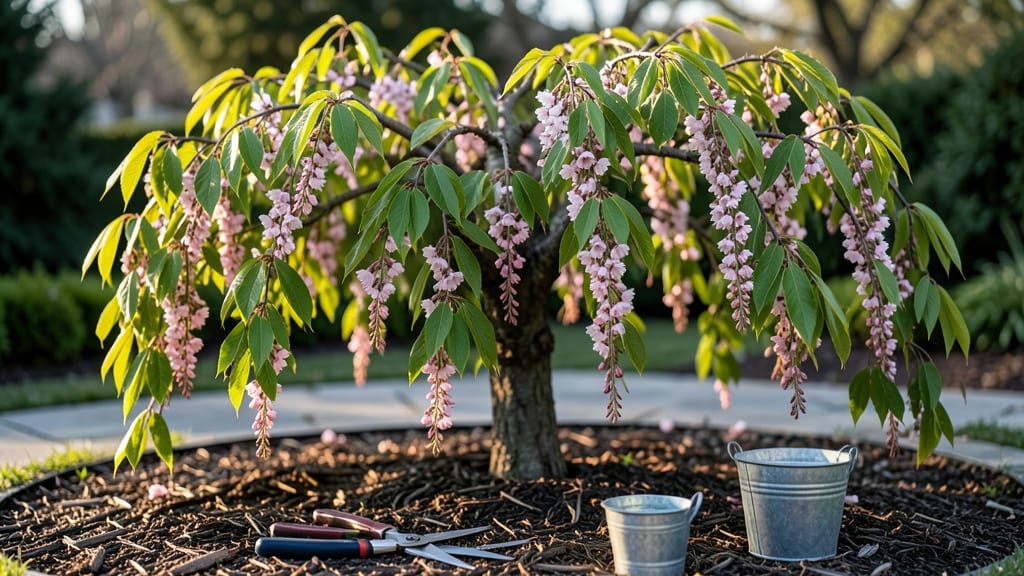
Trimming a weeping cherry tree transforms it from a tangled mess into a graceful, fountain-like centerpiece—and the right cuts make all the difference. I’ve learned the hard way that hacking away branches willy-nilly turns your tree into a sad, lopsided shadow of its former self.
The secret lies in three strategic cuts timed just right, whether you’re shaping it in late winter or cleaning up after summer storms.
You’ll need sharp bypass pruners, a sturdy ladder, and a clean work area—no shortcuts here. The goal isn’t to remove every stray branch but to open up the canopy so sunlight reaches the inner branches, encouraging fuller growth.
Start by removing dead or crossing branches first; these are the easiest cuts and prevent future problems. Then, focus on thinning out the outer layers to maintain that elegant, cascading silhouette.
What you’ll end up with is a tree that looks like it belongs in a botanical garden, not just your backyard. The branches will grow stronger, the blooms will be more abundant, and you’ll avoid the heartbreak of seeing your weeping cherry turn into a tangled disaster.
Plus, proper pruning extends its lifespan—some of these trees live for decades with the right care.
This method works year-round, though late winter (before buds swell) is ideal for major shaping. For minor touch-ups, summer is fine—just avoid heavy pruning when the tree is in full bloom. Ready to give your weeping cherry the care it deserves? Let’s get those pruners sharpened.
📚 In This Guide
- What you need
- Instructions
- Tips and common mistakes
- Wrapping up and next steps
What you need
- ● Pruning shears (bypass or anvil type) – For small branches (¼" to ¾" diameter).
- ● Loppers (long-handled) – For medium branches (¾" to 2" diameter).
- ● Pruning saw (bypass or folding) – For thick branches (2"+ diameter).
- ● Disinfectant (70% rubbing alcohol or bleach solution) – 1 part bleach to 9 parts water (sterilize tools between cuts).
- ● Rubber gloves – To protect hands from thorns and sap.
- ○ Heavy-duty pruning sealant (optional but helpful) – For sealing large cuts (½" or wider).
- ● Ladder or sturdy step stool – If branches are high (ensure it’s stable and rated for your weight).
- ● Tarp or drop cloth – To collect debris and protect landscaping.
- ● Sharpie or permanent marker – For marking cuts (if planning ahead).
- ● Extension pole pruners – For hard-to-reach branches without a ladder.
- ● Tree wound dressing (avoid overuse) – Only for very large cuts (modern pruning often skips this).
- ● Safety glasses – If branches are brittle or near power lines.
- ● Wheelbarrow or bucket – For hauling debris away efficiently.
Step-by-Step guide to pruning your weeping cherry tree
Here's how to keep your tree's elegant form while promoting healthy growth year after year.
Understand the Three Seasonal Cutting Windows
Weeping cherries respond best to pruning during three key times: late winter (just before buds swell), summer (after flowering), and light maintenance cuts throughout the year. The late winter cut is the most important—it removes dead wood and shapes the tree while it's dormant. I always prune in dry, calm weather to prevent sap bleeding and disease spread.
Summer pruning focuses on light thinning to improve air circulation and reduce disease risk. Never remove more than 25% of the foliage in one season—this stresses the tree. Look for branches growing toward the center or crossing others; these compete for sunlight and nutrients and should be removed first.
Remove Dead, Diseased, or Crossing Branches First
Start with dead or dying branches—they're easy to spot as they're brown, brittle, or have no leaves. Use clean, sharp pruners to make a clean cut just outside the branch collar (the swollen area where the branch meets the trunk). This ensures proper healing and prevents unsightly stubs.
Next, target crossing branches—where two limbs rub against each other. These create wounds that invite disease and weaken the tree's structure. Choose the smaller of the two branches to remove, cutting back to the branch collar. If both are equal in size, remove the one growing upward to maintain the tree's natural weeping shape.
Thin the Canopy for Light and Airflow
Step back and look at your tree—you're aiming for an open, airy shape that lets sunlight reach the inner branches. Remove 1-2 branches per year from the outer canopy to improve light penetration. Focus on branches that grow inward or downward, as these block light and create dense, disease-prone areas.
For summer thinning, I look for water sprouts—those fast-growing, vertical shoots that pop up after heavy pruning. These saplings steal energy from the main structure. Cut them back to a lateral bud or branch. Always make cuts at a 45-degree angle just above an outward-facing bud to encourage new growth in the right direction.
Shape the Tree's Natural Weeping Form
The goal with weeping cherries is to enhance their graceful, cascading shape without altering it drastically. Avoid heavy heading back (cutting the tip) of branches—this encourages dense, bushy growth that loses the tree's elegant silhouette. Instead, shorten only the tips of overly long branches by no more than 1/3 of their length to maintain balance.
Pay special attention to the lowest branches—these define the tree's skirt. If they're too sparse, select a few well-placed branches near the base and cut them back to a strong lateral branch. This creates a fuller, more dramatic weeping effect. Never remove more than one-third of the lowest branches in a single year.
Clean Up and Monitor for Recovery
After pruning, sterilize your tools with rubbing alcohol to prevent spreading disease between cuts. Collect and dispose of all pruned material—don't leave it beneath the tree, as it can harbor pests and fungi. I always water the base of the tree deeply after pruning to help it recover, especially during dry spells.
Watch for new growth in the following weeks—this is your sign the tree is responding well. If you notice yellowing leaves or oozing sap at pruning wounds, the cuts may have been too severe. In this case, the tree will heal, but growth may be stunted that season. For large wounds, consider applying pruning sealant to protect against disease.
Tips & tricks for perfect weeping cherry tree trimming
Here's what I've learned after years of shaping these elegant trees without stressing them—or myself.
Timing is Everything: The late winter cut is your golden opportunity to shape the tree while it's dormant. I've found that pruning just before buds begin to swell—typically in late January or February—gives the tree time to heal before spring growth begins. If you miss this window, don't panic; summer pruning still helps, but focus only on light thinning (no more than 25% of foliage) to avoid shocking the tree during its active growing season.
The 1/3 Rule for Branch Length: When shortening branches in Step 4, remember this simple guideline: never cut back more than one-third of any branch's length. I learned this the hard way after accidentally removing too much from a young tree's branches, which led to stunted growth. This rule maintains the tree's natural balance while encouraging healthy new growth from the remaining two-thirds.
Branch Collar Matters More Than You Think: That swollen area where branches meet the trunk or larger branches—the branch collar—isn't just for show. Making clean cuts just outside this collar promotes faster healing and prevents unsightly stubs that can trap moisture and invite disease. I always double-check my cuts with a magnifying glass to ensure I'm not leaving any rough edges that could compromise the tree's health.
Seasonal Recovery Signs: After pruning, watch for new growth within 3-4 weeks as your tree's response. Healthy new leaves should appear vibrant and green, while any yellowing or slow recovery might indicate stress from over-pruning. I've found that a deep watering immediately after pruning—especially during dry spells—helps the tree recover faster by replenishing moisture lost through the fresh cuts.
Pro Tips for Trim Weeping Cherry Tree
- Here's what I've learned after years of shaping these elegant trees without stressing them—or myself.
- Timing is Everything: The late winter cut is your golden opportunity to shape the tree while it's dormant. I've found...
- The 1/3 Rule for Branch Length: When shortening branches in Step 4, remember this simple guideline: never cut back mo...
Frequently asked questions
Got questions about trimming your weeping cherry tree?
You’re not alone! Here are answers to the most common concerns—from timing to tools—to keep your tree thriving and stunning year-round.
When is the best time to trim a weeping cherry tree?
Late winter or early spring (just before buds swell) is ideal for structural pruning. For light shaping, summer trimming is fine—but avoid heavy cuts then. Pro tip: Never prune in fall if you live in cold climates (disease risks spike!).
Can I trim a weeping cherry tree in winter?
Yes, but only if it’s dormant (no leaves, no buds). Winter pruning helps shape the tree, but avoid cutting in freezing temps (<20°F). Wait until temps stabilize above freezing for 24 hours. Warning: Over-trimming in winter can stress the tree—stick to 25% max removal.
What if my weeping cherry tree has dead or diseased branches?
Remove them immediately, any time of year! Use sterilized pruners (rubbing alcohol or bleach wipe) to prevent spreading disease. Cut back to healthy wood (green bark, no cracks) and dispose of infected branches off-site. Bonus: Seal larger cuts with pruning sealant to speed healing.
Will trimming my weeping cherry tree reduce its flowers?
Not if done right! Prune selectively—focus on deadwood, crossing branches, and overgrowth (never more than 20% of foliage). Weeping cherries bloom on old wood, so avoid heavy summer cuts. Result: A fuller, healthier tree with more flowers next season!
What’s the difference between pruning a weeping cherry and a standard cherry tree?
Weeping cherries need gentler shaping—avoid heavy topping! Their arching branches should guide cuts: thin from the bottom up to maintain their graceful form. Standard cherries can handle harder pruning, but weepers are delicate. Key rule: Never remove more than 1/3 of a branch’s width in one cut.
Do I need special tools for trimming a weeping cherry?
Basic tools work, but bypass pruners (for small branches) and a saw (for thicker stems) are best. For hard-to-reach spots, a pole pruner helps. Must-have: Sharp tools prevent tearing—clean blades = cleaner cuts!
Wrapping up and next steps
Trimming your weeping cherry tree doesn’t have to be intimidating—just follow the three key cuts (dormant, light shaping, and post-bloom cleanup) to keep it healthy and stunning year-round! 🌸 With the right tools, timing, and technique, you’ll encourage vibrant blooms, prevent disease, and maintain that graceful, cascading shape you love.
Now that you’re ready to tackle the task, grab your pruners and get started! For extra confidence, watch a quick video tutorial or consult your local nursery for personalized advice. Your weeping cherry will thank you with years of breathtaking beauty—happy pruning! ✂️🌿