
Fertilization
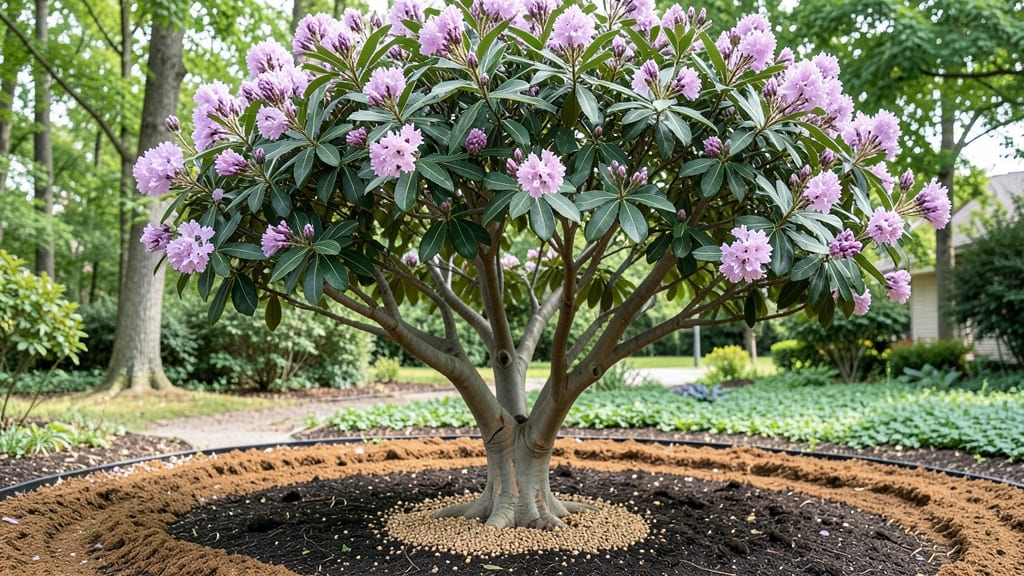
How to fertilize crape myrtle trees in early spring unlocks the secret to those showstopping blooms—but timing and type matter more than you think.
I’ve watched my trees go from sparse pink puffs to foot-tall flower clusters just by adjusting when and how I feed them, and the key is avoiding summer heat stress while giving roots the right nutrients.
The right fertilizer for crape myrtles is low in nitrogen (to prevent leafy overgrowth) and balanced with phosphorus for blooms—think 10-10-10 or 8-3-9 ratios. Organic options like composted manure or bone meal work too, but slow-release granules are foolproof for beginners.
Just skip fertilizing after mid-June, or you’ll get leafy growth instead of flowers.
You’ll know you’re doing it right when your tree bursts with vibrant blooms and sturdy branches by summer. Too much fertilizer? Yellow leaves or stunted growth. Too little? Weak stems that flop in storms. The goal is strong roots and dramatic flowers—no more, no less.
Young trees need gentle feeding, while mature ones can handle a little more. In drought-prone areas, water deeply after fertilizing to prevent root burn. This method works for every crape myrtle, from dwarf varieties to towering specimens.
📚 In This Guide
- What you need
- Instructions
- Tips and common mistakes
- Wrapping up and next steps
What you need
- ● Balanced fertilizer: A slow-release, granular fertilizer with an NPK ratio of 10-10-10 or 12-12-12 (e.g., blank">Miracle-Gro Shake 'n Feed or blank">Espoma Plant-Tone). Use 1–2 pounds per 100 square feet of root zone area.
- ○ Organic fertilizer (optional but recommended): Composted manure (cow, horse, or chicken) or worm castings for a nutrient-rich boost. Apply 2–3 inches of compost around the base (avoid direct contact with the trunk).
- ● Slow-release fertilizer spikes: For convenience, use 3–5 spikes per tree (e.g., Osmocote Smart-Release Plant Food).
- ● Hand trowel or garden fork: For gently working fertilizer into the top 2–3 inches of soil.
- ● Garden hose with spray nozzle: To thoroughly water the tree after fertilizing.
- ● Measuring scoop or gloves: To prevent over-application and ensure even distribution.
- ○ Mulch (optional but helpful): 2–3 inches of organic mulch (pine straw, wood chips, or shredded bark) to retain moisture and regulate soil temperature.
- ● Soil test: Check your soil’s pH (6.0–7.0 ideal for crape myrtles) and nutrient levels before fertilizing. Test kits are available at garden centers.
- ● Tree age & health: Avoid fertilizing newly planted trees (first 6–12 months) or stressed/diseased trees.
- ● Seasonal timing: Fertilize in early spring (before buds swell) and mid-summer (after first bloom)—never in fall or winter.
- ● Water access: Ensure the tree has consistent water for 1–2 weeks before and after fertilizing.
Step-by-step guide to fertilizing crape myrtle trees
Here's how I keep my crape myrtles bursting with color year after year.
Test Soil and Choose the Right Fertilizer
Before adding any fertilizer, test your soil's pH and nutrient levels. Crape myrtles thrive in slightly acidic to neutral soil (pH 5.5-7.0). If your soil is too alkaline, the plant struggles to absorb nutrients, even with fertilization. I use a home soil test kit for accuracy—it’s cheaper than lab tests and gives you results in minutes.
Select a balanced, slow-release fertilizer with equal parts nitrogen, phosphorus, and potassium (like a 10-10-10 or 12-12-12 formula). Crape myrtles respond well to organic options too, such as composted manure or bone meal, but avoid high-nitrogen fertilizers, which promote leafy growth at the expense of flowers. If your soil is deficient in micronutrients, a chelated iron supplement can help prevent yellowing leaves.
Apply Fertilizer at the Right Time
Timing is everything with crape myrtles. Apply the first dose of fertilizer in early spring, just as new growth begins—usually late March to early April, depending on your climate. This jumpstarts the tree’s energy for the blooming season ahead. Avoid fertilizing in late summer or fall, as new growth won’t harden off before winter, leaving the tree vulnerable to cold damage.
Spread the fertilizer evenly around the tree’s root zone, keeping it 6-12 inches away from the trunk to avoid root burn. Water the area thoroughly after application to help the nutrients penetrate the soil. If you’re using granular fertilizer, follow the package instructions for the correct amount per square foot of root zone. For a 4-foot-tall crape myrtle, I typically use about ½ cup of 10-10-10 fertilizer per application.
Monitor and Adjust for Seasonal Needs
After the initial spring feeding, skip fertilization until late spring, around May or June, when the tree shows signs of active growth. This second application encourages robust flowering. Use the same balanced fertilizer—never switch to a high-phosphorus blend, as that can lead to excessive foliage but fewer blooms. If your tree looks pale or leggy, it might need a light nitrogen boost, but I’ve found crape myrtles do best with consistency.
Throughout the growing season, watch for signs of nutrient deficiency. Yellowing leaves between the veins often signal iron or magnesium deficiency, while dark green leaves with purple stems can mean phosphorus deficiency. If you notice these, apply a targeted supplement (like iron sulfate or a phosphorus-rich fertilizer) and retest your soil in a few months. Over-fertilizing is just as harmful as under-fertilizing—it can burn roots and attract pests, so always err on the side of caution.
Prepare for Dormancy and Next Year
Once temperatures drop and leaves fall, stop fertilizing entirely for the season. Crape myrtles enter dormancy in late fall, and feeding at this stage can stimulate weak growth that won’t survive winter. Instead, focus on mulching—spread 2-3 inches of organic mulch (like shredded bark or pine straw) around the base of the tree, keeping it 3-4 inches away from the trunk to prevent rot. This helps retain moisture and regulates soil temperature.
In late winter, prune dead or crossing branches to improve airflow and shape the tree. This is also a good time to check the soil again—if it’s compacted or depleted, aerate slightly with a garden fork and mix in a small amount of compost to rebuild nutrients naturally. By spring, your crape myrtle will be ready for another round of feeding, and you’ll see those vibrant blooms return stronger than ever.
Tips & tricks for perfect crape myrtle seasonal feeding
These seasoned strategies will help you avoid common pitfalls and maximize your crape myrtle's blooming potential.
Soil Testing Precision: Don't rely on visual cues alone for your soil pH test—color charts can be misleading. Use a digital pH meter for accuracy, especially if your soil appears neutral but your tree shows deficiency symptoms. I've seen cases where soil looked perfect but was actually too alkaline for crape myrtles, causing nutrient lockout. Test in multiple spots around your tree's root zone, since pH can vary by just a few feet in your yard.
Fertilizer Application Technique: When spreading that ½ cup of 10-10-10 fertilizer for your 4-foot tree, use a spreader for even distribution. Work in concentric circles starting from the trunk outward, keeping that 6-12 inch clearance. I've noticed that hand-spreading often creates clumps near the trunk where roots are most vulnerable to burn. After application, water thoroughly but slowly—this helps nutrients penetrate deeper rather than running off the surface.
Seasonal Timing Secrets: The late March to early April window for your first application is critical, but don't stress about exact dates. Instead, look for these visual cues: when you see fresh green growth appearing on branches and buds starting to swell, that's your signal. For the second application in May or June, wait until you can see at least 2-3 inches of new growth since the first feeding. This growth-based approach works better than calendar dates across different climates.
Deficiency Diagnosis: Those yellowing leaves between the veins you might see? That's classic iron chlorosis, but it can also indicate magnesium deficiency. To distinguish, check the older leaves first—if they're affected, it's likely magnesium. For phosphorus deficiency (purple stems), the discoloration appears in younger leaves. I keep a small reference chart by my tools to compare symptoms quickly. Remember that over-fertilizing can actually worsen these symptoms by creating nutrient imbalances.
Pro Tips for Fertilize Crape Myrtle Trees
- These seasoned strategies will help you avoid common pitfalls and maximize your crape myrtle's blooming potential.
- Soil Testing Precision: Don't rely on visual cues alone for your soil pH test—color charts can be misleading. Use a d...
- Fertilizer Application Technique: When spreading that ½ cup of 10-10-10 fertilizer for your 4-foot tree, use a spread...
Frequently asked questions
Got questions about fertilizing your crape myrtle trees? You’re not alone! Here are some of the most common concerns—and straightforward answers—to help you keep those stunning blooms thriving.
When is the best time to fertilize crape myrtles?
Fertilize your crape myrtles in early spring (March–April) as new growth emerges, and again in late spring (May–June) to support blooming. Avoid fertilizing in fall or winter—it can stimulate tender growth that may freeze. For slow-release options, apply once in early spring and again in midsummer.
Can I over-fertilize crape myrtles?
Over-fertilizing can lead to excessive leafy growth at the expense of flowers, weak stems, or even root burn. Stick to the recommended rates (usually ½ to 1 pound of nitrogen per 100 sq. ft. per year) and water deeply after applying. If you notice yellowing leaves or stunted growth, flush the soil with water and reduce future doses.
What’s the difference between organic and synthetic fertilizers for crape myrtles?
Both work, but they behave differently:
- Organic (e.g., compost, manure, bone meal): Slow-release, improves soil health long-term, and mimics natural nutrient cycles. Best for established trees but may take longer to show results.
- Synthetic (e.g., 10-10-10, slow-release granules): Faster-acting, precise nutrient ratios (like 12-4-8 for blooms), and easier to measure. Ideal for young or struggling trees needing a quick boost.
Pro tip: Mix both—use organic in early spring to build soil and synthetic in late spring to promote flowers!
Why aren’t my crape myrtles blooming after fertilizing?
Blooms rely on balanced care, not just fertilizer. Check these fixes:
- Too much nitrogen? Switch to a low-nitrogen, high-phosphorus fertilizer (like 5-10-5) to encourage flowers.
- Not enough sunlight? Crape myrtles need 6+ hours of sun daily—prune nearby shade trees if needed.
- Over-pruning? Blooms form on old wood—avoid heavy summer pruning.
- Drought stress? Deep water 1–2 times per week during dry spells.
If the issue persists, test your soil’s pH (aim for 6.0–7.0)—crape myrtles thrive in slightly acidic to neutral soil.
Can I use coffee grounds or eggshells as fertilizer?
Yes, but with caution! Coffee grounds are high in nitrogen (great for leafy growth but can reduce blooms), so use them sparingly (mix into compost first). Crushed eggshells add calcium and trace minerals—sprinkle them around the base in early spring, but avoid overdoing it (they break down slowly). For best results, combine homemade amendments with a balanced fertilizer for optimal nutrition.
Wrapping up and next steps
Fertilizing your crape myrtle trees doesn’t have to be complicated—just follow the seasonal rhythm of growth and bloom! 🌸 By choosing the right fertilizer, timing applications carefully, and avoiding overfeeding, you’ll reward yourself with stunning flowers and lush foliage year after year.
Whether you’re a beginner or a seasoned gardener, these steps will help you nurture your trees like a pro.
Now that you’re armed with the know-how, take the next step—grab your gloves, head to the garden, and give your crape myrtles the love they deserve! 🌱 Watch them thrive, and enjoy the beauty they bring to your outdoor space.