
Pruning
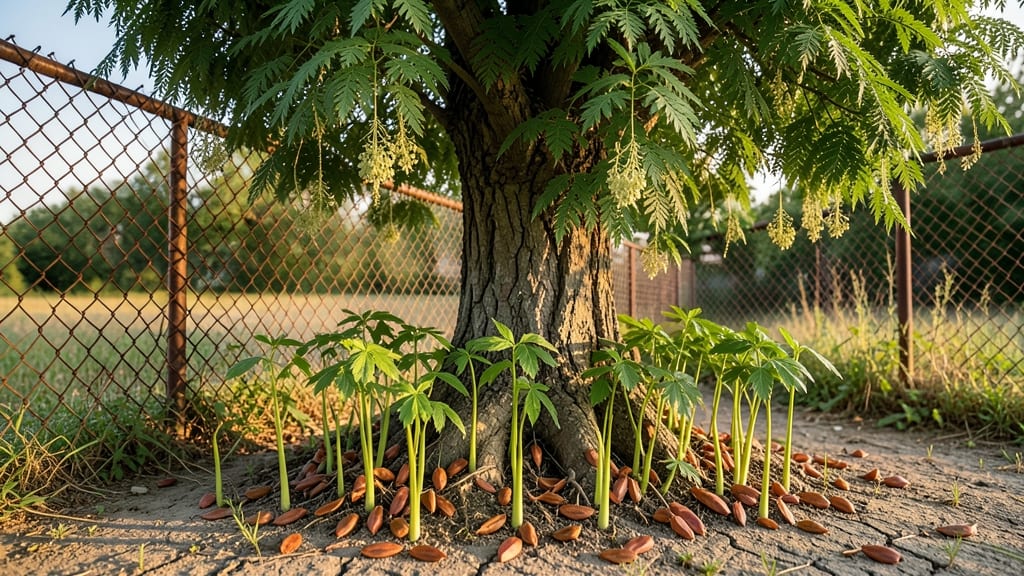
The Tree of Heaven spreads like a weed with wings—its seeds travel on the wind for miles, while its roots send up aggressive suckers that crowd out everything else.
I’ve watched it take over neglected lots and even push through concrete, and once it gets a foothold, controlling it becomes a year-round battle. The real kicker? It releases a chemical that suppresses other plants, making your garden feel like a biological no-man’s-land.
This tree doesn’t just spread—it dominates. Seeds germinate in disturbed soil, while roots can sprout new shoots 50 feet from the parent plant. Chemical treatments like glyphosate work best for mature trees, but younger plants often require repeated cutting or smothering with thick mulch.
Organic methods like vinegar sprays or manual removal help, though they demand patience and persistence.
What you’re left with is a landscape where native plants struggle to compete. The Tree of Heaven’s rapid growth and ecological bullying make it a nightmare for gardeners and conservationists alike.
But with the right strategy—early detection, consistent removal, and proper disposal of cuttings—you can regain control before it’s too late.
Whether you’re dealing with a single sapling or an established grove, the key is acting fast. This isn’t a plant you can ignore; it’s a full-blown invasion that needs aggressive management. Let’s talk about how to fight back before it’s too late.
📚 In This Guide
- What you need
- Instructions
- Tips and common mistakes
- Wrapping up and next steps
What you need
- ● Heavy-duty gloves (nitrile or leather, waterproof to protect from sap and thorns) – 2 pairs (one for cutting, one for cleanup).
- ● Safety goggles (ANSI-rated) – 1 pair (to shield eyes from debris and sap).
- ● Pruning shears (bypass or anvil type, sharp and sturdy) – 1 pair (for small branches <2" thick).
- ● Loppers (long-handled, bypass blades) – 1 pair (for branches 2"-4" thick).
- ● Pruning saw (bow or folding saw, tooth spacing for hardwood) – 1 (for branches >4" thick).
- ● Root saw or mattock (for underground cutting) – 1 (essential for root pruning).
- ● Shovel or spade (wide blade, sturdy metal) – 1 (for digging around roots).
- ● Heavy-duty trash bags (thick, leak-proof) – 5-10 (for debris disposal).
- ● Hermetic bags or root barrier material (if removing roots on-site) – As needed (check local regulations).
- ● Garden hose or water source – 1 (to rinse tools and reduce sap irritation).
- ● Disposable rags or paper towels – Small pack (for sap cleanup).
- ○ Herbicide (optional but effective): Glyphosate-based herbicide (e.g., Roundup, 20-30% concentration) – 1 gallon (for stump treatment).
- ● Triclopyr or imazapyr (for foliar spray) – As directed on label.
- ● Root barrier fabric (if planting near existing trees) – 1 roll (to prevent regrowth).
- ● Wheelbarrow or tarp – 1 (for hauling debris).
- ● Marking spray or flags – As needed (to tag treated areas).
- ● Respirator mask (if applying herbicides) – 1 (for safety).
- ● Ear protection (if using a chainsaw for large stumps) – 1 pair.
Understanding and controlling tree of Heaven's spread
This invasive tree spreads relentlessly—here’s how to recognize and manage its two biggest threats.
Identify the Two Primary Spread Mechanisms
The Tree of Heaven (Ailanthus altissima) spreads through both seeds and underground roots, making it one of the most aggressive invasives in North America. Its winged samaras (seed pods) can travel long distances on wind, while its suckering root system sends up new shoots even after the parent tree is removed.
Seed dispersal happens in late summer to fall, when the tree produces thousands of lightweight seeds that float away effortlessly. Meanwhile, roots can spread 50+ feet from the original trunk, creating dense thickets. Recognize these signs early: clusters of young trees in disturbed soil or along fences are classic indicators.
Monitor and Remove Seedlings Before They Mature
Young Tree of Heaven seedlings are highly vulnerable in their first year, so hand-pulling or digging them out is the most effective control method. Look for compound leaves with 7-13 leaflets and a strong, unpleasant odor when crushed—a dead giveaway. Remove them within 6 inches of the root to prevent regrowth.
Timing matters: spring or early summer is ideal, when seedlings are small but roots are still shallow. Mark infested areas with flags or stakes to track regrowth. If you miss them, they’ll grow into 20-foot-tall trees within three years, making removal exponentially harder.
Cut and Treat Suckering Roots to Prevent Regrowth
If you’re dealing with an established Tree of Heaven, cutting the trunk at ground level won’t stop it—the roots will send up new shoots. Instead, sever the root system using a shovel or root saw, cutting at least 6 inches deep around the base. This disrupts the tree’s nutrient flow and weakens its ability to regenerate.
For stubborn roots, apply horticultural vinegar (20-30% acetic acid) or a glyphosate-based herbicide directly to fresh cuts. Reapply every 2-4 weeks until no new shoots appear. Monitor the site for at least two growing seasons, as dormant buds can sprout unexpectedly.
Prevent Future Spread Through Soil and Equipment
Tree of Heaven seeds and root fragments can hitchhike on tools, shoes, and vehicles, so clean equipment thoroughly after working in infested areas. Scrub shovels, mowers, and boots with soapy water or disinfect with bleach solution (1 part bleach to 9 parts water) to kill lingering seeds or root pieces.
If you’re removing a large tree, bag and dispose of all debris in sealed containers—do not compost. Even small root fragments can sprout into new trees. Consider mulching heavily with cardboard or landscape fabric in treated areas to block light and prevent seed germination.
Consider Long-Term Management Strategies
For heavily infested properties, repeat treatments over multiple seasons are often necessary. Smaller trees (under 10 feet) respond well to stem injection with triclopyr, while larger trees may require professional removal with follow-up root treatment. Some land managers use goats or sheep to graze young seedlings, as they’re less likely to regrow after browsing.
If you’re in a high-risk area, consider planting competitive native species like black walnut or oak, which outcompete Tree of Heaven for space and resources. Regular soil checks** for new shoots in early spring will help you stay ahead of its aggressive spread.
Tips & tricks for controlling tree of Heaven's spread
Real talk: Tree of Heaven doesn't play by normal rules. Here's how to outsmart its relentless growth patterns.
Seed Dispersal Awareness: Those winged samaras (seed pods) can travel up to 100 feet from the parent tree. I've seen them land in cracks of sidewalks and take root—so check unexpected places like roof gutters, fence lines, and even your neighbor's yard. The key is early detection: look for clusters of seedlings in late summer when seeds first appear, and remove them before they establish roots.
Root System Strategy: The real battle happens underground. When cutting established trees, sever roots at least 6 inches deep around the base—this disrupts the root's nutrient flow. I've learned the hard way that surface cuts won't stop regrowth. For stubborn roots, apply horticultural vinegar directly to fresh cuts every 2-4 weeks until no new shoots appear. The vinegar's acetic acid concentration (20-30%) creates a chemical barrier that prevents regrowth.
Equipment Sanitation: Tree of Heaven seeds and root fragments can hitchhike on tools, shoes, and vehicles. After working in infested areas, I scrub all equipment with soapy water, then disinfect with a bleach solution (1:9 ratio). Even small root fragments can sprout into new trees—don't skip this step if you're moving between treatment sites. I keep a dedicated bucket of disinfectant near my work area for quick cleanups.
Long-Term Monitoring: Dormant buds can sprout unexpectedly up to two growing seasons after treatment. Mark treated areas with flags or stakes and conduct regular soil checks in early spring. I've seen trees that appeared completely removed send up new shoots three years later. The patience required here is non-negotiable—this isn't a one-time fix.
Pro Tips for How Does Tree Of Heaven Spread
- Real talk: Tree of Heaven doesn't play by normal rules. Here's how to outsmart its relentless growth patterns.
- Seed Dispersal Awareness: Those winged samaras (seed pods) can travel up to 100 feet from the parent tree. I've seen ...
- Root System Strategy: The real battle happens underground. When cutting established trees, sever roots at least 6 inc...
Frequently asked questions
Got questions about controlling Tree of Heaven (Ailanthus altissima)?
You’re not alone—this invasive species spreads fast, and understanding its behavior is key to stopping it. Below, we’ve answered the most common questions to help you take action.
How fast does Tree of Heaven spread?
Tree of Heaven spreads aggressively, both through seeds and underground roots. A single tree can produce thousands of seeds yearly, which sprout quickly in disturbed soil. Its root system (called suckers) can also spread up to 50 feet from the parent plant, making removal tricky. Without intervention, it can dominate an area in just a few years.
Can I stop Tree of Heaven from spreading by cutting it down?
Cutting alone won’t stop it—regrowth from roots is almost guaranteed. For effective control, you must:
- Cut the tree at ground level (or lower) to sever the root system.
- Apply herbicide (like glyphosate) to stumps and suckers immediately after cutting.
- Monitor the area for 2+ years to kill any new shoots.
For large infestations, consider professional help.
What’s the best time of year to remove Tree of Heaven?
The ideal time is late fall or early spring (September–March), when the tree is dormant. This reduces stress on the plant and makes herbicide absorption more effective. Avoid removing it in summer, as regrowth will be faster and more vigorous due to warm temperatures.
Are there natural ways to control Tree of Heaven without chemicals?
While no natural method is 100% effective, these complementary strategies can help:
- Solarization: Cover cut stumps with clear plastic for 4–6 weeks in summer to kill regrowth.
- Smothering: Use thick mulch or cardboard to block sunlight from young shoots.
- Goats or livestock: Some farmers use grazing animals to eat young seedlings (though this isn’t foolproof).
Note: Mechanical removal (digging) often fails because roots fragment easily. Always combine methods for best results.
How do I know if I’ve fully removed Tree of Heaven?
Even if no new shoots appear, wait at least 2 years before declaring victory. Hidden roots or seeds can sprout later. Signs you’ve succeeded:
- No new growth for 12+ months after treatment.
- No winged seeds (like helicopters) appearing in the area.
- No suckers emerging from the ground.
If you spot even one new shoot, treat it immediately to prevent reinfestation.
Wrapping up and next steps
Understanding how the Tree of Heaven spreads—through its aggressive roots, prolific seeds, and even chemical warfare—is the first step to keeping it in check. 🌱 While its rapid growth can be stunning, its invasive nature demands proactive measures, like regular pruning, soil management, and vigilant monitoring.
Don’t let it take over your yard or local ecosystem!
Take action now: inspect your property for early signs of growth, and if needed, consult a local arborist or invasive species expert for tailored solutions. Together, we can keep this tree where it belongs—under control! 🌿